Identification of Fusarium oxysporum causing sweet potato rot (Ipomoea batatas L & Lamb) in Uruguay
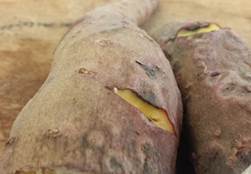
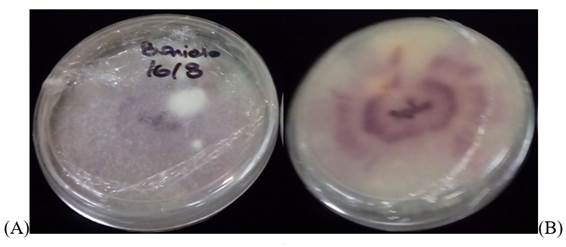
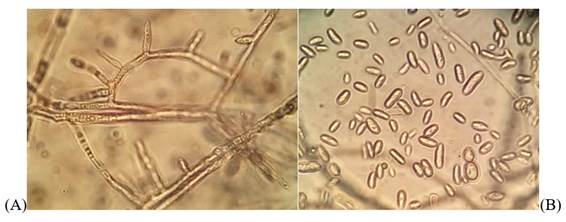
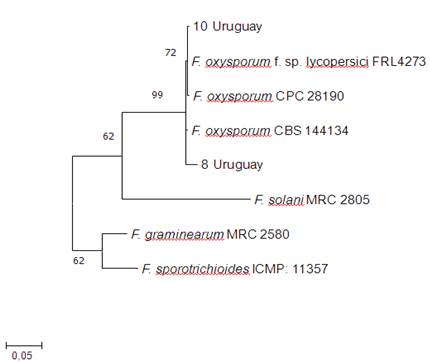
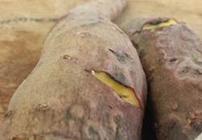
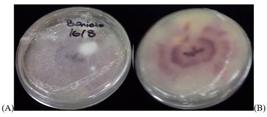
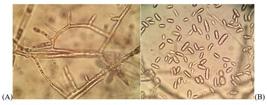
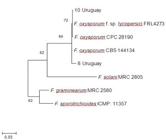
Sweet potato (Ipomoea batatas L & Lamb) is an important crop for Uruguay, both for the number of producers participating in its production and the per capita consumption of the population. It is harvested between January and April, and it is commercialized after a conservation period that lasts until November. During this period some losses happen due to bad conservation, most of them for microbiological causes. One of the main problems is a dry, superficial, rounded, and slightly sunken rot that as elapses it can increase its size and eventually mummify the root. To identify the causative agent of these injuries, a directed sampling was conducted, and the samples were sent to the Diagnostic Clinic of the Phytopathology Unit of the Agronomy Faculty. Fungi with Fusarium oxysporum characteristic was frequently isolated from roots showing initial rot symptoms and its identity verified by morphological and molecular techniques. Pathogenicity tests were performed and, once the symptom was recorded, the causal relationship of F. oxysporum with respect to the observed symptoms was verified accomplishing Koch’s Postulates. This result contributes to the knowledge of the disease and to adapt management practices to reduce losses and the commercial quality of sweet potato in local conditions.
Keywords:
sweet potato: fusariosis; post-harvest; conservation
 Thumbnail
 Thumbnail
 Thumbnail
 Thumbnail