Arbuscular Mycorrhizas in Two Native Grasses of Uruguay in Grazed and Ungrazed Areas
Abstract
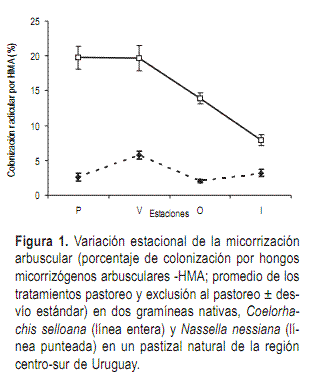
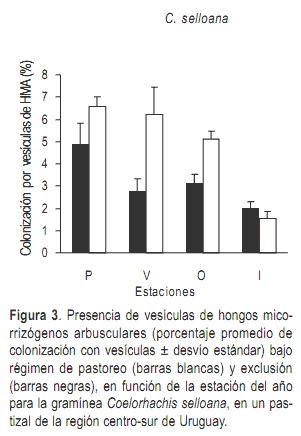
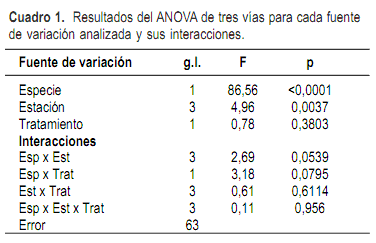
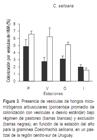
Arbuscular mycorrhiza fungi (AMF) have been reported to have positive effects on plants. Since for Uruguay there are no studies of associations between AMF and native species in natural grasslands, research on mycorrhiza interactions has gained in importance as grasslands are the major Uruguayan ecosystem. In addition, it has been suggested that our understanding about grassland ecosystems would be improved by extending current knowledge on the interactions between grasses, their associated microorganisms and herbivores. Therefore, this work was aimed at comparatively studying the interaction between two native grasses (the cool-season C3 Nassella neesiana, and the warm-season C4 Coelorhachis selloana) and the native AMF associated to their roots, as well as the seasonal dynamic of mycorrizal colonization in grazed and ungrazed areas. Results show, at first, that root colonization was higher in C. selloana than in N. nassella. It agrees with previous studies, which suggests that C4 species are more colonized by AMF than C3 ones. Second, colonization by AMF in C. selloana was congruent with its life cycle, because this warm-season species showed the highest values in summer. Regarding the cool-season N. nassella, it showed a slight higher colonization in summer, when it presents less photosynthetic activity. Third, though we didn’t find a significant effect of grazing treatment on AMF colonization, C. selloana grazed- plants presented higher colonization of fungi structures.
ARBUSCULAR MYCORRHIZAS; NATURAL GRASSLANDS; NASSELLA NEESIANA; COELORHACHIS SELLOANA
 Thumbnail
 Thumbnail