Polyploid induction of Eucalyptus dunnii Maiden to generate variability in breeding programs
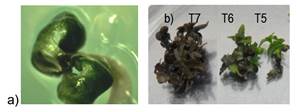
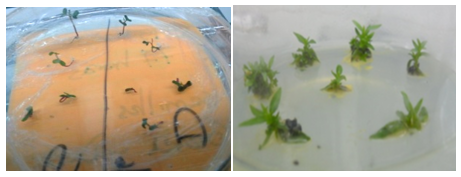
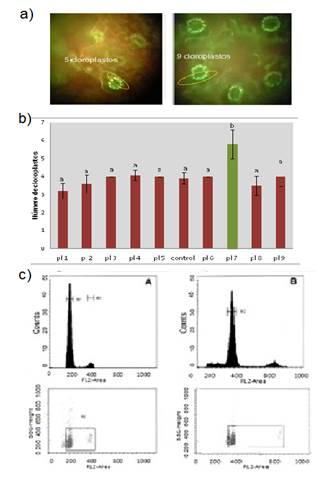
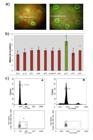
Eucalyptus dunnii Maiden produces good quality cellulose pulp, showing good frost tolerance. However, in Uruguay, it needs more than six years to reach the reproductive stage. Genome duplication was proposed as a strategy to obtain useful variability. The application of mitosis inhibitors for chromosomal duplication, in explants growing in vitro, was evaluated. Two antimitotic agents were used: colchicine and oryzalin in different concentrations and exposure times, in two types of explants: explants growing in vitro and pre-germinated seeds. The number of chloroplasts was used as a rapid ploidy estimator and confirmed by flow cytometry. For chloroplast count, fluorescein diacetate (fda) applied to in vitro leaves was used for staining. Oryzalin was effective for inducing plant duplication in E. dunnii from in vitro explants. In pre-germinated seeds, both antimitotic agents induced polyploids. The average number of chloroplasts was 5.5 in diploid control plants and more than 7 in tetraploids. Obtained plantlets were successfully cloned in the greenhouse. This is the first report on artificial polyploidy obtained in E. dunnii.
Keywords:
polyploidy; oryzaline; colchicine; in vitro culture
 Thumbnail
 Thumbnail
 Thumbnail