Thiamethoxam in the Control of Mahanarva fimbriolata, in the Farming Productivity and the Technological Quality of the Sugarcane
Abstract
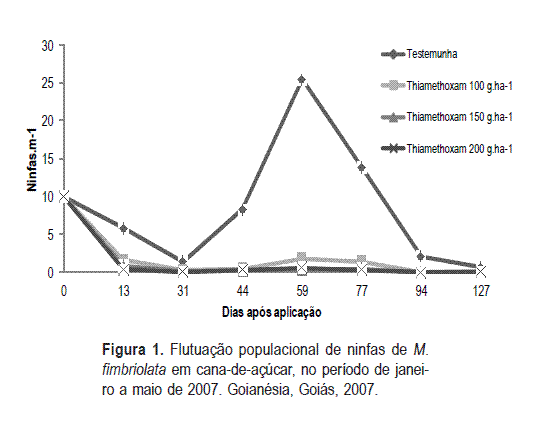
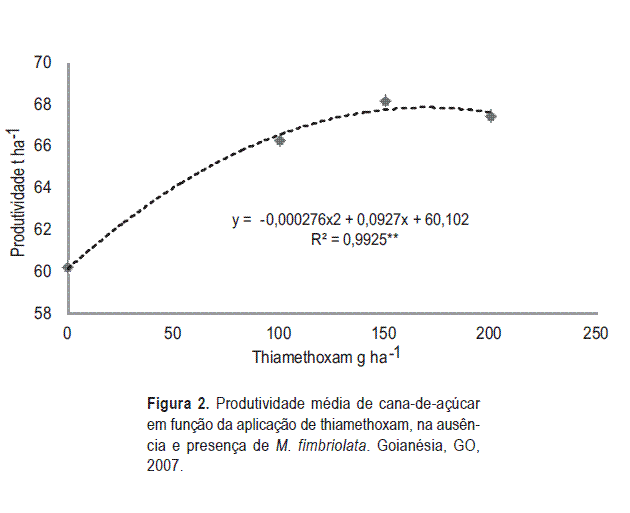
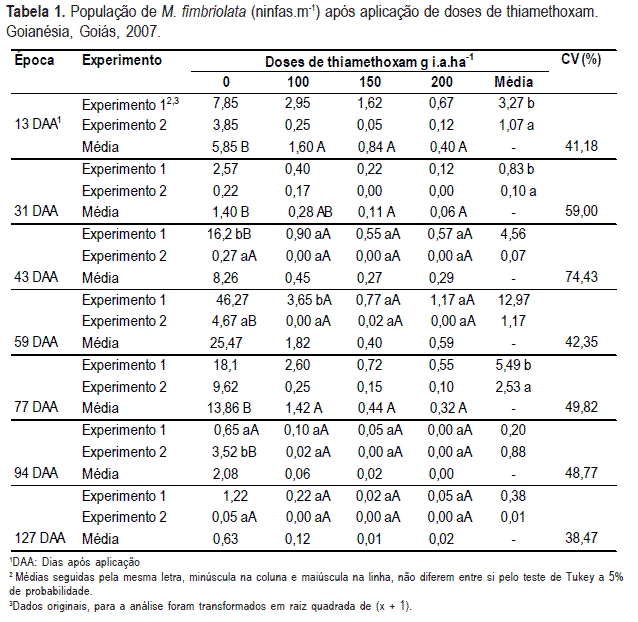
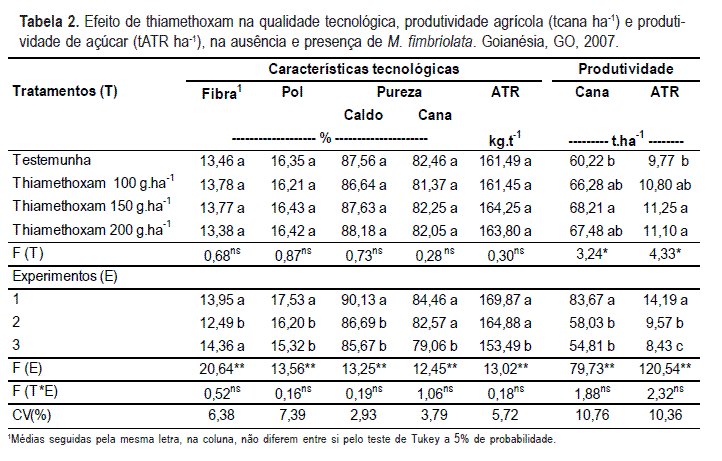
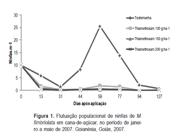
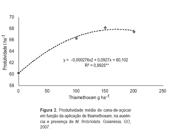
The objective of the present study was to evaluate the effect of thiamethoxam in the control of roots spittlebug, Mahanarva fimbriolata, in technological quality and productivity in the sugarcane crop. The research was carried out in the experimental areas of «Usina Jalles Machado S/A», Goianésia City, Goiás State, Brazil. Three experiments were installed in areas with mechanized harvest without previous burning: two with presence and one without the presence of roots spittlebug. The experimental design was randomized blocks, with four repetitions, being each parcel consisting of nine lines of ten meters. The evaluated treatments were: thiamethoxam in dose of 0, 100, 150 and 200 g of active ingredient per hectare. A costal spray of constant pressure (CO2) was used for the application. The evaluations of the population of spittlebug were made to the 13, 31, 43, 59, 77, 94 and 127 days after application, by counting the number of nymphs present in a line of the parcel. The productivity and the technological characteristics also was determined. Thiamethoxam reduced the population of spittlebug in all the doses, presenting not statistical differences among them. The physiological effect of thiamethoxam was observed in the significant increment of the farming production of up to 7.98 tons per hectare, consequently the increase in the industrial performance of sugar. The evaluated technological characteristics were not influenced by the application of thiamethoxam.
thiamethoxam; bioactivador; Saccharum spp.; roots spittlebug
 Thumbnail
 Thumbnail