Segregative phase separation in aqueous systems of whey protein and carboxymethylcellulose under isoionic conditions
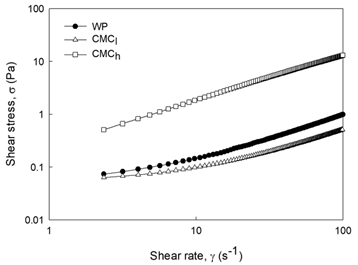
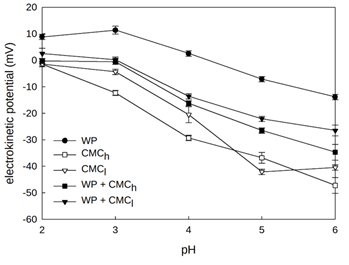
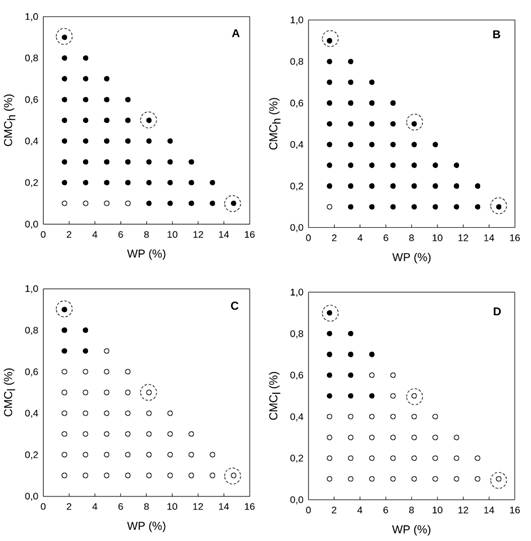
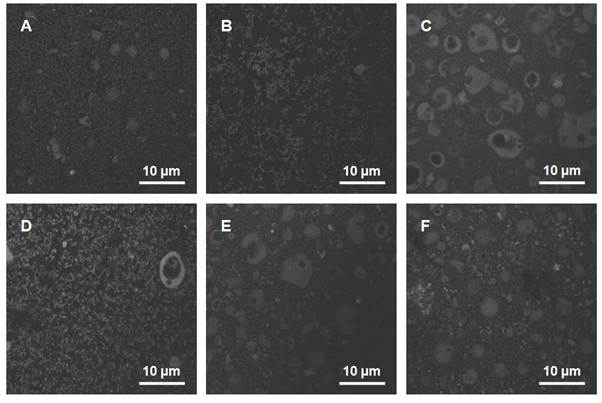
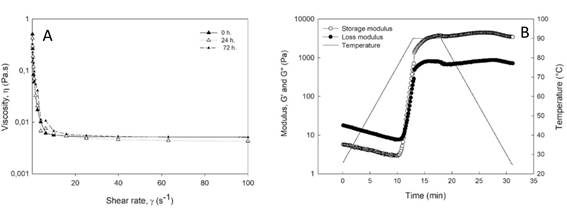
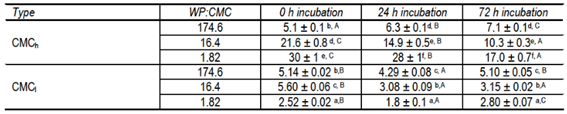
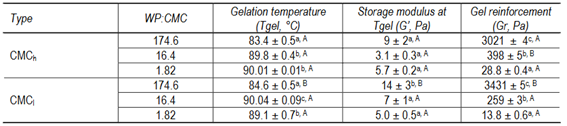
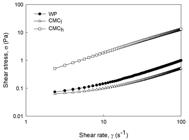
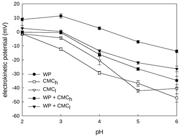
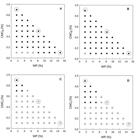
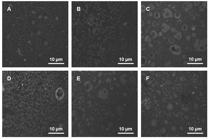
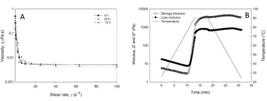
Whey, a byproduct of cheese production, contains valuable proteins such as whey protein (WP), which are key in the food industry due to their functional properties, especially the ability to form gels. When combined with polysaccharides like carboxymethylcellulose (CMC), WP can undergo phase separation, affecting properties like viscosity and texture in food products. This separation can be segregative, when the macromolecules are incompatible, or associative, when oppositely charged macromolecules attract each other and form networks. This study focuses on phase separation in WP and CMC mixtures under isoionic conditions, evaluating the effect of the molecular weight of CMC and the rheological properties of the mixtures. The tests included measurements of electrokinetic potential, microscopic analysis, and rheology of individual solutions and mixtures of WP with low- and high-viscosity CMC. It was found that mixtures with high-viscosity CMC tend to form segregated phases more easily. The flow and gelation properties also depended on the concentration of WP and the type of CMC, with higher concentrations of WP resulting in stronger gels. The results provide key insights for controlling the structure and functionality in food systems.
Keywords:
whey protein; carboxymethylcellulose; rheology; macromolecules; phase separation
 Thumbnail
 Thumbnail
 Thumbnail
 Thumbnail
 Thumbnail