Balancing nitrogen at the farm gate: Economic-environmental sustainability trade-off in pastoral dairy systems of Uruguay
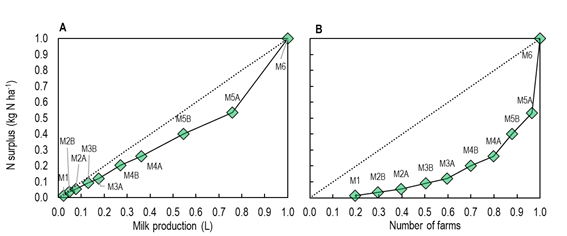
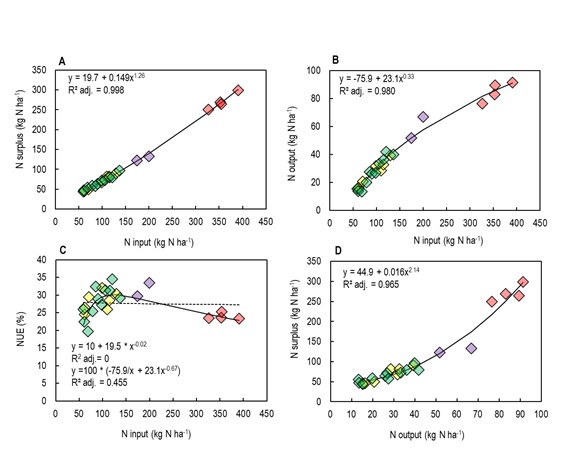
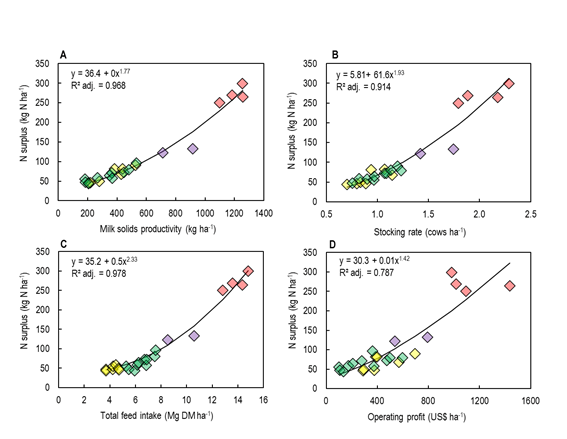
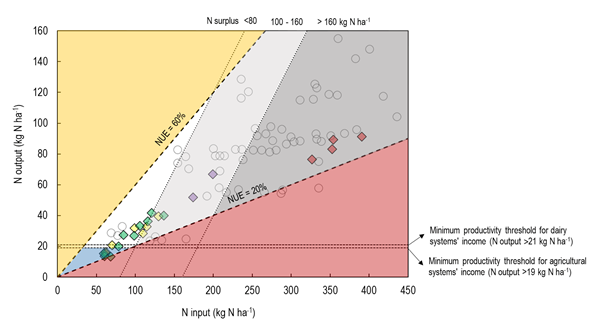
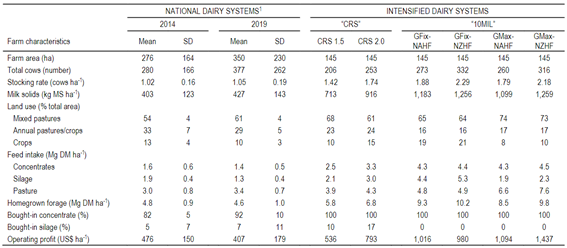
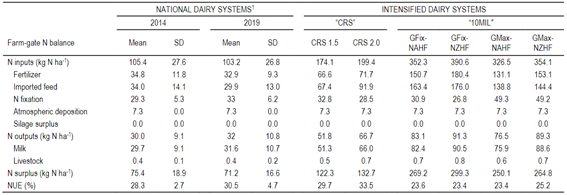
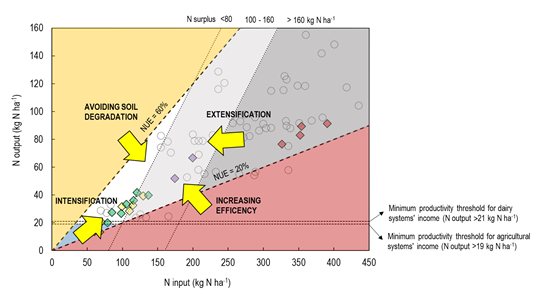
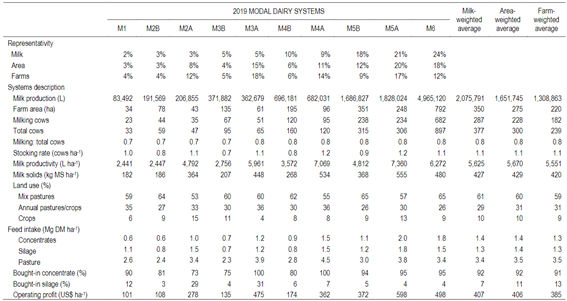
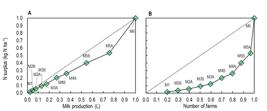
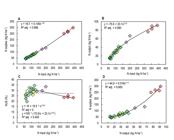
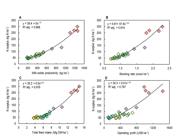
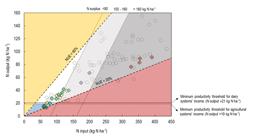
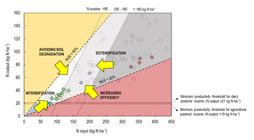
Uruguay´s dairy can potentially enhance milk productivity competitively, but intensification risks elevating nitrogen (N) surplus, heightening environmental concerns. This study quantified farm-gate N inputs and outputs, calculating N surplus (input-output) and N use efficiency (NUE=output/input) for 17 commercial modal dairy systems identified in the 2014 and 2019 national surveys and six prospective intensified systems based on experimental pastoral farmlets achieving near-maximal rainfed productivity. Current dairy systems maintained N surplus at 71 kg N ha-1 between 2014 and 2019 (range: 44-97 kg N ha-1) while improving NUE from 28.3 to 30.5% (range: 20-35%). Intensification increased N surplus without necessarily reducing NUE. Our analyses highlight three aspects: (i) comparatively low N surplus of current Uruguayan dairy, (ii) nonlinear links between N surplus and stocking rate, feed intake, milk productivity and operating profit, and (iii) inequality between dairy systems in their contribution to national dairy N surplus reflects mainly disparity in farm size. These insights underscore the crucial need for understanding the actual fate of N surpluses: nitrate leaching, ammonia volatilisation, N2 denitrification, or N accumulation in soil organic matter. This is an unavoidable requisite for designing management practices and policies able to effectively optimise the economic and environmental sustainability of Uruguayan dairy.
Keywords:
grazing systems; whole-farm balance; N losses; N surplus; N use efficiency
 Thumbnail
 Thumbnail
 Thumbnail
 Thumbnail
 Thumbnail