Butia: physical, nutritional and antioxidant properties of red, orange and yellow fruits
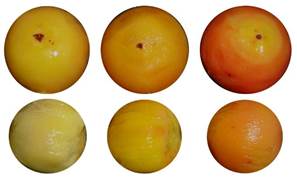
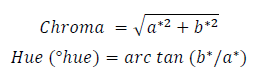
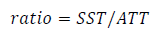
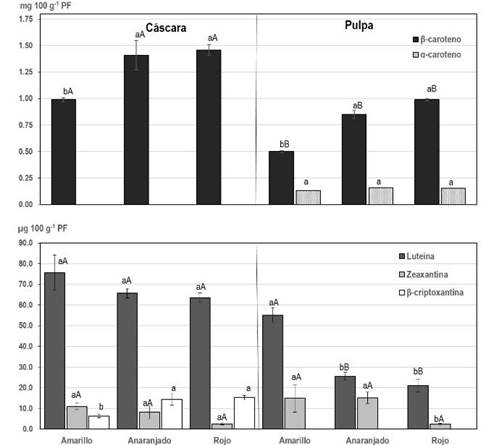
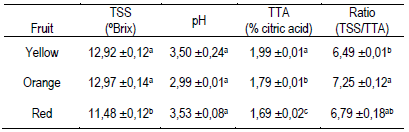
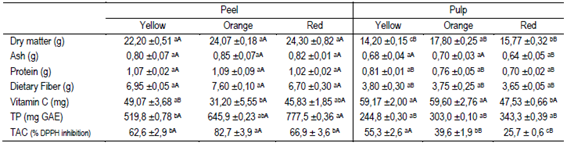
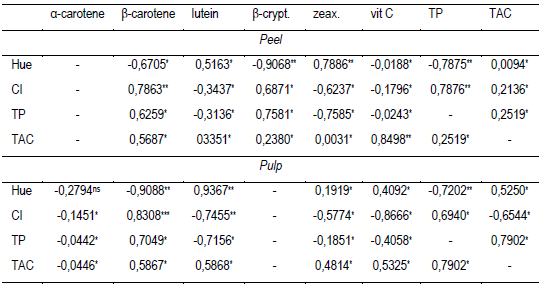
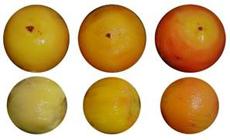
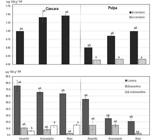
The fruit of the butia palm (Butia odorata (Barb. Rodr.) Noblick) has cultural and economic value for the inhabitants of the protected landscape area in Los Palmares de Rocha, Uruguay. Determining the physicochemical and nutritional quality of the fruits can contribute to enhance them by preserving these biosystems. This study aimed to characterize fruits with red, orange and yellow epicarp physically and chemically. Color, dry matter, ash, crude protein, dietary fiber, carotenoids, vitamin C, total polyphenols (TP), and total antioxidant capacity were measured in peel and pulp of the three types of fruit. All data were reported for 100 g of fresh weight. Furthermore, the pH, the titratable acidity and the total soluble solids were determined in the pulp juice. The three types of butia had a higher content of β-carotene (≈1.28 mg), lutein (≈68.2 µg) and TP (≈647.7 mg gallic acid equivalent) in peel than in pulp. In addition, the content of vitamin C (≈48.7 mg) and dietary fiber (≈ 7.1 g) was similar in the peel and in the pulp for the three colors of butia. Intake of 100 g of butia fruits in natura would provide up to 14% of the dietary fiber, 8% β-carotenes and 57% of the vitamin C required daily by an adult.
Keywords:
Butia odorata; carotenes; xanthophyll; vitamin C; polyphenols; dietary fiber
 Thumbnail
 Thumbnail
 Thumbnail
 Thumbnail
 Thumbnail
 Thumbnail