Performance evaluation of Uruguayan dairy farming systems
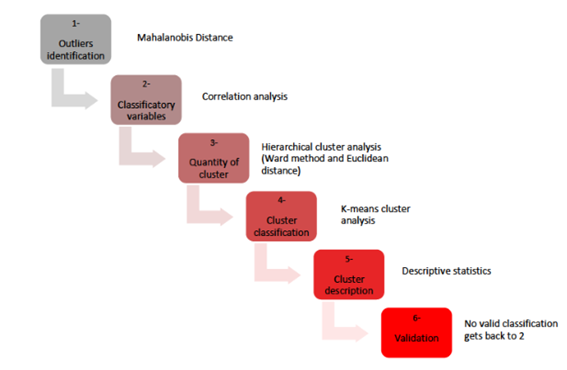
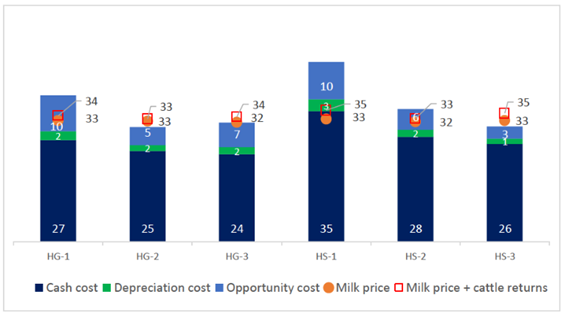
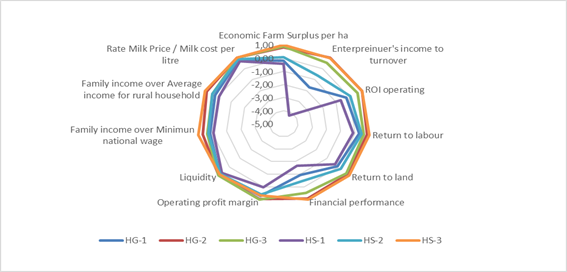
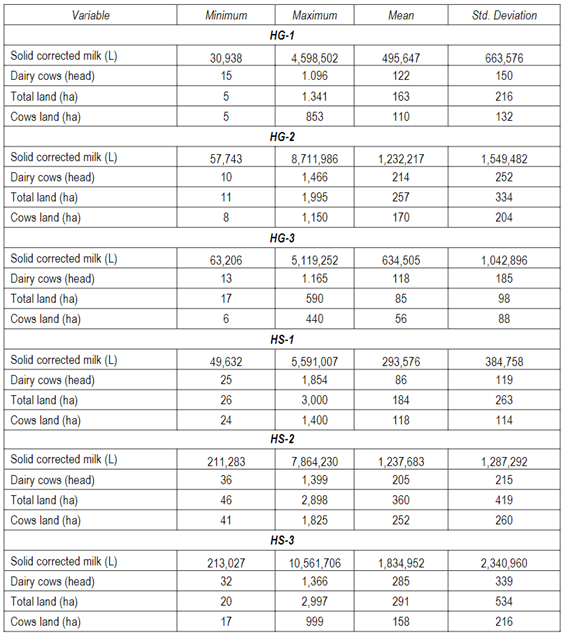
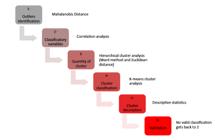
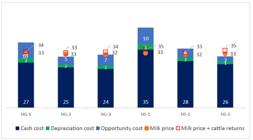
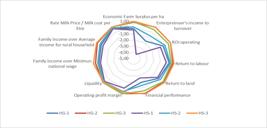
In the last 20 years, the Uruguayan dairy sector has intensified and concentrated on higher cow productivity, maintaining the herd, smaller land, and fewer farms. The research aims are to identify, describe, and evaluate the economic performance of different types of dairy farms. A sample of 284 farms from the National Dairy Farm Survey 2019 was used (representing 2,021 dairies); using k-means Cluster analysis with the variables: cow productivity, stocking rate, land productivity, concentrate, roughage, and grass intake (per hectare). We identified six farm types, three with high participation of grass in the cows’ diets (HG, 60% or more of dry matter intake), and the other three focused on supplementation (HS); with three intensification levels (1-low, 2-intermediate and 3-high productivity per ha). For the 2018/19 season three types of farms presented the best economic performance (HS-3, HG-3, and HG-2), including those with the highest stocking rate and grass intake per hectare, and more than USD 225 Economic Farm Surplus (EFS) per hectare with the lower unitary cost. Other two types exhibited intermediate economic performance (HS-2 and HG-1) with EFS close to zero and unitary cost similar to price. And one type (HS-1) displayed the worst economic performance, with negative indicators and the largest number of farms with very low productivity.
Keywords:
typology; k-mean cluster analysis; economics results; competitiveness; intensification
 Thumbnail
 Thumbnail
 Thumbnail