Agroecological short supply chains: Status and challenges for Uruguay’s family farming sector
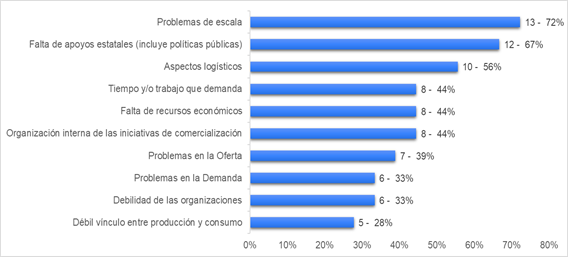
Agroecology, historically driven by social movements as a resistance strategy, has recently been incorporated into public policy agendas. The National Agroecology Plan (PNA) prioritizes family farming and establishes among its strategic axes the access, distribution, and consumption of agroecological food. This study aims to characterize the short supply chains for agroecological products, focusing on associative and short-circuit strategies, as well as analyzing the constraints of public policies. To achieve this, secondary information sources, interviews with qualified informants, and the implementation of an online form for characterizing short sales circuits were applied. A total of 126 sales spaces were identified, of which 91 belong to short supply chains and are predominantly located in the metropolitan area. The main short supply chains are fairs, baskets, direct on-farms sales, and local stores or stalls. Most strategies are linked to farmer and/or consumer organizations, with the Uruguay Agroecology Network playing a central role. Among the identified limitations are logistical aspects, scale issues, and a lack of state support. The limited budget allocated for the implementation of the PNA and the regulatory changes that affected certification through the Participatory Guarantee System of the RAU reflect problems and contradictions in recent public policies. Despite these limitations, the initiatives aim to redefine market relations by strengthening the production-consumption link through approaches rooted in social and solidarity economy.
Keywords:
agroecology; associative strategies; producer-consumer connection; social and solidarity economy; public policies
 Thumbnail
 Thumbnail
 Thumbnail
 Thumbnail
 Thumbnail
 Thumbnail