Water productivity in maize, at different levels of deficit irrigation in humid climate
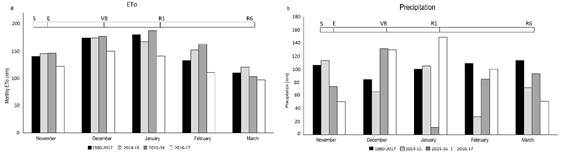
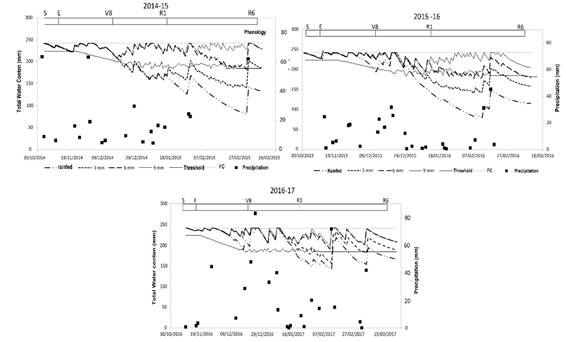
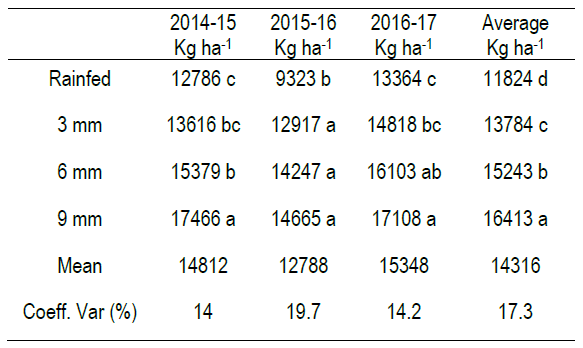
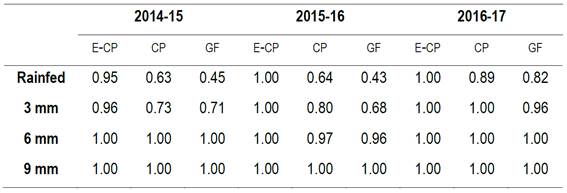
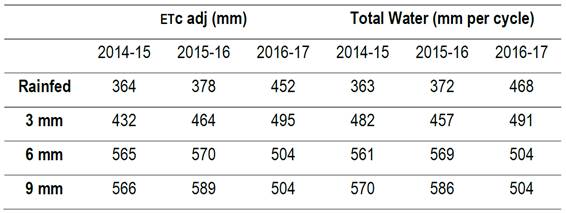
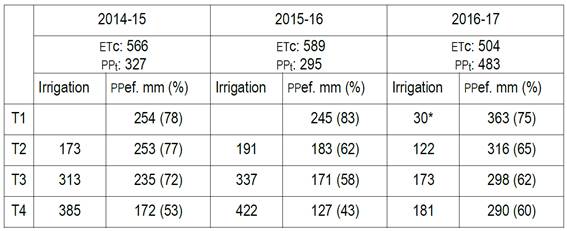
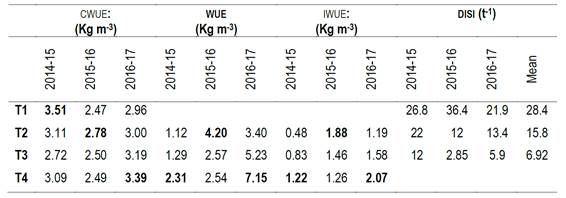
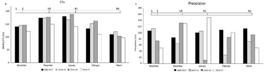
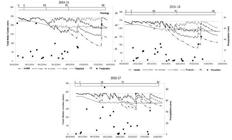
In regions with temperate and humid climate such as Uruguay, irrigation stabilizes and increases the yields of summer crops by supplementing rainfall. Irrigation on demand generates higher water consumption, it affects production system sustainability due to inefficient use of resources and it is environmentally negative (excessive fresh water use and energy for its extraction). It is necessary to evaluate deficit irrigation alternatives that increase the productivity of irrigation water. Therefore, three maximum irrigation depths were evaluated: (T2) 3 mm day-1, (T3) 6 mm day-1, (T4) 9 mm day-1, and (T1) control without irrigation (only receives rainfall), on corn production, in order to define more efficient irrigation strategies. Results indicate responses to different levels of deficit irrigation. When rainfall was higher than average, its poor distribution during the crop cycle generated water deficit at specific times, affecting yield. T1 and T2 did not cover etc during the Critical Period and grain filling, which caused lower yields. The yields in T3 and T4 were higher and on the three-year average they were significantly different. T3 did not always cover etc, but the soil reserve and rainfall contributed to cover it, saving almost 20% of irrigation water compared to T4. However, the water productivity indicators (wue, iwue) show that T4 is the best irrigation strategy, although it uses less rainfall and soil water reserve.
Keywords:
temperate climate; water use efficiency; deficit irrigation; zea mays
 Thumbnail
 Thumbnail