Floral food resources for Apis mellifera (Hymenoptera: Apidae) in a mountain forest area in Uruguay
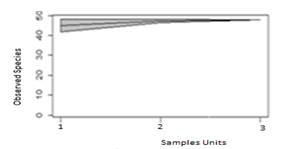
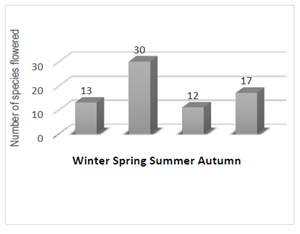
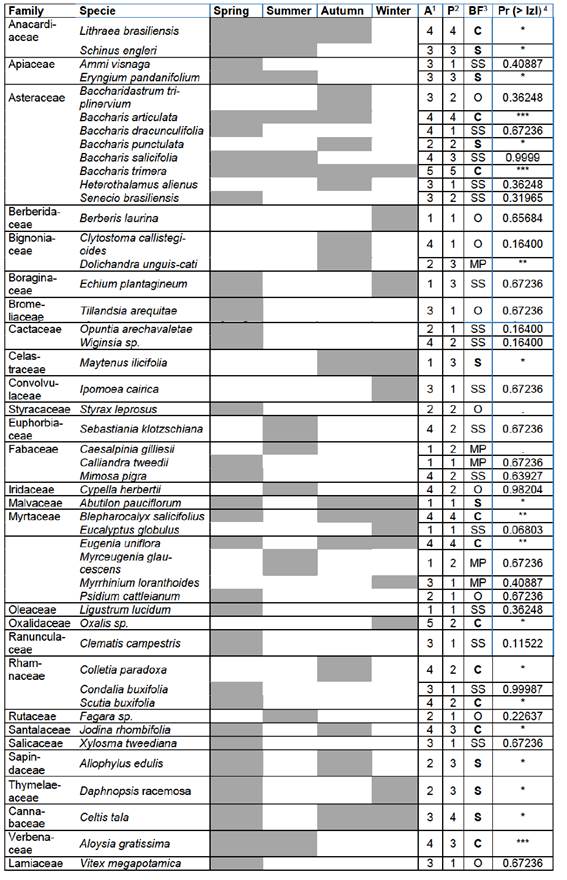
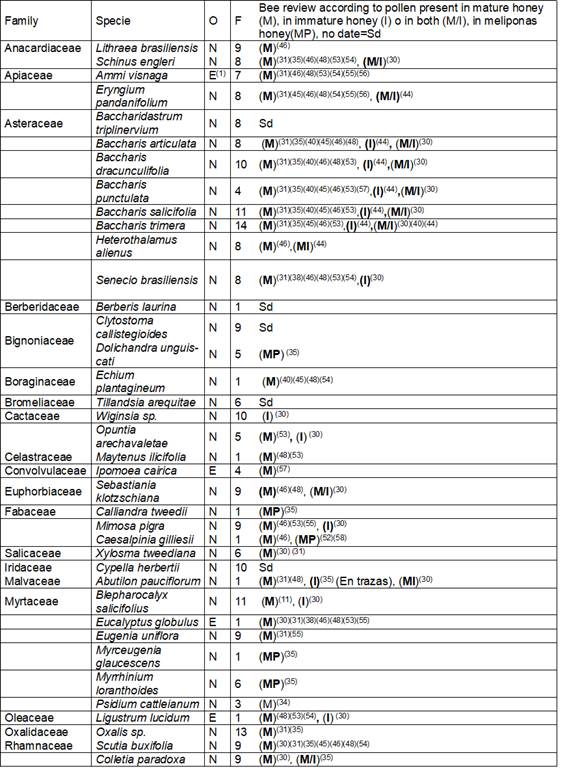
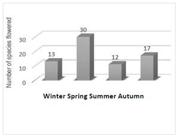
Knowing the blooms is useful to predict the behavior of Apis mellifera (honeybee) colonies. The objective was to determine the floristic characteristics of a mountain forest in Uruguay from the beekeeping point of view. We made eight visits in every three sites surrounding the apiary, at 10-20 m, 500 m and 1500 m distance. The first visit determined the species, families, origin (native or exotic), and frequency of each taxon. In subsequent visits, we censed which ones remained in bloom (presence or absence). We assigned each species a value of one to five for abundance (A) and the duration of flowering (P), during two years. Using the Shannon Index the floristic diversity was established. A generalized linear model was employed to analyze flowering through the response variables: presence of flowering in winter, spring, summer and autumn, as well as flowering duration. We calculated a Shannon Index of 3.6, indicating high biodiversity. Then we correlated the findings of the survey and literature reports on the occurrence of each species in melissopalynological studies in mature and immature honey. The expression “Convertible Flora” was coined to identify the floral resources whose pollen is stored when no flower is available. These were Lithraea brasiliensis, Baccharis articulata, Baccharis trimera, Blepharocalyx salicifolius, Eugenia uniflora, Colletia Paradoxa, Oxalis sp., Scutia buxifolia, Jodina rhombifolia, Aloysia gratissima for the spring and autumn seasons (P <0.05). The expression “Support Flora” (P <0.05) is used to classify those resources that are found in immature honey and are almost absent in mature honey, and are used as nutrients during the colony expansion: Schinus engleri, Maytenus ilicifolia, Eryngium pandanifolium, Baccharis punctulata, Abutilon pauciflorum, Daphnopsis racemosa, Allophylus edulis, and Celtis tala. This flora classification allows planning the expected developments and yields of honey from a region to establish technological useful and efficient packages of honey harvests.
Keywords:
Apis mellifera; honeybee calendars; support flora; convertible flora
 Thumbnail
 Thumbnail