Review on ecological interactions of the Cochliomyia hominivorax fly and assessment of the possible impacts of its eradication in Uruguay
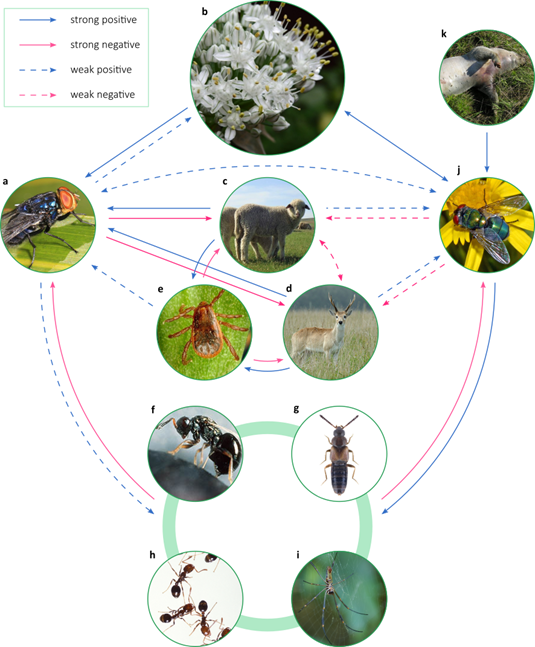
Controlling a pest species raises questions about the harmful effects its eradication could cause in ecosystems. Currently, in Uruguay are being analyzed strategies to eradicate the New World Screwworm (NWS), Cochliomyia hominivorax (Diptera: Calliphoridae), an obligatory ectoparasite that causes myiasis in warm-blooded vertebrates, including humans. The loss of a species implies a risk of secondary extinctions and cascading effects that depend on the ecological function of the species and the capacity of the rest of the species with which it interacts to compensate for its loss. To assess the ecological impact of the NWS eradication, we analyzed its ecological redundancy, its effect as an indirect regulatory agent for other species, and its participation in critical ecosystem functions. We conclude that the NWS presents high functional redundancy in most ecological interactions. It does not play an essential role as a regulatory agent of other species and does not play an important role in critical ecosystem functions. Without ignoring the information gaps that certainly exist about the ecological interactions network of the NWS in Uruguay, we estimate that its eradication is unlikely to cause secondary extinctions or cascading effects in the networks it integrates. In order to timely detect possible impacts during the course of the program, it is recommended to monitor the ecosystems using indicators related to direct and indirect partners in the ecological interactions of the NWS.
Keywords:
Cochliomyia hominivorax; eradication; ecological impact; ecological interactions; functional redundancy
 Thumbnail