Sustainability assessment of family livestock systems in the Pampa biome of Brazil: A Nexus approach
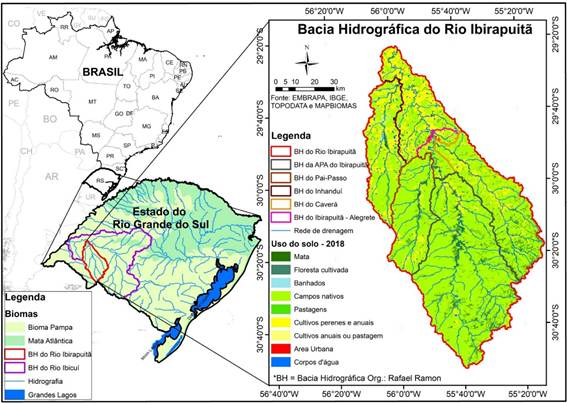
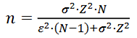
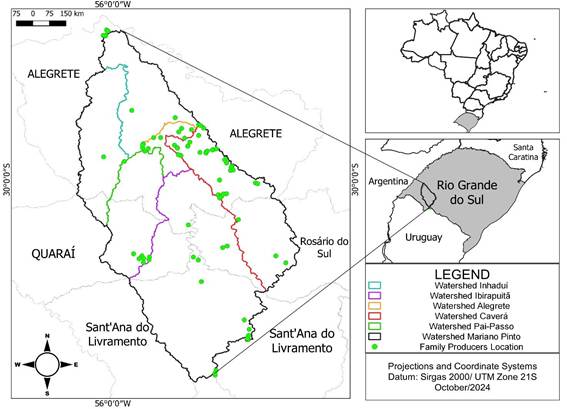
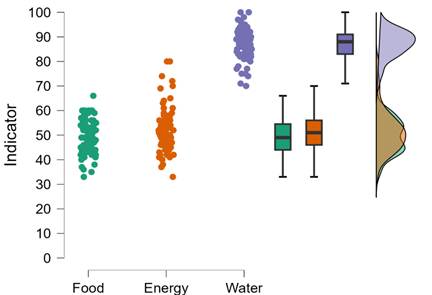
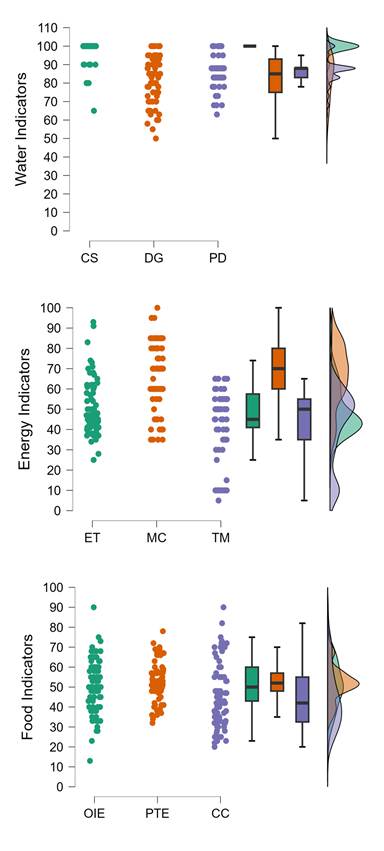
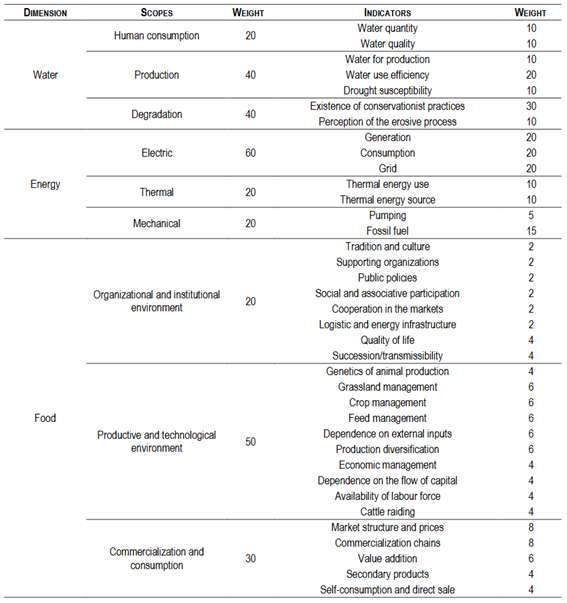
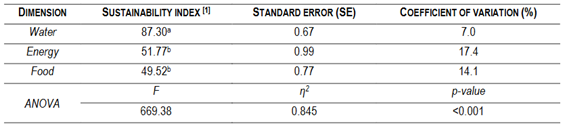
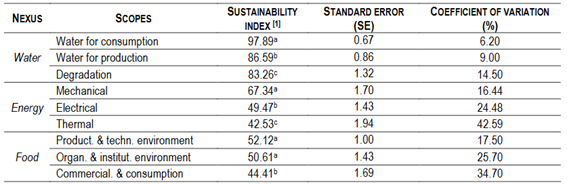
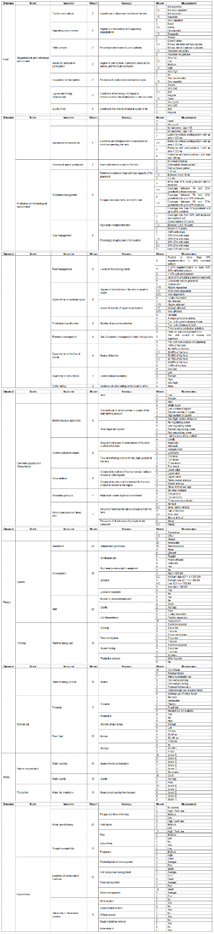
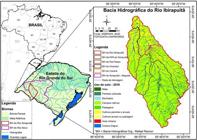
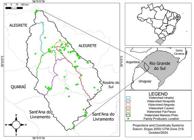
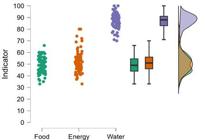
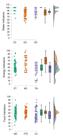
In a context of climate change, the study of sustainability based on integrated approaches, such as the WEF Nexus (water-energy-food), has become important in assessing the efficiency of production systems. This article evaluates the sustainability of family livestock systems in Brazil's Pampa biome from the perspective of the WEF Nexus. The re-search was based on primary data collected through interviews with 83 family livestock farmers located in the Ibirapuitã River basin. The MESMIS methodology was used to construct 37 indicators, which were measured and compared between and within the WEF Nexus dimensions using Analysis of Variance (ANOVA) and Tukey's test for multiple comparisons. In an analysis between the dimensions, a significant difference was found between the averages of the sustainability indicators in the basin systems (p<0.01). The water dimension showed the highest level of sustainability, classified as “ideal”. Within the WEF Nexus, in the food dimension, a lower level of sustainability was found in the “marketing and consumption” indicators (p<0.05), classified as alert. In the energy dimension, the high level of sustainability in the use of mechanical energy in the systems stands out, in contrast to the alert situation in the use of thermal energy (p<0.05). Finally, in the water dimension, all the sustainability indicators are in an ideal situation. The study consolidated a methodology for assessing sustainability indicators based on the NEXUS approach, as well as identifying the main action points for improving the systems.
Keywords:
climate change; livestock farming; rural economics; sustainability indicators
 Thumbnail
 Thumbnail
 Thumbnail
 Thumbnail
 Thumbnail
 Thumbnail