Optimizing autohydrolysis conditions for production of ferulic and p-coumaric acids with antioxidant activity from rice huskOptimización de las condiciones de autohidrólisis para la producción de ácidos ferúlico y p-cumárico con actividad antioxidante a partir de cáscara de arroz
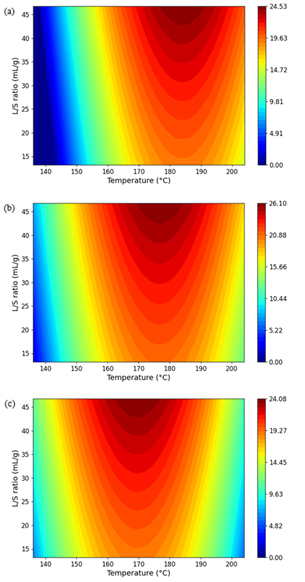
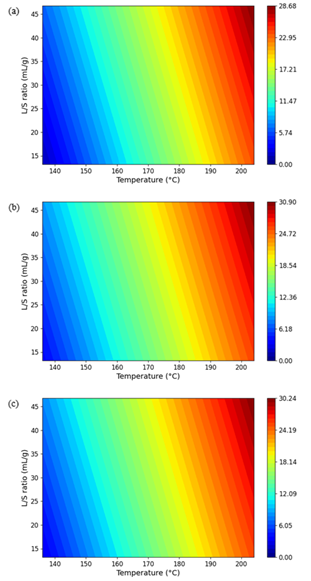
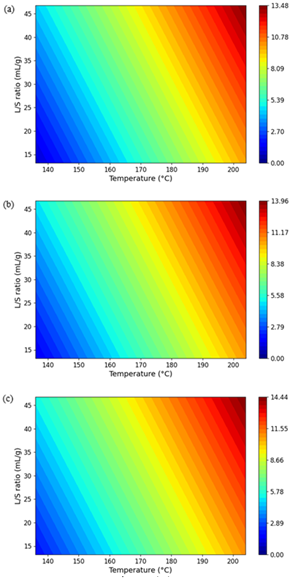
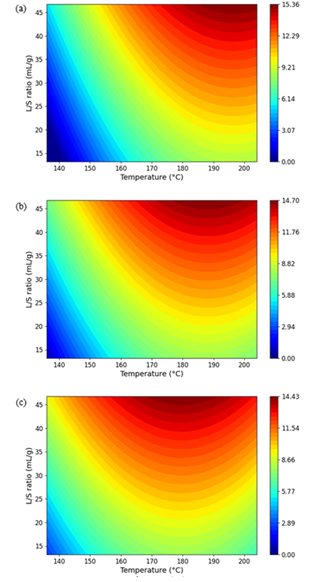
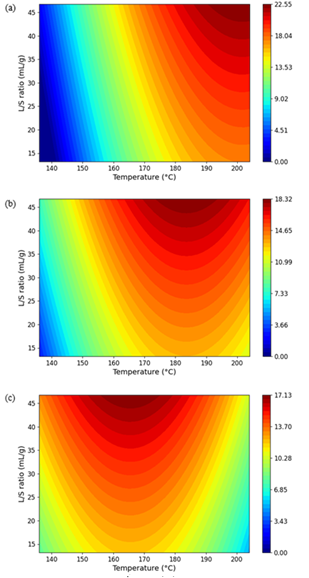
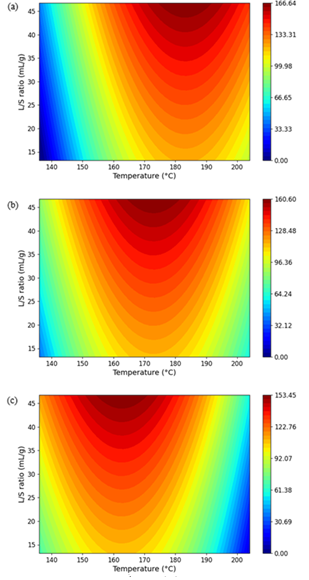
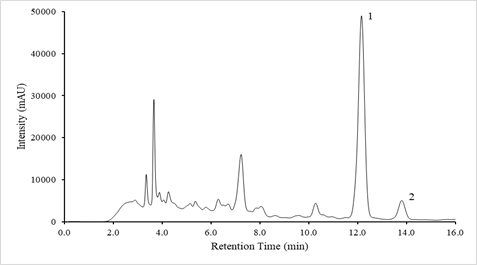
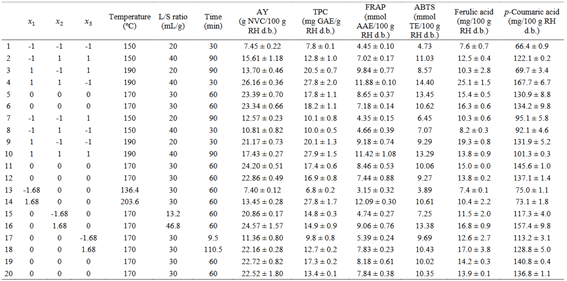
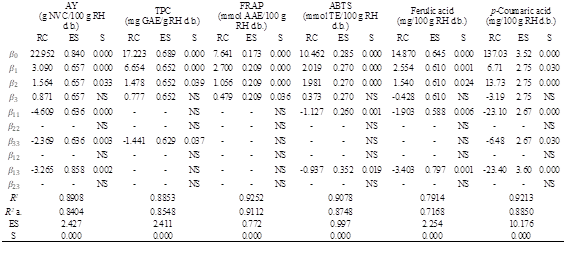
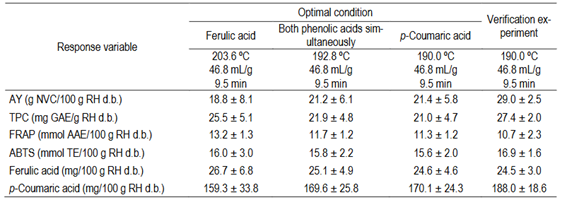
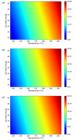
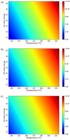
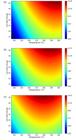
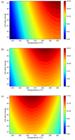
Uruguay generates approximately 275 thousand tons of rice husk (RH) annually as a byproduct of rice production. RH, a lignocellulosic material rich in cellulose, hemicelluloses and lignin, is typically burned or landfilled, leading to environmental concerns. This study aimed to optimize the obtention of phenolic acids with antioxidant properties, particularly ferulic and p-coumaric acids, through hydrothermal treatment (autohydrolysis) of RH. Response surface methodology (RSM) was employed to assess the influence of temperature, liquid/solid (L/S) ratio, and hydrolysis time on autohydrolysis yield, total phenolic content (TPC), antioxidant activity, and phenolic acids concentrations. The optimal conditions for production of ferulic and p-coumaric acids were determined to be 190 °C, 46.8 mL/g, and 9.5 minutes, yielding 24.5 mg/100 g RH on a dry basis (d.b.) of ferulic acid and 188.0 mg/100 g RH d.b. of p-coumaric acid. The hydrolysates also exhibited significant antioxidant activity and TPC. Compared to previous studies, our findings indicate enhanced hydrolysis yield, highlighting autohydrolysis as a promising, environmentally friendly method for valorization of RH. These results contribute to the development of sustainable biorefinery processes for agricultural waste valorization.
Keywords:
antioxidants; autohydrolysis; ferulic acid; rice husk; p-coumaric acid
 Thumbnail
 Thumbnail
 Thumbnail
 Thumbnail
 Thumbnail
 Thumbnail
 Thumbnail
 Thumbnail
 Thumbnail
 Thumbnail
 Thumbnail
 Thumbnail
 Thumbnail