Deficit irrigation in soybeans, the effect on grain yield and water productivity in temperate climates
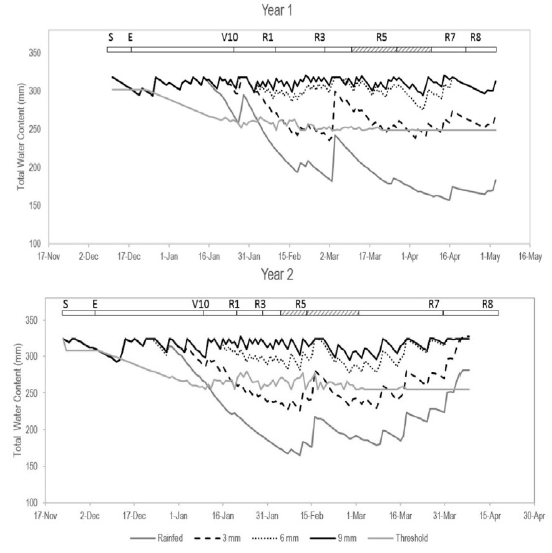
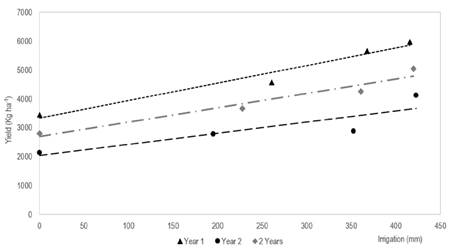
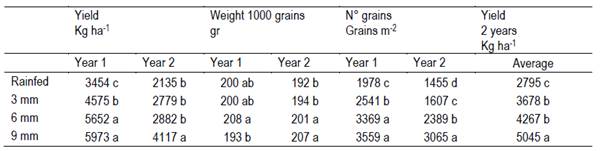
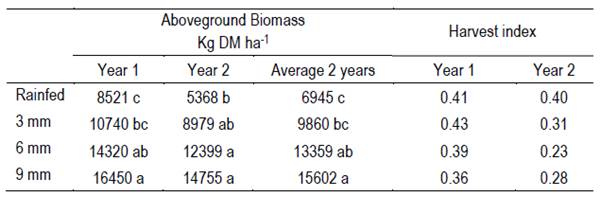
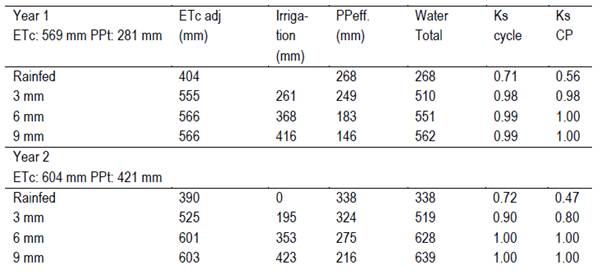
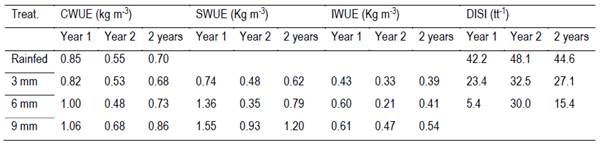
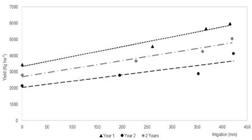
In regions with a temperate and humid climate, deficit irrigation improves the profitability and sustainability of production systems, when properly implemented. It is necessary to generate knowledge on the response of crops to deficit irrigation. Aiming to improve the design and management of irrigation equipment used in soybean cultivation in Uruguay, an experiment was proposed where three maximum depths of irrigation replacement (3 mm, 6 mm and 9 mm day-1) and non-irrigated control were evaluated. A randomized complete block design was used, with four treatments and four replications. Drip irrigation was applied, which allowed a good adjustment of the different irrigation depths used and reduced the experimental area. Non-irrigated and 3 mm suffered water stress from V10 to grain filling, producing lower yields. The 6 mm treatment yielded the same as the 9 mm in Year 1, but lower in Year 2. This study indicates that irrigation is necessary when rainfall is less than the average for the region or its distribution is inadequate. The 9 mm treatment showed the highest water productivity (WUE: 0.86 Kg m-3) and irrigation (IWUE: 0.54 Kg m-3), with less use of rainfall, compared to 6mm.
Keywords:
glycine max (L.) Merr; temperate environment; water use efficiency
 Thumbnail
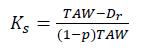 Thumbnail
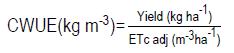 Thumbnail
 Thumbnail
 Thumbnail
 Thumbnail
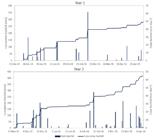 Thumbnail
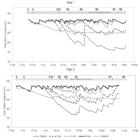 Thumbnail
 Thumbnail