Resistance to leaf rust in cultivars and wheat lines from Paraguay
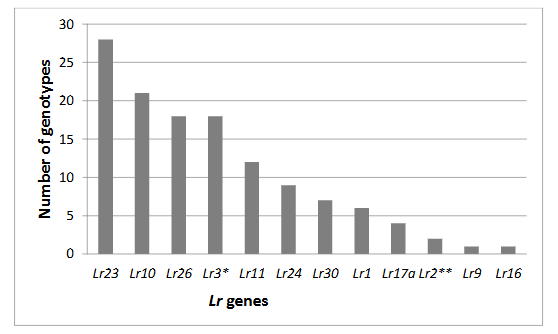
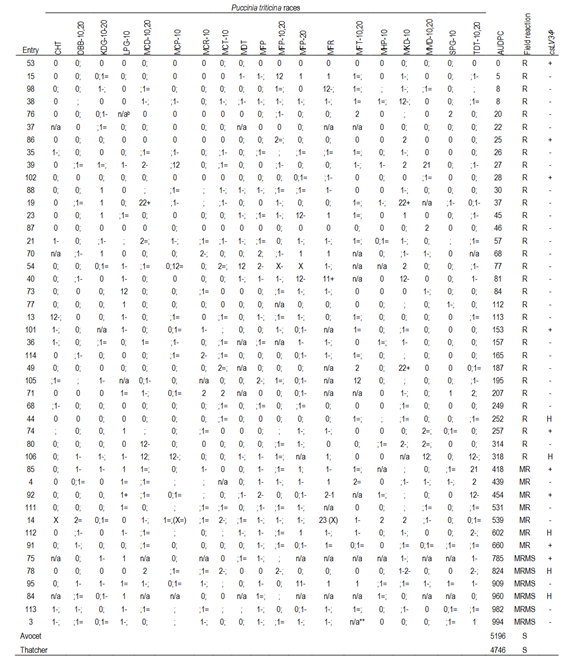
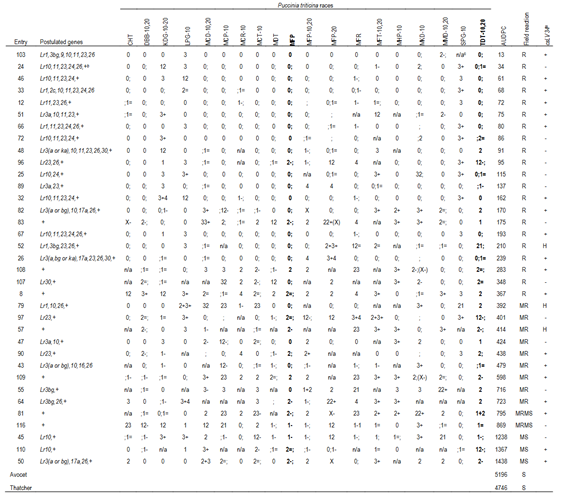
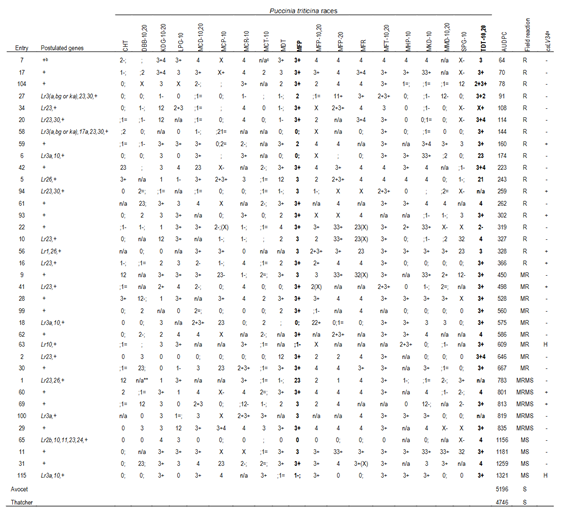
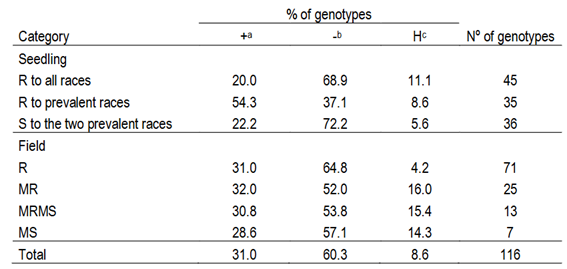
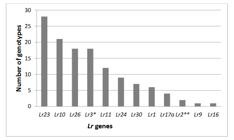
Leaf rust (LR) of bread wheat (Triticum aestivum L.), caused by the fungus Puccinia triticina Eriks, is one of the most important diseases in Paraguay, the Southern Cone of America and worldwide. The economic importance of the disease is clear considering that two or more fungicide applications are necessary to control the disease in susceptible cultivars. The best strategy for the management of this disease is through genetic resistance. This research was conducted in Uruguay aiming to postulate the LR resistance genes present in 116 wheat cultivars and lines from Paraguay, and to characterize their field resistance. The presence of 12 all-stage resistance genes: Lr1, Lr2(b, c), Lr3(a, bg, ka), Lr9, Lr10, Lr11, Lr16, Lr17a, Lr23, Lr24, Lr26, Lr30 was postulated based on the reaction of the genotypes to different races of the pathogen. The adult plant resistance gene Lr34 was postulated in 31% of the genotypes, based on the molecular marker csLV34. This study also allowed differentiating genotypes with field resistance conferred by all-stage resistance genes from those with resistance expressed at the adult plant stage. Knowledge of the resistance genes present in the germplasm of breeding programs is of paramount importance to establish strategies to achieve effective and long-lasting resistance.
Keywords:
leaf rust; resistance genes; adult plant resistance
 Thumbnail