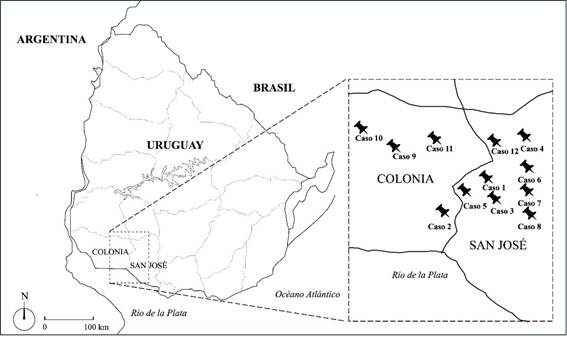
The process of generational transfer: Case study of the western basin of San José, Uruguay
The generational transfer has a direct impact on the economic and social reproduction of family farming; it involves the transfer of economic assets, as well as the social, cultural, and symbolic capital of families. The permanence of young people depends on both internal and external factors within the family-farm system. The most frequently cited factors include the more demanding lifestyle in rural areas, gender inequality, conflictive relationships between youth and adults within families, and children’s questioning of the economic viability of the productive system. A qualitative study was conducted using the case study methodology to understand the generational transfer strategies developed by artisanal cheesemaking families. The main technique used was the semi-structured interview, which was applied with a gender and generational perspective to a sample of twelve families. The study highlights the role of women produc-ers in passing on knowledge and skills related to artisanal cheesemaking to the next generation, and the lack of open and clear dialogue between adults and youth within families during the transfer process. This hinders the handover of responsibilities and the promotion of a smooth transition, both in families with male and female successors, as well as the incorporation of innovations in products or new forms of production. The importance of public policies and technical assistance emerges as key to promoting intrafamily dialogue in identifying successors and creating action plans that support generational transfers.
Keywords:
family production; generational change; gender; generations; artisanal cheese factory
 Thumbnail