Sustainable food production: Recovering plant waste and incorporating it into food products
Abstract:
Agroindustrial and domestic waste obtained from fruit and vegetable processing represents a nutritious, economical, and environmentally friendly raw material. These wastes have attracted attention because they are considered a good source of bioactive compounds such as polyphenols, carotenoids, and dietary fiber. Therefore, the combination of vegetable waste, legumes, and/or cereals could provide an alternative for both health and the environment. The objective of this research was to develop various products from the combination of vegetable waste, legumes, and/or cereals, verifying their acceptance and nutritional contribution. The work was carried out with pineapple shells, as well as lettuce waste from municipal markets and local juice and salad stores. These wastes were disinfected, dried, and ground to form homogeneous flours. The raw materials were selected and evaluated for their sensory acceptance and physicochemical composition. Chorizo-type sausage formulations were obtained with lettuce flour or pineapple shell/soy flour, and biscuits and pasta with lettuce flour or pineapple shell/wheat flour. Most products presented good sensory acceptance on a 9-point hedonic scale and showed an improvement in nutritional value compared to products without substitutions. Hence, plant waste could be transformed into valuable raw materials for nutrient recovery, becoming usable by-products. According to our results, the addition of these flours at concentrations of 10 to 20% could provide additional nutritional value, but further research is needed to improve their acceptability.
Keywords:
sustainability; legumes; food waste; novel foods
Resumen:
Los residuos agroindustriales y domésticos provenientes del procesamiento de frutas y hortalizas representan una materia prima nutritiva, económica y respetuosa con el medio ambiente. Estos residuos han despertado interés por considerarse una buena fuente de compuestos bioactivos como polifenoles, carotenoides y fibra dietética. Por lo tanto, la combinación de residuos vegetales, legumbres y/o cereales podría ofrecer una alternativa tanto para la salud como para el medio ambiente. El objetivo de esta investigación fue desarrollar diversos productos a partir de la combinación de residuos vegetales, legumbres y/o cereales, verificando su aceptación y aporte nutricional. El trabajo se realizó con cáscaras de piña y residuos de lechuga provenientes de mercados municipales y tiendas locales de jugos y ensaladas. Estos residuos se desinfectaron, secaron y molieron para formar harinas homogéneas. Las materias primas se seleccionaron y evaluaron en cuanto a su aceptación sensorial y composición fisicoquímica. Se obtuvieron formulaciones de chorizo con harina de lechuga o de cáscara de piña/harina de soya, y galletas y pastas con harina de lechuga o de cáscara de piña/harina de trigo. La mayoría de los productos presentaron una buena aceptación sensorial en una escala hedónica de 9 puntos y mostraron una mejora en el valor nutricional en comparación con productos sin sustituciones. Por lo tanto, los residuos vegetales podrían transformarse en valiosas materias primas para la recuperación de nutrientes, convirtiéndose en subproductos aprovechables. Según nuestros resultados, la adición de estas harinas en concentraciones del 10 al 20 % podría aportar un valor nutricional adicional, pero se requiere más investigación para mejorar su aceptabilidad.
Palabras clave:
sostenibilidad; legumbres; desperdicio alimentario; nuevos alimentos
Resumo:
Resíduos agroindustriais e domésticos do processamento de frutas e hortaliças representam uma matéria prima nutritiva, econômica e ecologicamente correta. Esses resíduos têm despertado interesse por ser considerados uma boa fonte de compostos bioativos, como polifenóis, carotenoides e fibras alimentares. Portanto, a combinação de resíduos vegetais, leguminosas e/ou cereais pode oferecer uma alternativa tanto para a saúde quanto para o meio ambiente. O objetivo desta pesquisa foi desenvolver diversos produtos a partir da combinação de resíduos vegetais, leguminosas e/ou cereais, verificando sua aceitação e valor nutricional. O trabalho foi realizado com cascas de abacaxi e resíduos de alface de mercados municipais e lojas locais de sucos e saladas. Esses resíduos foram desinfetados, secos e moídos para formar farinhas homogêneas. As matérias-primas foram selecionadas e avaliadas quanto à aceitação sensorial e composição físico-química. Formulações de chouriço foram obtidas com farinha de alface ou casca de abacaxi/farinha de soja, e biscoitos e massas com farinha de alface ou casca de abacaxi/farinha de trigo. A maioria dos produtos apresentou boa aceitação sensorial em uma escala hedônica de 9 pontos e demonstrou melhora no valor nutricional em comparação aos produtos sem substituições. Portanto, resíduos vegetais podem ser transformados em matérias-primas valiosas para a recuperação de nutrientes, tornando-se subprodutos utilizáveis. De acordo com nossos resultados, a adição dessas farinhas em concentrações de 10 a 20% pode fornecer valor nutricional adicional, mas mais pesquisas são necessárias para melhorar sua aceitabilidade.
Palavras-chave:
sustentabilidade; leguminosas; desperdício alimentar; novos alimentos
1. Introduction
Food consumption satisfies biological needs, but the ways in which people eat vary significantly1. Alongside this complexity, food waste has become a pressing issue, with global waste levels increasing annually. Countries such as China and India are responsible for more than 150 million tons of food waste2. Worldwide, it is estimated that around 17% of total food production is thrown away, likewise resources such as water, land, energy and labor are lost3. According to Food and Agriculture Organization (FAO) data, approximately one billion tons of food was thrown away worldwide, of which Latin America is responsible for about 13%4. In Mexico, over 20 million tons of food are wasted annually, often unrelated to the shelf life of products. Reducing this waste by more than 50% is a critical goal5)(6) .
Reducing food loss and waste in a circular economy strategy has important environmental (pollution reduction) and economic (economic valorization of by-products) implications and supports the United Nations Sustainable Development Goals. It is important to recognize that waste is when something no longer has a use, and residue is when it can be given a new use. To address rising global food waste, this study explores the development of innovative food products utilizing composite flours derived from fruit and vegetable by-products. Flour made from fruit and vegetable by-products presents a viable, low-cost solution for revaluing food waste. Studies have demonstrated that these flours can be successfully integrated into various products, including bakery items, dairy, meat, and extruded products7. Many bakery products, however, contain drawbacks such as high levels of fast-absorbing sugars, fats, and limited dietary fiber, making them highly caloric8. For this reason, studies have been carried out on the effects of different vegetable flours such as broccoli, cauliflower, artichoke, fennel, zucchini and mushroom added to gluten-free breads on sensory quality, antioxidant properties and glycemic response9.
The term composite flours was created in 1964 by the FAO, when the need to find a solution for countries that do not produce wheat was recognized. The different types of flour (composite and/or alternative) aim to innovate in their raw materials, to be an option to formulate foods that have specific regimes for the consumer and that each of them has an added nutritional value10. The technology behind composite flours has proven valuable in demonstrating that blending wheat flour with various types of cereal flours, legumes, tubers, roots, and vegetables is highly effective in baking and biscuit production. Additionally, it is beneficial for combining corn and sorghum flours to produce tortillas11.
An important function of composite flours is that they can be used to reduce the use of wheat totally or partially, and their use is a complete innovation for the baking industry, pasta production, food supplements, cookies, tortillas, among others, resulting in a great alternative to increase the nutritional value and quality of each food12, since the search for functional foods has grown steadily especially due to their potential to provide a better state of health13. Therefore the need to research and develop foods from the combination of plant waste, legumes and/or cereals, verifying their acceptance and nutritional contribution.
2. Materials and Methods
2.1 Materials and Equipment Used for Product Development
Standard equipment for all three products was used to prepare the different foods, including an industrial kitchen (Corial®), an oven (Digitop Turb Brasmig®), and a refrigerator (TorRey®). A stainless-steel biscuit press (Marcato®) was used to shape the biscuits. An Atlas® machine (Marcato 150) was used to make the pasta, with a thickness of 7 mm. A Rhino® laminator was used for the chorizos, and they were stuffed into a 33 mm collagen artificial sausage casing.
2.2 Lettuce Waste and Pineapple Shells
The shells and lettuce were sourced from local food establishments, including a municipal market, a juice shop and street vendors selling juice and fruit in the city of Puebla, México (small-scale food processors). The waste was collected at room temperature (as it is disposed of on-site) and placed in plastic bags. They were transported to the laboratory and disinfection was performed after removing items that showed visible signs of microbiological or fungal deterioration. Once disinfected, it was kept refrigerated at 4 °C until it was processed to convert it into flour.
2.3 Disinfection, Drying, and Grinding of Raw Materials
The raw materials were washed with soap and running water to remove contaminating residues and excess dirt. A 200 ppm sodium hypochlorite solution was used as a disinfectant for 30 minutes at room temperature, as it has the lowest microbial count in raw materials. The material was then rinsed with potable water and drained for 15 minutes at room temperature on the dehydrator screens. The material was spread in even, flat layers. The screens were placed in the 5-screed Excalibur® dehydrator at 60 °C for 18 hours, reducing the humidity to 6-7%. Finally, the dried material was ground into flour using a Willey® mill (20 mesh). The resulting flours were vacuum-packed in a Migsa® vacuum sealer.
2.4 Microbiological Analysis
Since the raw materials used in this research were waste products, ensuring their microbiological safety was of utmost importance, so microbiological analyses were performed on the flours and formulated foods, including tests for aerobic mesophilic bacteria, total coliforms, fungi, yeasts, Salmonella sp. and Escherichia coli, using the pour plate method in accordance with the Mexican Official Standards14)(15)16)(17)18.
2.5 Product Formulation
The different products (cookies, pasta, and chorizo) were prepared using standard techniques. For example, for the cookies, a simple base formulation with minimal ingredients was selected. Once the dough was made, it was left to rest for 15 minutes, and then the cookies were shaped and baked at 180 °C for 20 minutes. For the pasta, the most well-known formulation of one egg per 100 g of flour was used. The pasta was dehydrated for 4 hours at 60 °C in a 5-tray Excalibur dehydrator and stored in airtight bags until prepared. For the chorizo, the standard ingredients were mixed and manually stuffed into carefully washed natural pork casings. The base formulations are shown in Table 1. The addition levels of the different flours were selected based on previous work19, so that for each food product added with waste flour, additions of 5-20% were evaluated.
2.6 Proximate Analysis of Flour and Formulated Feeds
Flour and formulated products were characterized for moisture, ash, fat, protein, and crude fiber content following AOAC methods20. Carbohydrates were determined by the difference of the sum of concentrations of protein, fat, moisture, ash, and crude fiber.
2.7 Sensory Evaluation
A nine-point hedonic scale was used to determine product acceptance21. Evaluations were conducted in a food laboratory with 30 untrained panelists aged 20-35 years, under conditions of adequate ventilation, room temperature (23-25 °C) and natural lighting. To participate, information about the products to be tasted was provided and signed informed consent was requested. The scale used was: 9= I like it very much, 8= I like it a lot, 7= I like it, 6= I like it a little, 5= I neither like it nor dislike it, 4= I dislike it a little, 3= I dislike it, 2= I dislike it a lot, 1= I dislike it very much. Panelists were provided with drinking water to rinse between each tasting. The parameters evaluated were taste, smell, texture, color, and overall appearance.
2.8 Statistical Analysis
Data obtained from sensory evaluations and bromatological analyses were analyzed using descriptive and inferential statistics. The mean and standard deviation (SD) were calculated for each quantitative variable. Comparisons between the three treatment groups (pineapple, lettuce, and control) were performed using one-way analysis of variance (ANOVA). When significant differences were identified, post hoc comparisons were used to determine which groups exhibited such differences, using superscript letters to indicate statistical differences. The significance level was set at p < 0.05. All statistical analyses were performed using Stata software, version 15 (StataCorp, College Station, TX, USA).
3. Results
3.1 Flour and Developed Foods
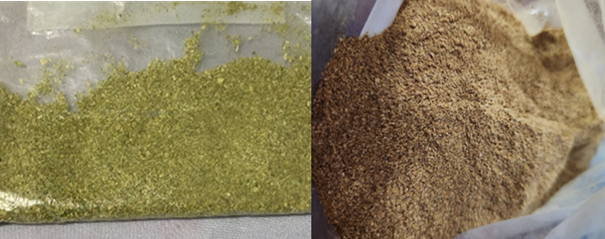
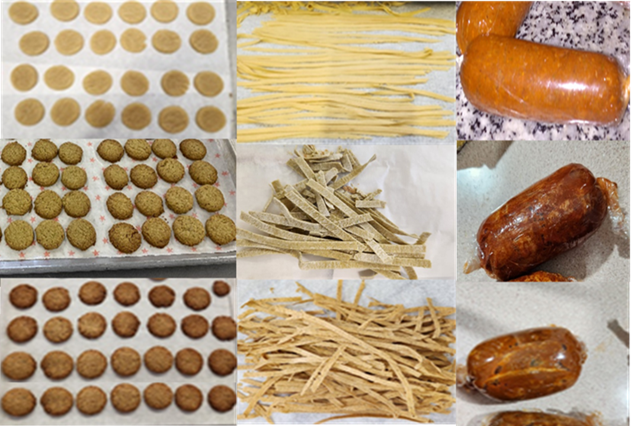
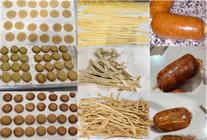
Figure 1 shows the flour obtained from lettuce and pineapple shells waste and Figure 2 shows the six products that had the best sensory acceptance.
According to the literature, vegetal food waste has been mainly incorporated into bakery products (cookies, bread and pancakes), cereals, pasta, cheeses and fermented beverages for human consumption22, showing significant contributions in nutritional value and energy intake23. With this information, pasta, cookies and chorizo-type sausages were selected, replacing the meat in the latter with textured soy.
3.2 Proximal Composition of Flour Obtained from Waste
Table 2 shows the results of the proximal composition of the flours obtained. As can be seen, the waste flours obtained are a good source of fiber, presenting contents between 11 and 15%, since it is considered a high fiber food (rich in fiber) if it contains at least 6 g fiber/100 g or 3 g fiber/100 kcal24.
3.3 Sensory Evaluation of the Different Food Products Made from Waste Flour
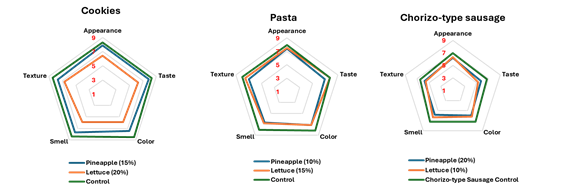
Figure 3 shows the sensory scores obtained for the evaluated characteristics; only formulations that presented scores equal to or greater than 4 in each sensory parameter are shown.
The addition levels studied in each product were 0, 5, 10, 15 and up to 20% for each of the different flours in the various selected foods. A total of 5 formulations were available for each product and the formulations which sensory evaluation on a 9-point hedonic scale was equal to or greater than 6 were selected.
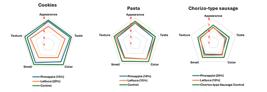
Sensory evaluation of the products developed (only that with a rating ≥ 6 is presented) and control product
Once the formulations with the highest sensory acceptance were selected, the products made with waste lettuce flour and those made with pineapple shell were compared with the control product without the addition of either flour. The results can be seen in Table 3.
3.4 Proximal Composition of Different Food Products Made from Waste Flour
Table 4 shows the chemical composition of the three selected products with the highest sensory ratings.
4. Discussion
Fruits and vegetables are processed industrially and at home to extend their shelf life or to offer different forms of consumption, generating a large amount of waste that is often discarded, causing contamination problems25)(26) . For several years now, it has been reported that plant residues or waste can still provide various phytochemicals and nutrients27. For example, pomegranate peels, lemon peels, and green walnut shells can be used as natural antimicrobials28)(29) , while pineapple peels provide large amounts of fiber and antioxidant compounds7.
The chemical composition of flours from different plant wastes has been extensively investigated, finding different values that depend mainly on the variety, temperature, and exposure time of the waste during drying30. However, Table 2 indicates that these flours, despite being practically waste, are still a source of minerals, proteins and fiber, and the bibliography indicates that it is possible to additionally find numerous bioactive compounds31.
Recycling vegetal wastes for human consumption involves transforming discarded materials into valuable food ingredients or products, which reduces the environmental impact and offers alternative food sources. However, although agricultural waste can be a good source of bioactive compounds suitable for human consumption, most research describes techniques that, although novel, require time-consuming separation and purification processes and chemical reagents32)(33)34)(35) . Therefore, the alternative presented here is simply disinfecting, drying, and pulverizing the waste so that any food handler could revalue their plant waste.
Clearly, most food waste may not be of sufficient sanitary quality to be reused as food36. Therefore, the first step was to evaluate the ability to disinfect these wastes to levels within official microbiological standards. The use of 200 ppm hypochlorite was very effective and, unlike other decontamination technologies, is reported to also provide residual disinfection37. After treatment, both the waste flours and the formulated food products complied with the Mexican Official Microbiological Standards for each category and tested negative for Salmonella sp., coliforms, and Escherichia coli, indicating that they were microbiologically safe for use.
Chemical composition of flours from different plant wastes has been extensively investigated, with varying values found, primarily depending on the variety, temperature, and drying time of the residue38)(39)40. Table 2 shows that the flours studied can be source of nutrients such as minerals, protein, and fiber.
When incorporated into the different foods (Table 4), it can be observed that the ash content in the cookies with lettuce flour (20%) and the cookies with pineapple shell (15%) is significantly higher than in the control sample, like that observed with the use of mango pit, pineapple shell, or banana peel flours41)(42)43)(44) . Regarding protein, the cookies with pineapple shell flour had the lowest percentage, which is not surprising, since it is the flour with the lowest percentage of protein and, in the case of the cookies, it was also added in a smaller amount than the lettuce flour, although it should be noted that these values can vary significantly depending on the variety used45.
The fat content is significantly higher in cookies with waste flour, which is consistent with the report that the lipid content in food waste is an important component of agricultural waste, that can vary between 5% and 30%, and can be effectively extracted and utilized46.
The addition of these flours to foods is expected to contribute to increased fiber consumption, as the contribution of this component ranged from 11% for lettuce flour to 15% for pineapple peel flour, like that reported by Larruri and others27, which allows them to be considered high in fiber24)(27)47. Therefore, it is not surprising that the largest contribution of flours from these residues was their fiber content, which should not be ignored, since daily fiber consumption in Mexico is below the recommended amount for optimal health48.
For pasta, the selected additions were 15% for lettuce flour and 10% for pineapple peel. The results were like those found with the crackers; all foods added with waste flour provided a significantly higher concentration of nutrients, except for fat, where the contribution is significantly lower in contrast to the crackers. However, Tetercycz and others49, despite reporting high fat contents in tomato waste and pepper seeds, reported similar results to ours for pastas added with similar percentages. The main contribution of the addition of waste flour was fiber; as reported in other studies, the nutritional composition of wheat flour is characterized by relatively low levels of fiber and minerals, suggesting the importance of supplementing it with other ingredients to improve the nutritional qualities of the final products32)(49) .
Since most research incorporating plant-based waste into food focuses on pasta and bakery products49)(50) , a natural meat product was selected for the incorporation of waste flour. Sausages could be an option for incorporating plant-based waste; some companies use recycled juice pulp to make vegan sausages. Other options include using recycled fruit pits and rosehip waste to create plant-based cheese sausages or to enhance the nutritional value and color of pork sausages51)(52) .
It was decided to make the sausage completely vegan because consumer preference for vegan sausages is increasing, driven by factors such as health, animal welfare and environmental sustainability53. In the case of chorizo-type sausages, the addition of waste flour did not seem to significantly affect the composition, except in the case of the use of pineapple peel flour, where a significantly lower protein but higher fiber content was observed, perhaps because the addition of up to 20% of pineapple peel flour displaces the protein content provided by the soy that is added in smaller quantities, and despite everything improving sensory characteristics54.
The sensory evaluation of any food is crucial, as consumer acceptability is determined by characteristics such as color, appearance, structure, and flavor55. Table 3 shows the results of the evaluation of different products with added waste flours compared to formulations without the addition.
Only those products whose overall sensory evaluation was greater than or equal to 6 were selected, that is, a “like” rating on the scale used, because the control without the addition of waste flour yielded overall ratings of 8.0 for pasta, 8.4 for cookies and 6.9 for chorizo-type sausage. Although all products showed significant differences from the control product, the overall evaluation was acceptable; however, adjustments to the manufacturing processes are necessary to refine the formulations or adjustments to the labeling that refer to the nutritional and health benefits of the product56.
In the case of cookies, the texture of the cookies with lettuce flour was the one that obtained the lowest rating, even by far compared to cookies with pineapple peel flour, which had significantly better acceptance in color, aroma, and texture. This could be due to the use of a 20% substitution with lettuce flour. However, for pasta, the acceptance of the formulation with lettuce flour in general was significantly higher than for pasta with pineapple peel flour, where texture was the least accepted parameter. Sensory rejection of formulations with vegetable waste flours may be mainly due to changes in color, texture, aroma, or flavor. Although some authors report their incorporation into pasta and bread with minimal sensory problems, others indicate that overall acceptability is negatively affected, especially as higher concentrations are added57)(58) .
Despite these results, these differences do not substantially affect overall consumer acceptance, as all samples received positive ratings across all sensory characteristics for both cookies and pasta. This suggests that although ingredient substitution affects the acceptance of some sensory attributes, the products remain well accepted by consumers44.
In the case of chorizo, both formulations with added flours obtained significantly lower scores in all parameters evaluated compared to the control, and very similar scores were obtained between the two products added with waste flours, except for the aroma, where the formulation with lettuce was better received. Even so, the overall evaluation reflects an acceptance of the added products. These results seem to confirm the limitations of sensory acceptance that occur with products added with waste flours in the development of meat products59)(60)61)(62) .
5. Conclusions
Reusing agricultural waste for human consumption involves transforming discarded agricultural materials into valuable food ingredients or products, which would reduce environmental impact by offering alternative food sources. In conclusion, it is possible to consider that plant waste, both in food stores and at home, can be easily transformed into flours that, when added to commonly consumed foods at levels of 10 to 20%, could modestly contribute to reducing the generation of polluting waste and, at the same time, could potentially increase nutrient content. Although sensory acceptance is not equal to controls without the addition of vegetable flours, further research is required on the impact of these flours on the sensory acceptability of various foods.
References:
-
1. Mingay E, Hart M, Yoong S, Hure A. Why we eat the way we do: a call to consider food culture in public health Initiatives. Int J Environ Res Public Health. 2021;18(22):11967. Doi: 10.3390/ijerph182211967.
» https://doi.org/10.3390/ijerph182211967 -
2. Jeno JGA, Viveka R, Varjani S, Nagappan S, Nakkeeran E. Current trends and prospects of transforming food waste to biofuels in India. In: Bhaskar T, Varjani S, Pandey A, Rene ER, editors. Waste biorefinery: value addition through resource utilization. Amsterdam: Elsevier; 2021. p. 391-419. Doi: 10.1016/B978-0-12-821879-2.00014-4.
» https://doi.org/10.1016/B978-0-12-821879-2.00014-4 -
3. Kummu M, de Moel H, Porkka M, Siebert S, Varis O, Ward PJ. Lost food, wasted resources: global food supply chain losses and their impacts on freshwater, cropland, and fertiliser use. Sci Total Environ. 2012;438:477-89. Doi: 10.1016/j.scitotenv.2012.08.092.
» https://doi.org/10.1016/j.scitotenv.2012.08.092 - 4. Food wastage footprint: impacts on natural resources: summary report. Rome: FAO; 2013. 61p.
-
5. Cena H, Calder PC. Defining a healthy diet: evidence for the role of contemporary dietary patterns in health and disease. Nutrients. 2020;12(2):334. Doi: 10.3390/nu12020334.
» https://doi.org/10.3390/nu12020334 - 6. Reyes-Medina AJ. Evaluación de tres técnicas de conservación sobre la calidad poscosecha de frutos de Lulo (Solanum quitoense Lam) (master's thesis). Bogotá (CO): Universidad Nacional de Colombia, Facultad de Ciencias Agrarias; 2023. 146p.
-
7. Santos D, Lopes da Silva JA, Pintado M. Fruit and vegetable by-products’ flours as ingredients: a review on production process, health benefits and technological functionalities. LWT. 2022;154:112707. Doi: 10.1016/j.lwt.2021.112707.
» https://doi.org/10.1016/j.lwt.2021.112707 -
8. Peris M, Rubio-Arraez S, Castelló ML, Ortolá MD. From the laboratory to the kitchen: new alternatives to healthier bakery products. Foods. 2019;8(12):660. Doi: 10.3390/foods8120660.
» https://doi.org/10.3390/foods8120660 -
9. Saccotelli MA, Spinelli S, Conte A, Del Nobile MA. Gluten-free bread enriched with vegetable flours. Food Nutr Sci. 2018;9:356-68. Doi: 10.4236/fns.2018.94028.
» https://doi.org/10.4236/fns.2018.94028 -
10. Zanuttini R, Negro F. Wood-based composites: innovation towards a sustainable future. Forests. 2021;12(12):1717. Doi: 10.3390/f12121717.
» https://doi.org/10.3390/f12121717 - 11. Noorfarahzilah M, Lee JS, Sharifudin MS, Mohd Fadzelly AB, Hasmadi M. Applications of composite flour in development of food products. Int Food Res J. 2014;21(6):2061-74.
-
12. Chandra S, Singh S, Kumari D. Evaluation of functional properties of composite flours and sensorial attributes of composite flour biscuits. J Food Sci Technol. 2015;52(6):3681-8. Doi: 10.1007/s13197-014-1427-2.
» https://doi.org/10.1007/s13197-014-1427-2 -
13. Shahnaz T, Fawole AO, Adeyanju AA, Onuh JO. Food proteins as functional ingredients in the management of chronic diseases: a concise review. Nutrients. 2024;16(14):2323. Doi: 10.3390/nu16142323.
» https://doi.org/10.3390/nu16142323 -
14. Secretaría de Salud (MX). Bienes y servicios: método para la cuenta de bacterias aerobias en placa (Internet). NOM-092-SSA1-1994. In: Diario Oficial de la Federación. Ciudad de México: Secretaría de Gobernación; 1995 (cited 2025 Sep 2). Available from: Available from: https://dof.gob.mx/nota_detalle.php?codigo=4886029&fecha=12/12/1995#gsc.tab=0,
» https://dof.gob.mx/nota_detalle.php?codigo=4886029&fecha=12/12/1995#gsc.tab=0, -
15. Secretaría de Salud (MX). Bienes y servicios: método para la cuenta de microorganismos coliformes totales en placa (Internet). NOM-113-SSA1-1994. In: Diario Oficial de la Federación . Ciudad de México: Secretaría de Gobernación ; 1995 (cited 2025 Sep 2). Available from: Available from: https://dof.gob.mx/nota_detalle.php?codigo=4880115&fecha=25/08/1995#gsc.tab=0
» https://dof.gob.mx/nota_detalle.php?codigo=4880115&fecha=25/08/1995#gsc.tab=0 -
16. Secretaría de Salud (MX). Bienes y servicios: método para la determinación de salmonella en alimentos (Internet). NOM-114-SSA1-1994. In: Diario Oficial de la Federación . Ciudad de México: Secretaría de Gobernación ; 1995 (cited 2025 Sep 2). Available from: Available from: https://www.ordenjuridico.gob.mx/Documentos/Federal/wo69538.pdf
» https://www.ordenjuridico.gob.mx/Documentos/Federal/wo69538.pdf -
17. Secretaría de Salud (MX). Bienes y servicios: método para la cuenta de mohos y levaduras en alimentos (Internet). NOM-111-SSA1-1994. In: Diario Oficial de la Federación . Ciudad de México: Secretaría de Gobernación ; 1995 (cited 2025 Sep 2). Available from: Available from: https://dof.gob.mx/nota_detalle.php?codigo=4881226&fecha=13/09/1995#gsc.tab=0
» https://dof.gob.mx/nota_detalle.php?codigo=4881226&fecha=13/09/1995#gsc.tab=0 -
18. Secretaría de Salud (MX). Métodos de prueba microbiológicos: determinación de microorganismos indicadores: determinación de microorganismos patógenos (Internet). NOM-210-SSA1-2014. In: Diario Oficial de la Federación . Ciudad de México: Secretaría de Gobernación ; 2015 (cited 2025 Sep 2). Available from: Available from: https://dof.gob.mx/nota_detalle_popup.php?codigo=5398468
» https://dof.gob.mx/nota_detalle_popup.php?codigo=5398468 -
19. Estrada-López HH, Restrepo-Flórez CE, Iglesias-Navas MA. Aceptabilidad sensorial de productos de panadería y repostería con incorporación de frutas y hortalizas deshidratadas como ingredientes funcionales. Inform Tecnol. 2018;29(4):13-20. Doi: 10.4067/s0718-07642018000400013.
» https://doi.org/10.4067/s0718-07642018000400013 - 20. Latimer GW. Official Methods of Analysis of AOAC International. 22nd ed. New York: Oxford University Press; 2023. 3v.
- 21. Lawless HT, Heymann H. Sensory evaluation of food: principles and practices. 2nd ed. Nueva York: Springer; 2010. 596p.
-
22. Melini V, Melini F, Luziatelli F, Ruzzi M. Functional ingredients from agri-food waste: effect of inclusion thereof on phenolic compound content and bioaccessibility in bakery products. Antioxidants (Basel). 2020;9(12):1216. Doi: 10.3390/antiox9121216.
» https://doi.org/10.3390/antiox9121216 - 23. Díaz-Montes E. Residuos agroalimentarios: ¿qué son? ¿quién los genera? y ¿por qué son valiosos? Frontera Biotecnológica. 2022;(23):9-16.
-
24. European Parliament and Council. Regulation (EC) No 1924/2006 of the European Parliament and of the Council of 20 December 2006 on nutrition and health claims made on foods. Official Journal of the European Union (Internet). 2006 (cited 2025 Sep 2);L404:9-25. Available from: Available from: https://eur-lex.europa.eu/eli/reg/2006/1924/oj/eng
» https://eur-lex.europa.eu/eli/reg/2006/1924/oj/eng -
25. Ferreira MS, Santos MC, Moro TM, Basto GJ, Andrade RM, Gonçalves ÉC. Formulation and characterization of functional foods based on fruit and vegetable residue flour. J Food Sci Technol . 2015;52(2):822-30. Doi: 10.1007/s13197-013-1061-4.
» https://doi.org/10.1007/s13197-013-1061-4 -
26. Sadh P, Duhan S, Duhan J. Agro-industrial wastes and their utilization using solid state fermen-tation: a review. Bioresour Bioprocess. 2018;5:1. Doi: 10.1186/s40643-017-0187-z.
» https://doi.org/10.1186/s40643-017-0187-z -
27. Larrauri JA, Rupérez P, Calixto FS. Pineapple shell as a source of dietary fiber with associated polyphenols. J Agric Food Chem. 1997;45(10):4028-31. Doi: 10.1021/jf970450j.
» https://doi.org/10.1021/jf970450j -
28. Delgado Adámez J, Gamero Samino E, Valdés Sánchez E, González-Gómez GD. In Vitro estimation of the antibacterial ac-tivity and antioxidant capacity of aqueous extracts from grape-seeds (Vitis vinifera L). Food Control. 2012;24(1-2):136-41. Doi: 10.1016/j.foodcont.2011.09.016.
» https://doi.org/10.1016/j.foodcont.2011.09.016 -
29. Katalinic V, Mozina SS, Skroza D, Generalic I, Abramovic H, Milos M, Ljubenkov I, Piskernik S, Pezo I, Terpinc P, Boban M. Polyphenolic profile, antioxidant properties and antimicrobial activity of grape skin extracts of 14 Vitis vinifera varieties grown in Dalmatia (Croatia). Food Chem. 2010;119:715-23. Doi: 10.1016/j.foodchem.2009.07.019.
» https://doi.org/10.1016/j.foodchem.2009.07.019 -
30. Flórez-Montes C, Rojas-González AF, Rodríguez- Barona S. Bromatological characterization of fruit waste. Biotecnol Sector Agropecuario Agroind. 2022;20(1):84-96. Doi: 10.18684/rbsaa.v20.n1.2022.1759.
» https://doi.org/10.18684/rbsaa.v20.n1.2022.1759 -
31. Li Q, Putra NR, Rizkiyah DN, Abdul Aziz AH, Irianto I, Qomariyah L. Orange pomace and peel extraction processes towards sustainable utilization: a short review. Molecules. 2023;28(8):3550. Doi: 10.3390/molecules28083550.
» https://doi.org/10.3390/molecules28083550 -
32. Iqbal A, Schulz P, Rizvi SSH. Valorization of bioactive compounds in fruit pomace from agro-fruit industries: present Insights and future challenges. Food Biosci. 2021;44:101384. Doi: 10.1016/j.fbio.2021.101384.
» https://doi.org/10.1016/j.fbio.2021.101384 -
33. Sadh PK, Chawla P, Kumar S, Das A, Kumar R, Bains A, Sridhar K, Duhan JS, Sharma M. Recovery of agricultural waste biomass: a path for circular bioeconomy. Sci Total Environ . 2023;870:161904. Doi: 10.1016/j.scitotenv.2023.161904.
» https://doi.org/10.1016/j.scitotenv.2023.161904 -
34. Prado-Acebo I, Cubero-Cardoso J, Lu-Chau TA, Eibes G. Integral multi-valorization of agro-industrial wastes: a review. Waste Manag. 2024;183:42-52. Doi: 10.1016/j.wasman.2024.05.001.
» https://doi.org/10.1016/j.wasman.2024.05.001 -
35. Aguiar S, Uvidia H, Arboleda L. Aprovechamiento de residuos agroindustriales como alternativa en el mejoramiento de la calidad del ambiente. Rev Inv Cs Agro y Vet. 2021;5(15):266-77. Doi: 10.33996/revistaalfa.v5i15.145.
» https://doi.org/10.33996/revistaalfa.v5i15.145 -
36. Pleissner D. Recycling and reuse of food waste. Curr Opin Green Sustain Chem. 2018;13:39-43. Doi: 10.1016/j.cogsc.2018.03.014.
» https://doi.org/10.1016/j.cogsc.2018.03.014 -
37. Gil MI, Selma MV, López-Gálvez F, Allende A. Fresh-cut product sanitation and wash water disinfection: problems and solutions. Int J Food Microbiol. 2009;134(1-2):37-45. Doi: 10.1016/j.ijfoodmicro.2009.05.021.
» https://doi.org/10.1016/j.ijfoodmicro.2009.05.021 -
38. Abdullah AD. Utilization of fruits and vegetable waste in cereal based food (cookies). Int J Eng Res Technol. 2018;7(7):383-90. Doi: 10.17577/IJERTV7IS070132.
» https://doi.org/10.17577/IJERTV7IS070132 -
39. Paz-Arteaga SL, Cadena-Chamorro E, Goméz-García R, Serna-Cock L, Aguilar CN, Torres-León C. Unraveling the valorization potential of pineapple waste to obtain value-added products towards a sustainable circular bioeconomy. Sustainability. 2024;16(16):7236. Doi: 10.3390/su16167236.
» https://doi.org/10.3390/su16167236 -
40. Rebolledo-Hernández MV, Cocotle-Ronzón Y, Hernández-Martínez E, Morales-Zarate E, Acosta-Domínguez L. Physicochemical, functional and flow properties of a coffee husk flour. Ciencia Ergo-Sum. 2023;30(3). Doi: 10.30878/ces.v30n3a7.
» https://doi.org/10.30878/ces.v30n3a7 -
41. Shafi A, Ahmad F, Mohammad Z. Effect of the addition of banana peel flour on the shelf life and antioxidant properties of cookies. ACS Food Sci Technol. 2022;2(8):1355-63. Doi: 10.1021/acsfoodscitech.2c00159.
» https://doi.org/10.1021/acsfoodscitech.2c00159 -
42. Mala T, Piayura S, Itthivadhanapong P. Characterization of dried pineapple (Ananas comosus L.) peel powder and its application as a novel functional food ingredient in cracker product. Future Foods. 2024;9:100322. Doi: 10.1016/j.fufo.2024.100322.
» https://doi.org/10.1016/j.fufo.2024.100322 -
43. Mutua JK, Imathiu S, Owino W. Evaluation of the proximate composition, antioxidant potential, and antimicrobial activity of mango seed kernel extracts. Food Sci Nutr. 2016;5(2):349-57. Doi: 10.1002/fsn3.399.
» https://doi.org/10.1002/fsn3.399 -
44. Gallardo MA, Martínez-Navarro ME, Álvarez-Ortí M, Pardo JE. Utilization of flours derived from the waste from the frozen vegetable industry for bakery product production. Agriculture. 2024;14(10):1747. Doi: 10.3390/agriculture14101747.
» https://doi.org/10.3390/agriculture14101747 -
45. 'Aqilah NMN, Rovina K, Felicia WXL, Vonnie JM. A review on the potential bioactive components in fruits and vegetable wastes as value-added products in the food industry. Molecules. 2023;28(6):2631. Doi: 10.3390/molecules28062631.
» https://doi.org/10.3390/molecules28062631 -
46. Vučurović D, Bajić B, Trivunović Z, Dodić J, Zeljko M, Jevtić-Mučibabić R, Dodić S. Biotechnological utilization of agro-industrial residues and by-products-sustainable production of biosurfactants. Foods. 2024;13(5):711. Doi: 10.3390/foods13050711.
» https://doi.org/10.3390/foods13050711 -
47. Plakantonaki S, Roussis I, Bilalis D, Priniotakis G. Dietary fiber from plant-based food wastes: a comprehensive approach to cereal, fruit, and vegetable waste valorization. Processes. 2023;11(5):1580. Doi: 10.3390/pr11051580.
» https://doi.org/10.3390/pr11051580 -
48. Barquera S, Hernández-Barrera L, Campos-Nonato I, Espinosa J, Flores M, Barriguete A, Rivera JA. Energy and nutrient consumption in adults: analysis of the Mexican National Health and Nutrition Survey 2006. Salud Publica Mex. 2009;51 Suppl 4:S562-73. Doi: 10.1590/s0036-36342009001000011.
» https://doi.org/10.1590/s0036-36342009001000011 -
49. Teterycz D, Sobota A. Use of high-protein and high-dietary-fibre vegetable processing waste from bell pepper and tomato for pasta fortification. Foods. 2023;12(13):2567. Doi: 10.3390/foods12132567.
» https://doi.org/10.3390/foods12132567 -
50. Gómez M, Martinez MM. Fruit and vegetable by-products as novel ingredients to improve the nutritional quality of baked goods. Crit Rev Food Sci Nutr . 2018;58(13):2119-35. Doi: 10.1080/10408398.2017.1305946.
» https://doi.org/10.1080/10408398.2017.1305946 -
51. Mazumder MAR, Sujintonniti N, Chaum P, Ketnawa S, Rawdkuen S. Developments of plant-based emulsion-type sausage by using grey oyster mushrooms and chickpeas. Foods. 2023;12(8):1564. Doi: 10.3390/foods12081564.
» https://doi.org/10.3390/foods12081564 -
52. Borşa Bogdan AR, Fogarasi M, Ranga F, Borșa A, Tanislav AE, Mureșan V, Semeniuc CA. The use of a powder obtained from rosehip waste to reformulate pork sausages: impacts on their quality. Foods. 2025;14(6):1067. Doi: 10.3390/foods14061067.
» https://doi.org/10.3390/foods14061067 -
53. Carhuancho-Colca KP, Silva-Paz RJ, Elías-Peñafiel C, Salvá-Ruiz BK, Encina-Zelada CR. Comparison of vegetarian sausages: proximal composition, instrumental texture, rapid descriptive sensory method and overall consumer liking. Foods. 2024;13(11):1733. Doi: 10.3390/foods13111733.
» https://doi.org/10.3390/foods13111733 -
54. Romero MA, Alvarado AV, Otálvaro AM. Evaluación de la sustitución de grasa animal por harina de pepino (Cyclanthera pedata) en una salchicha tipo FrankfurtInventum. Inventum. 2019;14(26):43-51. Doi: 10.26620/uniminuto.inventum.14.26.2019.43-51.
» https://doi.org/10.26620/uniminuto.inventum.14.26.2019.43-51 -
55. Moshtaghian H, Bolton K, Rousta K. Challenges for upcycled foods: definition, inclusion in the food waste management hierarchy and public acceptability. Foods. 2021;10(11):2874. Doi: 10.3390/foods10112874.
» https://doi.org/10.3390/foods10112874 -
56. Plazzotta S, Sillani S, Manzocco L. Exploitation of lettuce waste flour to increase bread function-ality: effect on physical, nutritional, sensory properties and on consumer response. Int J Food Sci Technol . 2018;53(10):2290-7. Doi: 10.1111/ijfs.13820.
» https://doi.org/10.1111/ijfs.13820 -
57. Monteiro MLG, Mársico ET, Deliza R, Castro VS, Mutz YS, Junior MSS, Soares MS Jr, Caliari M, dos Santos EA, Conte-Junior CA. Physicochemical and sensory characteristics of pasta enriched with fish (Oreochromis niloticus) waste flour. LWT . 2019;111:751-8. Doi: 10.1016/j.lwt.2019.05.075.
» https://doi.org/10.1016/j.lwt.2019.05.075 -
58. Boff JM, Strasburg VJ, Ferrari GT, de Oliveira Schmidt H, Manfroi V, de Oliveira VR. Chemical, technological, and sensory quality of pasta and bakery products made with the addition of grape pomace flour. Foods. 2022;11(23):3812. Doi: 10.3390/foods11233812.
» https://doi.org/10.3390/foods11233812 - 59. Yadav S, Yadava R. Efecto del uso de harina de garbanzo bengalí y harina de maíz como extensores en la calidad fisicoquímica y nutricional de rollos de carne de codorniz. Vet Pract. 2008;9:150-3.
- 60. Nagamallika E, Prabhakara Reddy K, Masthan Reddy P. Development of chicken meat patties with different extenders. J Food Sci Technol . 2005;42:529-31.
-
61. Serdaroğlu M, Yıldız-Turp G, Abrodímov K. Quality of low-fat meatballs containing Legume flours as extenders. Meat Sci. 2005;70(1):99-105. Doi: 10.1016/j.meatsci.2004.12.015.
» https://doi.org/10.1016/j.meatsci.2004.12.015 -
62. Hygreeva D, Pandey MC, Radhakrishna K. Potential applications of plant based derivatives as fat replacers, antioxidants and antimicrobials in fresh and processed meat products. Meat Sci. 2014;98(1):47-57. Doi: 10.1016/j.meatsci.2014.04.006.
» https://doi.org/10.1016/j.meatsci.2014.04.006