Identification and characterization of antimicrobial peptides from Feijoa sellowiana transcriptome
Abstract:
Antimicrobial peptides (AMPs) are small polypeptides present in a wide diversity of phylogenetically distant organisms, including plants. They are part of the innate immune response, allowing rapid action at a lower energetic cost than the adaptive immune system. Various applications of these peptides as anti-infective agents have been demonstrated. Despite their significant potential, the initiatives for bioprospecting of AMPs from the native flora of Uruguay are still incipient. The aim of this study was to identify and characterize genes encoding six antimicrobial peptides families, comprising: defensins, snakins, thionins, hevein-like, lipid transfer proteins (LTPs), and cyclotides in the native fruit species Feijoa sellowiana (Myrtaceae), commonly known as guayabo del país or feijoa. The search was carried out using BLAST, based on a de novo transcriptome of leaf and flower, utilizing reference sequences. The relationships between F. sellowiana and reference protein sequences were characterized through multiple alignments and phylogenetic analysis. The exon-intron structure and isoforms of F. sellowiana AMPs were analyzed by PCR amplification in genomic DNA. This study identified 23 defensins, 49 snakins, 7 thionins, 12 hevein-like and 87 LTPs; no evidence of cyclotide transcripts was found. The expected exon-intron structure was confirmed for five sequences, belonging to defensins, snakins, and hevein-like families.
Keywords:
AMPs; guayabo del país; gene validation; de novo transcriptome; defensins
Resumen:
Los péptidos antimicrobianos (AMPs) son polipéptidos pequeños, presentes en una gran diversidad de organismos alejados filogenéticamente, incluidas las plantas. Forman parte de la respuesta inmune innata, permitiendo una acción rápida a menor costo energético que el sistema inmune adaptativo. Se han demostrado diversas aplicaciones de estos péptidos como agentes antiinfecciosos. A pesar de su importante potencial, la bioprospección de AMPs en la flora nativa de Uruguay es aún incipiente. El objetivo de este estudio fue identificar y caracterizar genes que codifican seis familias de péptidos antimicrobianos que comprenden: defensinas, esnaquinas, tioninas, hevein-like, proteínas de transferencia de lípidos (lipid transfer proteins [LTPs]) y ciclótidos, en la especie frutal nativa Feijoa sellowiana (Myrtaceae), comúnmente llamada guayabo del país. La búsqueda se realizó mediante BLAST, a partir de un transcriptoma de novo de hoja y flor y utilizando secuencias de referencia. Las relaciones entre F. sellowiana y secuencias de proteínas de referencia se caracterizaron mediante alineamientos múltiples y análisis filogenético. La estructura exón-intrón y las isoformas de los AMP de F. sellowiana se analizaron mediante amplificación por PCR en ADN genómico. Este estudio identificó 23 defensinas, 49 esnaquinas, 7 tioninas, 12 hevein-like y 87 LTPs, no encontrándose evidencia de transcriptos de ciclótidos. La estructura exón-intrón esperada se confirmó para cinco secuencias, pertenecientes a familias de defensinas, esnaquinas y hevein-like.
Palabras clave:
AMPs; guayabo del país; validación génica; transcriptoma de novo; defensinas
Resumo:
Os peptídeos antimicrobianos (AMPs) são pequenos polipeptídios presentes em uma grande diversidade de organismos filogeneticamente distantes, incluindo plantas. Eles fazem parte da resposta imunológica inata, permitindo uma ação rápida com um custo energético menor do que o sistema imunológico adaptativo. Diversas aplicações desses peptídeos como agentes anti-infecciosos foram demonstradas. Apesar de seu significativo potencial, a bioprospecção de AMPs na flora nativa do Uruguai ainda é incipiente. O objetivo deste estudo foi identificar e caracterizar genes que codificam seis famílias de peptídeos antimicrobianos compreendendo: defensinas, snakins, tioninas, hevein-like, proteínas de transferência de lipídios (LTPs) e ciclotídeos, na espécie frutífera nativa Feijoa sellowiana (Myrtaceae), comumente conhecida como goiabeira-serrana. A busca foi realizada usando BLAST, baseada em um transcriptoma de novo de folha e flor, utilizando seqüências de referência. As relações entre F. sellowiana e sequências de proteínas de referência foram caracterizadas por meio de alinhamentos múltiplos e análise filogenética. A estrutura exon-íntron e isoformas de AMPs de F. sellowiana foram analisadas por amplificação por PCR em DNA genômico. Este estudo identificou 23 defensinas, 49 snakins, 7 tioninas, 12 hevein-like, 87 LTPs; nenhuma evidência de transcrições de ciclotídeo foi encontrada. A estrutura exon-íntron esperada foi confirmada para cinco seqüências, pertencentes às famílias defensinas, esnaquinas e hevein-like.
Palavras-chave:
AMPs; goiabeira-serrana; validação gênica; transcriptômica de novo; defensinas
1. Introduction
Antimicrobial peptides (AMPs) are ancient defense weapons with a potential role in the evolutionary success of multicellular organisms. As part of the innate immune response, these proteins allow a rapid response at a lower energy cost compared to the adaptive immune system of higher vertebrates1. They are present in both plants and animals, playing an important role in forming defense barriers either before or after infection, against a wide range of target organisms, including bacteria, fungi, viruses, and protozoa1. AMPs consist of polypeptides of less than 200 amino acids (often fewer than 50 amino acids), and unlike secondary metabolites, they are products of unique genes2)(3) .
Despite a great diversity of AMPs has been reported, certain features are typically shared among the AMP families, such as their small size, general positive charge, amphipathic stereogeometry, tolerance to acidic and organic solvents, thermal stability, and broad biological activity4)(5) . In addition, they commonly present an even number of cysteine residues that participate in intramolecular disulfide bridges, conferring structural and thermodynamic stability2.
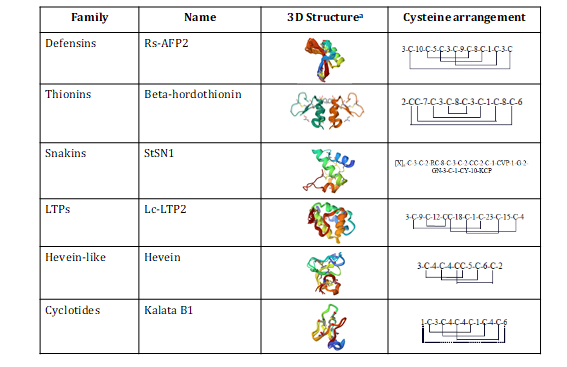
In plants, AMPs are frequently secreted to the extracellular space, and are found constitutively in storage organs (e.g. seeds) and in the outer layers of cells in generative tissues (reproductive organs, fruits, and flowers). In vegetative tissues, they are also produced induced by infections or wounds3)(6) . Several plant-derived AMP families have been identified based on conserved and specific arrangements of cysteine residues, which leads to similar folding patterns and structures, even in the absence of a high degree of sequence similarity or identity. The six major AMP families comprise defensins, thionins, lipid transfer proteins (LTP), cyclotides, hevein-like proteins, and snakins3)(7) (Table 1).
Various applications of AMPs as anti-infectious agents have been demonstrated1. In the agronomy field, AMPs are considered promising compounds for the prevention and treatment of commercially important crop diseases and for post-harvest preservation9)(10) , as well as for enhancing tolerance to abiotic stress11. Additionally, recent interest in developing new AMP-based human therapeutic agents from AMPs is driven by the growing problem of resistance to conventional antibiotics and the need for new antibiotics1.
So far, commercial crops have been the primary target in the search for AMPs. In contrast, the bioprospection of AMPs in wild species is still in its early stages. The greater biodiversity present in wild plants increases the relevance of bioprospecting AMP in this category of species12. Actually, several AMPs with confirmed antimicrobial activity have been recently identified by bioprospecting several wild plant species native to Uruguay, including Peltophorum dubium (Spreng.) Taub. (ibirapitá), Erythrina crista-galli L. (ceibo), and Maytenus ilicifolia Mart. ex Reissek (congorosa)13)(14)15)(16) .
Feijoa sellowiana (O. Berg) O. Berg., commonly known as feijoa or guayabo del país, is a woody, fleshy-fruit species belonging to the Myrteae tribe of Myrtaceae. It is an open-pollinated, diploid (2n=22) species, native to Uruguay and Brazil, which is highly appreciated for its edible fruits and as ornamental17. Currently, there is a growing interest in bioprospecting biologically active compounds in F. sellowiana, as a result of the findings of antioxidant, anti-inflammatory, antimicrobial, anticancer, and antidiabetic activities identified from F. sellowiana leaf, flower, and fruit extracts18. However, until now, AMPs have not yet been studied in this species. Recently, a de novo transcriptome of leaf and floral tissues of F. sellowiana has been reported19, enabling an in-silico search of AMP. The objective of this work was to identify and characterize genes encoding antimicrobial peptides of major AMP families: defensin, snakin, thionin, hevein-like, LTP, and cyclotide in F. sellowiana de novo transcriptome.
2. Materials and Methods
2.1 AMP Prediction in Feijoa sellowiana Transcriptome
The analysis started with the results from the de novo assembly of the transcriptome19, and transcripts were examined for putative sequences encoding AMP-type proteins, specifically from the defensin, snakin, thionin, hevein-like, cyclotide, and LTP families. The BioEdit program20 was used to create a local database with the transcriptome pool. The local BLAST tool (tblastN) within the same program was used, with query sequences reported from AMP proteins in different species. The reference AMP sequences reported in other plant species were obtained from UniProt21, Phytozome22, and NCBI23) (Table S1). Hits with an E-value less than 0.01 were selected, and at least three cysteines matching the typical motifs of each peptide were required. The motifs of the families were based on those described by Slavokhotova and others24.
2.2 Alignments and Neighbor-Joining Trees
Multiple alignments of the predicted primary Feijoa sellowiana proteins and reference sequences used as queries were performed using ClustalW within BioEdit20. To infer phylogenetic relationships, these alignments were then used to construct cladograms using the MEGA program, employing the Neighbor-Joining method25.
2.3 Exon-Intron Structure of AMP Genes
Five defensin, one hevein-like and three snakin/GASA putative genes were PCR amplified from Feijoa sellowiana genomic DNA. Primers were designed from transcript contigs with the aid of Primer3 Plus program to target the region corresponding to the mature peptide and/or in 5’ and 3’ UTRs (Table S2). Genomic DNA extraction from F. sellowiana leaves was performed using the method of Doyle26. PCR amplification was performed in a 20 μl reaction containing: 1X DreamTaq buffer (Thermo) with 2 mM MgCl2, 0.5 mM dNTPs, 0.5 μM of each primer, 50 ng template DNA, 1 ng BSA, and 1 U DreamTaq DNA polymerase (Thermo). The PCR program was as follows: 94 °C for 3 min; followed by 35 cycles of 94 °C for 30 sec, 52-58 °C for 40 sec and 72 °C for 40 sec. The amplified fragments were visualized by agarose gel electrophoresis. The sequencing of genomic amplified AMP genes was performed at Macrogen Inc. (Seoul, Korea). To analyse exon-intron structure and detect possible transcript isoforms, PCR products and their corresponding transcript contigs were aligned using Clustal W and Pairwise Alignment tools in BioEdit.
3. Results
3.1 Sequence Identification
As a result of the BLAST process and manual curation, 177 sequences with similarity to AMPs were identified (Table 2, Table S3 a-e). Most of the sequences had at least two isoforms. The sequences were named using the prefix As (Acca sellowiana, used as a synonym of Feijoa sellowiana), followed by the family name (Df for defensins, Sn for snakins, Tn for thionins, Hv for heveins, and LTP for LTPs), and a consecutive number. These sequences comprise both complete (Signal Peptide presence and cysteine domain complete) and nearly complete AMP coding sequences (CDS) that may lack the Signal peptide and/or showed incomplete cysteine motifs (Table 2, Table S3).
Number of AMP sequences identified in the Feijoa sellowiana transcriptome, classified by family, based on a homology-guided search
3.2 Multiple Alignments and Cladograms
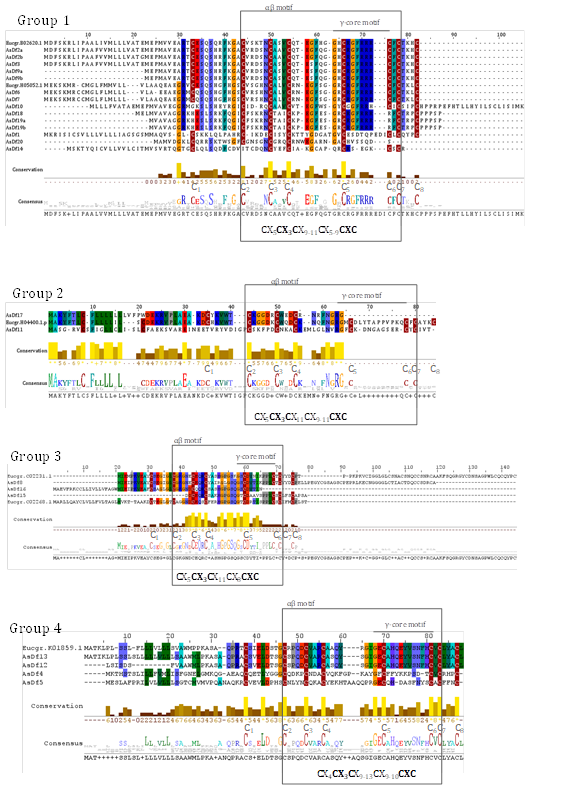
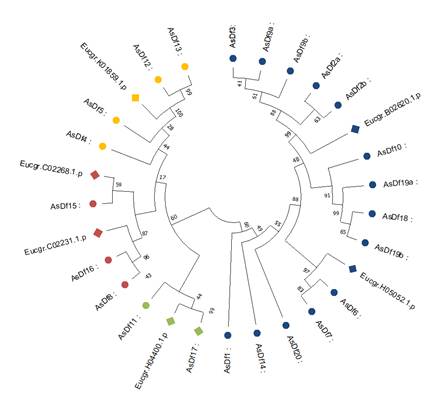
For defensins, a multiple alignment of the of 23 Feijoa sellowiana predicted peptides (AsDf) was performed against six (Table S1) of 15 Eucalyptus grandis defensins, which this study previously annotated on Eucalyptus grandis v2.0 complete genome assembly. Based on the phylogenetic analysis, the 23 AsDf and six E. grandis defensins were clustered in four groups with at least one E. grandis sequence in each one (Figure S1). To further describe these groups, Figure 1 showed the multiple alignment of these sequences. The two typical distinctive defensin motifs: the Csαβ motif (CXnCX3CXnCXnCXC) (where C=Cys, X=any amino acid, and n indicates a non-conserved number of amino acids (aa)), and the γ-core motif (GXCX3-9C) were present in all AsDf. However, in some cases, these motifs were incomplete. Also, 12 of 23 exhibited signal peptide (Table S3 a). A total of 11 AsDf (1, 2a, 2b, 3-7, 10-11, 13) that showed both signal peptide as well as complete cysteine motifs were considered complete. Based on the number of aminoacids placed between cysteine 1 (Cys 1) and 2 (Cys 2), four groups were identified (Figure 1, Figure S1). Accordingly, for Group 1-4, Cys1 and Cys2 were separated by 10, 5, 6 and 8 aa, respectively. In addition, Group 2 showed an additional Cys at the amino terminal end. Furthermore, different patterns of conserved residues were found among the four groups.
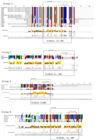
Alignment of Feijoa sellowiana defensin sequences identified with Eucalyptus grandis reference sequences
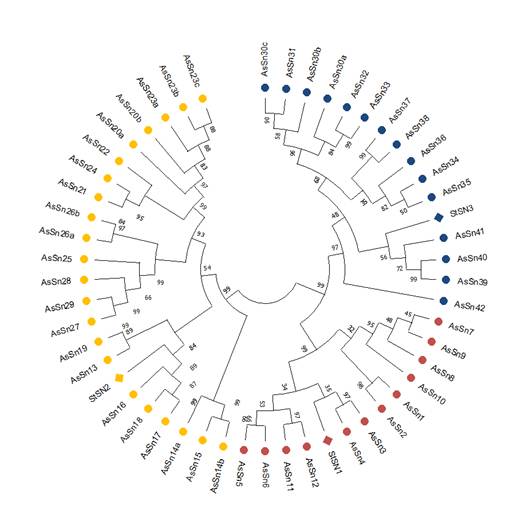
In the case of snakins, the alignment of 49 AsSn sequences was performed against the reference snakin sequences StSN1, StSN2, and StSN3 from potato (Solanum tuberosum), each belonging to a distinct subfamily, namely 1, 2, and 3, respectively27. The phylogenetic analysis revealed a clustering into three main groups that coincided with subfamilies 1, 2, and 3. The smallest group (subfamily 1) comprised 12 Feijoa sellowiana snakins, while the largest group (subfamily 2) comprised 22 (Figure 2, Figure S2).
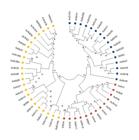
Neighbor Joining tree (cladogram) of 49 putative Snakin/GASA peptides (AsSn) found in the Feijoa sellowiana transcriptome and potato snakins StSn1, StSn2 and StSn3 as references
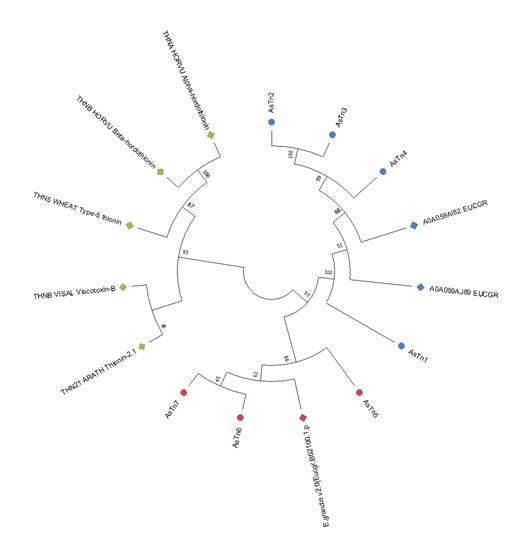
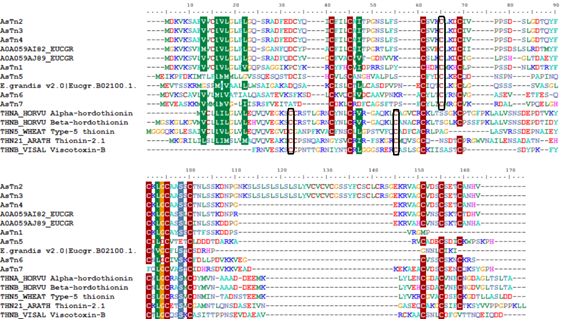
For thionins, the seven candidate sequences were aligned against two reference sequences from Eucalyptus grandis, as well as revised sequences from Triticum aestivum (wheat), Hordeum vulgare (barley), Arabidopsis thaliana, and Viscum album. A pattern of Cys was shared between all Feijoa sellowiana and E. grandis sequences but not with T. aestivum, H. vulgare, A. thaliana, and V. album, as shown in Figure S3. Regarding the NJ tree, three groups were observed, two of which were solely composed of F. sellowiana and E. grandis sequences, while the third one (Group 3) comprised revised sequences from the remaining species (Figure 3, Figure S3).
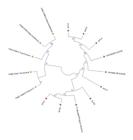
Neighbor Joining tree of genetic distance (cladogram) of seven putative thionin peptides found in the Feijoa sellowiana transcriptome and reference sequences from Eucalyptus grandis, Triticum aestivum (wheat), Hordeum vulgare (barley), Arabidopsis thaliana, and Viscum album
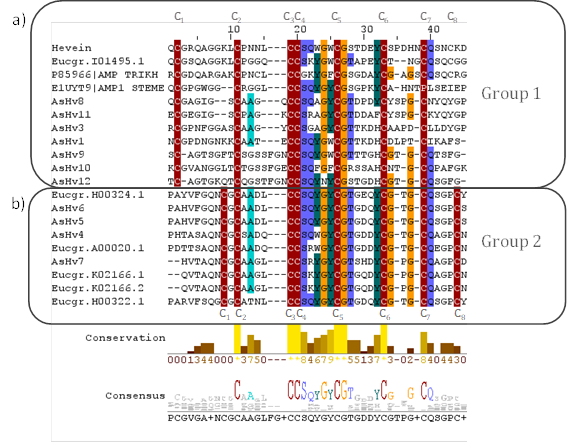
For hevein-like proteins, the hevein motif of 11 Feijoa sellowiana peptides were aligned against reference hevein from Hevea brasiliensis, along with revised sequences from Stellaria media, Triticum kiharae. In addition, six Eucalyptus grandis sequences that showed similarity with putative hevein sequences from F. sellowiana were also included (Figure 4). Two groups were detected with F. sellowiana putative heveins. Group 1 included seven F. sellowiana heveins as well as reference proteins from H. brasiliensis, S. media, T. kiharae, and one protein from E. grandis; while Group 2 exclusively comprised four F. sellowiana and five reference E. grandis heveins.
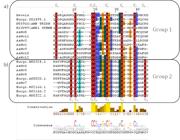
Alignment of the hevein motif from 11 hevein-like sequences of Feijoa sellowiana with reference sequences from Eucalyptus grandis, Stellaria media, Triticum kiharae, and the hevein from Hevea brasiliensis: a) Group 1, b) Group 2
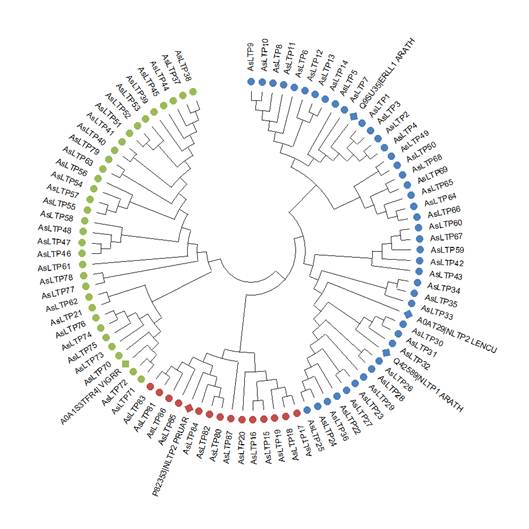
A total of 87 Feijoa sellowiana putative LTPs were found. The multiple alignment (data not shown) and cladogram (Figure 5) using revised reference sequences from Arabidopsis thaliana, Lens culinaris, Vigna radiata and Prunus armeniaca revealed three main groups (Figure 5). Of the four reference sequences belonging to the LTP1 subfamily, three were placed in Group 2 (blue) (A0AT29, Q42589, and Q39176), while one was placed in Group 1 (green) (A0A1S3TFR4). A reference sequence from the LTP2 subfamily (P82353) was placed in Group 3 (red). The AsLTP proteins were distributed in all three groups. Thirty-two and 41 AsLTPs are assigned to Groups 1 and 2, respectively, which may correspond to the LTP1 subfamily, while remaining 14 AsLTPs were found in the LTP2 group (Group 3).
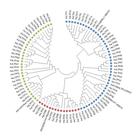
Neighbor Joining tree (cladogram) of 87 putative LTP peptides found in the Feijoa sellowiana transcriptome and reference sequences from Arabidopsis thaliana, Lens culinaris, Vigna radiata, and Prunus armeniaca
3.3 Exon-Intron Structure
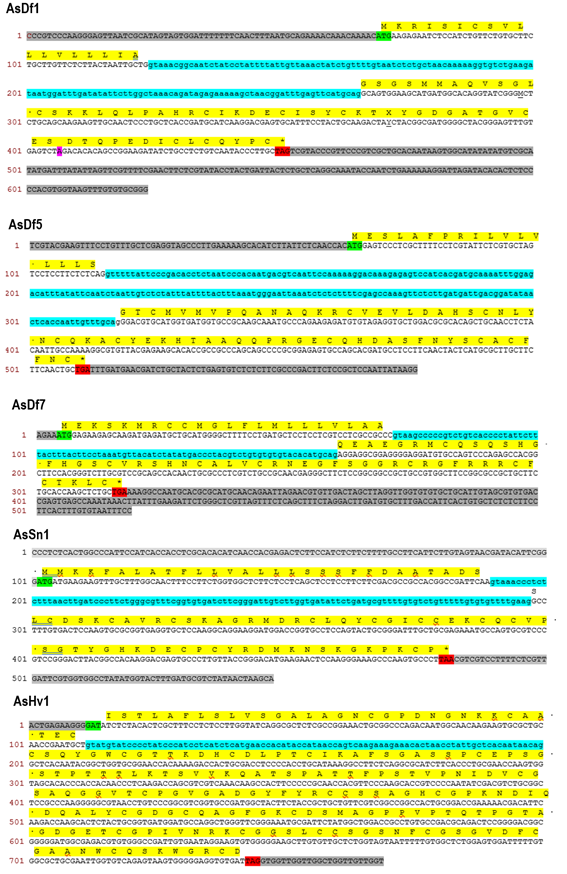
Nine Feijoa sellowiana candidate AMP transcript sequences comprising five complete defensins, one complete hevein-like, and three snakins were selected for characterizing the exon-intron structure. Out of the 9 amplified products from genomic DNA, only five sequences (AsDf1, AsDf5, AsDf7, AsSn1 and AsHv1) showed adequate quality. For AsDf1, the alignment of the transcript and genomic sequences revealed a single gap corresponding to an intron of 143 bp long (Figure 6 a). An additional nucleotide (A) was added at nucleotide 407 due to the poor quality of the sequence, which caused the reading frame to shift from +2 to +3 at this position. Similarly, an exon-intron-exon arrangement was also found for AsDf5 and AsDf7 (Figure 6 b-c) for which intron lengths were 205 and 90 bp, respectively. Interestingly, the alignment of transcript AsDf6 and genomic AsDf7 revealed 100% identity (data not shown). As transcript sequences for AsDf6 and AsDf7 showed 100% identity at both exon regions, AsDf6 may represent an AsDf7 isoform, exhibiting intron retention. For AsSn1 and AsHv1, an exon-intron-exon structure was also observed (Figure 6 d-e) with intron lengths of 108 and 90 bp, respectively.
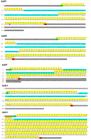
Gene structure and protein sequences of Feijoa sellowiana AsDf1, AsDf5, AsDf7, AsSn1 and AsHv1
4. Discussion
AMPs have proven to be highly promising molecules for anti-infective use in various fields1. While an ample number of plant-derived AMP have been identified from several plant species, very little has been done on the identification of AMP from Myrtaceae. This study identified, for the first time, a large number of five AMP families in a Feijoa sellowiana de novo transcriptome assembly based on homology with reference AMPs, and manual curation. The outcomes of this study expand the repertoire of functional AMPs in leaf and flower tissues as well as the origin of plant-derived AMP.
Plant defensins generally consist of a signal peptide at the amino-terminal end, and a basic, cysteine-rich mature peptide, with typical αβ and γ-core motifs, of 45 to 54 aa long3. In silico search for plant defensins based on transcriptome data has been reported. Rodríguez Decuadro13 reported 14 defensins from Peltophorum dubium and 12 defensins from Maytenus ilicifolia. Slavokhotova and others28 identified 16 transcripts encoding defensins in healthy (non-infected) seeds of Stellaria media. This study identified 23 Feijoa sellowiana defensins that clustered in four groups and revealed, for the first time, their relationships with those from Eucalyptus. Although four groups have not been previously reported in the literature, each of them presented at least one reference sequence from Eucalyptus grandis.
Defensin genes exhibit a typical exon-intron-exon structure29. In this study, a clear exon-intron-exon structure was found for AsDf1 and AsDf5. As for AsDf6, the alignment between the amplified genomic sequence and the corresponding contig (transcript) did not reveal the presence of any intron. However, when the alignment was performed with AsDf7 transcript (a putative isoform of AsDf6), an exon-intron-exon structure was observed. These results may indicate that AsDf6 and AsDf7 are true isoforms, or that the Df6 may represent an unprocessed transcript that erroneously retained an intron.
Snakins are encoded by snakin/GASA genes and are characterized by having a GASA domain of approximately 60 aa, with 12 cysteine residues in highly conserved positions, that may be involved in the formation of up to six disulfide bonds11. In this study, both alignment and clustering analyses supported that snakins, including those from Feijoa sellowiana, were clustered into three groups, which corresponded to the subfamilies described in potato based on SNSt1, SNSt2, and SNSt3, as described by Segura and others30, Berrocal-Lobo and others27, and Nahirñak and others11. Other studies have also divided the snakin/GASA proteins into three highly conserve subfamilies across different species31)(32)33. The phylogenetic analysis of the F. sellowiana Snakin/GASA predicted proteins further supported the classification of snakins in three subfamilies
A total of 49 snakin/GASA genes were detected, all of which, except for three, were denoted as isoforms according to Trinity assembler. In the work by Rodríguez Decuadro13)(16) putative snakin transcripts were predicted in Peltophorum dubium and 15 transcripts in Maytenus ilicifolia, while Li and others31 reported 18 putatitve snakin transcripts in Nicotiana tabacum. Shang and others32 predicted 27, 30, and 9 snakin-GASA genes in the mangroves, Avicennia marina, Kandelia obovata, and Aegiceras corniculatum, respectively. Sun and others33 identified 15 snakin/GASA genes in the genome of Brassica rapa L. ssp. pekinensis. These numbers are somewhat lower than those found in this work, suggesting that the higher number could be due to isoforms. However, in the Eucalyptus grandis genome, there are three proteins annotated as "snakin" and 38 annotated with the GASA motif34. The similar number to that in E. grandis might indicate that the number of snakins in the Myrtaceae family could be higher.
The exon-intron structure of snakin genes varied among subfamilies. For subfamily 1, snakin genes consist of two exons and one intron, while for subfamilies 2 and 3, the total number of introns varied between two and three35. The genomic sequence of snakin AsSn1 exhibited an exon-intron-exon structure that corresponded with the expected structure of genes from the subfamily 1. This result was consistent with the placement of AsSn1 within subfamiliy 1, based on phylogenetic results (Figure 2). Further work on the analysis of AsSn13 (subfamily 2) and AsSn42 (subfamily 3) gene structures would allow us to verify whether the expected exon-intron structure for each of these two subfamilies had also been retained in these Feijoa sellowiana genes.
Hevein is a small chitin-binding protein domain of 43 aa long, derived from a prohevein, which is encoded by a hevein precursor gene originally described for the rubber tree (Hevea brasiliensis)36. Eleven hevein-like sequences were found in Feijoa sellowiana transcriptome, with two of them as potential isoforms. These numbers were similar to those reported in other species using the same methodology. In Peltophorum dubium, eight hevein-like transcripts were found, while in Maytenus ilicifolia, ten transcripts were identified13. In Leymus arenarius, two hevein-like sequences were identified24, and in healthy Stellaria media seeds28, 14 hevein-like sequences were found. In Eucalyptus, five hevein transcripts are annotated in the Phytozome database34. Most of hevein-like peptides possess eight cysteine residues forming four disulfide bridges. Out of the 12 heveins found in F. sellowiana, none of those placed in Group 1 showed a complete set of 8 cysteines, whereas all from Group 2 did. Regarding the AsHv1 gene sequence (hevein), the presence of an intron was identified. The literature regarding the structure of hevein genes is scarce. Van Damme and others37 reported two introns for a hevein-like gene expressed in the fruit of Sambucus nigra. However, a recent study on the hevein gene family in Hevea brasiliensis reported that the presence of one intron was conserved in the four members of this family38.
Thionins are basic peptides reported in various plant tissues such as seeds, stems and roots, and are mainly located in the intracellular space (although they can also be found extra-cellularly)39. In this work, seven putative transcripts were obtained, two of which appeared as isoforms. The numbers reported for Peltophorum dubium and Maytenus ilicifolia are 0 and 1, respectively13. In Leymus arenarius, 15 thionins were reported24, and in the transcriptome of Stellaria media, three were described28). In Eucalyptus grandis, seven thionins are also annotated32, suggesting that this may be a number associated with phylogenetic proximity. The pre-pro-thionin protein consists of a signal or leader peptide of 25 amino acids and a pro-peptide of 60 amino acids (which includes the mature peptide and an acidic C-terminal tail, which neutralizes the mature thionin)40. The reference thionin sequences used in this work (except for those from eucalyptus) formed an exclusive group; consistently, marked differences in the cysteine patterns between these peptides and those found in Feijoa sellowiana were observed in the alignments. This result suggested that the F. sellowiana thionins differed from those used as reference organisms. However, the Eucalyptus thionins showed greater homology with those from F. sellowiana, and in the cladogram, they clustered together into two groups. Notably, the Arabidopsis thaliana thionin-like sequences reported in the work of Almaghrabi and others41, in particular from the CRP2310 and CRP2360 families, showed the same cysteine pattern as that of putative thionins of F. sellowiana.
All LTPs shared a conserved pattern of eight cysteines at specific positions. They have been subdivided into two subfamilies, according to their molecular masses. As such, peptides from LPT1 and LPT2 show ca. 10 and 7 kDa, respectively42. A total of 87 AsLTPs were found in this work, but isoforms were not characterized due to the large quantity. Rodríguez Decuadro13 reported 28 putative LTPs for Peltophorum dubium and 32 for Maytenus ilicifolia, while Slavokhotova and others28 reported 51 LTPs, and 31 for healthy Stellaria media seeds26. However, in Eucalyptus grandis, 91 proteins are annotated as "lipid transfer proteins"32, suggesting, as with thionins, that this may be associated with phylogenetic proximity. In this study, Feijoa sellowiana LTP peptides were clustered with both LPT1 and LPT2 references peptides, although most of them corresponded to LPT1 variants. Rodríguez Decuadro16 found that LTP1 sequences from P. dubium were divided into three groups, where reference LTP1 from Vigna radiata A0A1S3TFR4 was positioned in one of them, separated from the other LTP1 reference sequences. Similarly, in this work, the V. radiata sequence was placed in Group 1, along with other sequences from F. sellowiana, separated from the other LTP1 reference sequences placed in Group 3. According to Santos-Silva and others43, physicochemical variables should be included with both phenetic and functional characteristics to generate a more appropriate functional classification system for this group of peptides, as the classification system into subfamilies 1 and 2 appeared to be artefacts.
Cyclotides are short cyclic peptides that have a head-to-tail cyclized backbone and three conserved disulfide-bonds in a knotted arrangement44. So far, they have been mainly found in species of the Rubiaceae, Cucurbitaceae, Violaceae, Solanaceae, Poaceae, and Fabaceae families45. No reports of cyclotides have been found in Myrtaceae and no protein annotated as "cyclotide" is found in the Eucalyptus grandis genome stored at Phytozome either. Accordingly, in this study, no evidence of cyclotide transcripts was found in Feijoa sellowiana transcriptome. Recent studies aimed to identify cyclotides in Peltophorum dubium (Fabaceae) and Maytenus ilicifolia (Celastraceae) genomes led also to negative results13. In order to confirm whether cyclotides are truly absent in these genomes, it might be worth considering more sensitive, alternative search approaches to Blast.
5. Conclusions
Using a bioinformatics approach, 177 AMPs including 23 defensins, 49 snakins, 7 thionins, 11 hevein-like, and 87 LTPs were identified in a de novo transcriptome of Feijoa sellowiana. No sequence with homology to cyclotides was found. Notably, several F. sellowiana defensin, thionin and hevein-like AMPs were found as likely members of novel groups within each of these AMP families. Conversely, for snakins and LTPs, the proteins from F. sellowiana were similar to those already characterized in other species. For five of F. sellowiana AMP, both the expected size and gene structure were validated. Altogether, this study identified, for the first time in Myrtaceae, a diverse AMP repertoire, and provided evidence of novel AMP diversity that warrant additional exploration. Further studies on tissue and temporal-expression patterns of the F. sellowiana AMP genes, as well as on the antimicrobial activity of corresponding AMP proteins will be shortly initiated.
References:
-
1. Zasloff M. Antimicrobial peptides of multicellular organisms. Nature. 2002;415(6870):389-95. Doi: 10.1038/415389a.
» https://doi.org/10.1038/415389a -
2. Lay FT, Anderson MA. Defensins--components of the innate immune system in plants. Curr Protein Pept Sci. 2005;6(1):85-101. Doi: 10.2174/1389203053027575.
» https://doi.org/10.2174/1389203053027575 -
3. Benko-Iseppon AM, Galdino SL, Calsa T Jr, Kido EA, Tossi A, Belarmino LC, Crovella S. Overview on plant antimicrobial peptides. Curr Protein Pept Sci . 2010;11(3):181-8. Doi: 10.2174/138920310791112075.
» https://doi.org/10.2174/138920310791112075 -
4. Yeaman MR, Yount NY. Mechanisms of antimicrobial peptide action and resistance. Pharmacol Rev. 2003;55(1):27-55. Doi: 10.1124/pr.55.1.2.
» https://doi.org/10.1124/pr.55.1.2 -
5. Brogden KA. Antimicrobial peptides: pore formers or metabolic inhibitors in bacteria? Nat Rev Microbiol. 2005;3(3):238-50. Doi: 10.1038/nrmicro1098.
» https://doi.org/10.1038/nrmicro1098 -
6. Ganz T. Defensins: antimicrobial peptides of vertebrates. C R Biol. 2004;327(6):539-49. Doi: 10.1016/j.crvi.2003.12.007.
» https://doi.org/10.1016/j.crvi.2003.12.007 -
7. Nawrot R, Barylski J, Nowicki G, Broniarczyk J, Buchwald W, Goździcka-Józefiak A. Plant antimicrobial peptides. Folia Microbiol (Praha). 2014;59(3):181-96. Doi: 10.1007/s12223-013-0280-4.
» https://doi.org/10.1007/s12223-013-0280-4 -
8. Berman HM, Westbrook J, Feng Z, Gilliland G, Bhat TN, Weissig H, Shindyalov IN, Bourne PE. The Protein Data Bank. Nucleic Acids Res. 2000;28(1):235-42. Doi: 10.1093/nar/28.1.235.
» https://doi.org/10.1093/nar/28.1.235 -
9. Kaur J, Sagarman US, Shah D. Can plant defensins be used to engineer durable commercially useful fungal resistance in crop plants? Fungal Biol Rev. 2011;25(3):128-35. Doi: 10.1016/j.fbr.2011.07.004.
» https://doi.org/10.1016/j.fbr.2011.07.004 - 10. Larrañaga P, Diaz-Dellavalle P, Cabrera A, Alem D, Leoni C, Almeida-Souza A, Giovanni-De-Simone S, Dalla-Rizza M. Activity of naturally derived antimicrobial peptides against filamentous fungi relevant for agriculture. Sustain Agric Res. 2012;1(2):211-21.
-
11. Nahirñak V, Almasia NI, Hopp HE, Vazquez-Rovere C. Snakin/GASA proteins: involvement in hormone crosstalk and redox homeostasis. Plant Signal Behav. 2012;7(8):1004-8. Doi: 10.4161/psb.20813.
» https://doi.org/10.4161/psb.20813 -
12. Pestana-Calsa MC, Ribeiro IL, Calsa T Jr. Bioinformatics-coupled molecular approaches for unravelling potential antimicrobial peptides coding genes in Brazilian native and crop plant species. Curr Protein Pept Sci . 2010;11(3):199-209. Doi: 10.2174/138920310791112138.
» https://doi.org/10.2174/138920310791112138 - 13. Rodríguez Decuadro S. Prospección de defensinas y esnaquinas de plantas nativas para el desarrollo de nuevos agentes antimicrobianos (doctoral dissertation). Montevideo (UY): Universidad de la República, Facultad de Ciencias; 2018. 122p.
-
14. Rodríguez-Decuadro S, Barraco-Vega M, Dans PD, Pandolfi V, Benko-Iseppon AM, Cecchetto G. Antimicrobial and structural insights of a new snakin-like peptide isolated from Peltophorum dubium (Fabaceae). Amino Acids. 2018;50(9):1245-59. Doi: 10.1007/s00726-018-2598-3.
» https://doi.org/10.1007/s00726-018-2598-3 -
15. Rodríguez-Decuadro S, Dans PD, Borba MA, Benko-Iseppon AM, Cecchetto G. Gene isolation and structural characterization of a legume tree defensin with a broad spectrum of antimicrobial activity. Planta. 2019;250(5):1757-72. Doi: 10.1007/s00425-019-03260-w.
» https://doi.org/10.1007/s00425-019-03260-w -
16. Rodríguez-Decuadro S, da Rosa G, Radío S, Barraco-Vega M, Benko-Iseppon AM, Dans PD, Smircich P, Cecchetto G. Antimicrobial peptides in the seedling transcriptome of the tree legume Peltophorum dubium. Biochimie. 2021;180:229-42. Doi: 10.1016/j.biochi.2020.11.005.
» https://doi.org/10.1016/j.biochi.2020.11.005 -
17. Rivas M, Puppo M, Baccino E, Quezada M, Franco J, Pritsch C. Phenotypic and molecular diversity of wild populations of Acca sellowiana (Berg.) burret in the Southern Area of natural distribution. Horticulturae. 2024;10(4):360. Doi: 10.3390/horticulturae10040360.
» https://doi.org/10.3390/horticulturae10040360 -
18. Zhu F. Chemical and biological properties of feijoa (Acca sellowiana). Trends Food Sci Technol. 2018;81:121-31. Doi: 10.1016/j.tifs.2018.09.008.
» https://doi.org/10.1016/j.tifs.2018.09.008 -
19. Oberti H, Gutierrez-Gonzalez J, Pritsch C. A first de novo transcriptome assembly of feijoa (Acca sellowiana (Berg) Burret) reveals key genes involved in flavonoid biosynthesis. Plant Genome. 2024;17(3):e20501. Doi: 10.1002/tpg2.20501.
» https://doi.org/10.1002/tpg2.20501 - 20. Hall TA. BioEdit: a user-friendly biological sequence alignment editor and analysis program for Windows 95/98/NT. Nucl Acids Symp Ser. 1999;41:95-8.
-
21. Apweiler R, Bairoch A, Wu CH, Barker WC, Boeckmann B, Ferro S, Gasteiger E, Huang H, Lopez R, Magrane M, Martin MJ, Natale DA, O'Donovan C, Redaschi N, Yeh LS. UniProt: the Universal Protein knowledgebase. Nucleic Acids Res . 2004;32(Database issue):D115-9. Doi: 10.1093/nar/gkh131.
» https://doi.org/10.1093/nar/gkh131 -
22. Goodstein DM, Shu S, Howson R, Neupane R, Hayes RD, Fazo J, Mitros T, Dirks W, Hellsten U, Putnam N, Rokhsar DS. Phytozome: a comparative platform for green plant genomics. Nucleic Acids Res . 2012;40(Database issue):D1178-86. Doi: 10.1093/nar/gkr944.
» https://doi.org/10.1093/nar/gkr944 -
23. Sayers EW, Beck J, Bolton EE, Brister JR, Chan J, Connor R, Feldgarden M, Fine AM, Funk K, Hoffman J, Kannan S, Kelly C, Klimke W, Kim S, Lathrop S, Marchler-Bauer A, Murphy TD, O'Sullivan C, Schmieder E, Skripchenko Y, Stine A, Thibaud-Nissen F, Wang J, Ye J, Zellers E, Schneider VA, Pruitt KD. Database resources of the National Center for Biotechnology Information in 2025. Nucleic Acids Res . 2025;53(D1):D20-D29. Doi: 10.1093/nar/gkae979.
» https://doi.org/10.1093/nar/gkae979 -
24. Slavokhotova AA, Shelenkov AA, Odintsova TI. Prediction of Leymus arenarius (L.) antimicrobial peptides based on de novo transcriptome assembly. Plant Mol Biol. 2015;89(3):203-14. Doi: 10.1007/s11103-015-0346-6.
» https://doi.org/10.1007/s11103-015-0346-6 -
25. Tamura K, Peterson D, Peterson N, Stecher G, Nei M, Kumar S. MEGA5: molecular evolutionary genetics analysis using maximum likelihood, evolutionary distance, and maximum parsimony methods. Mol Biol Evol. 2011;28(10):2731-9. Doi: 10.1093/molbev/msr121.
» https://doi.org/10.1093/molbev/msr121 -
26. Doyle J. DNA protocols for plants-CTAB total DNA isolation. In: Hewitt GM, Johnston AWB, Young JPW, editors. Molecular techniques in taxonomy. Berlin: Springer; 1991. p. 283-93. Doi: 10.1007/978-3-642-83962-7_18.
» https://doi.org/10.1007/978-3-642-83962-7_18 -
27. Berrocal-Lobo M, Segura A, Moreno M, López G, García-Olmedo F, Molina A. Snakin-2, an antimicrobial peptide from potato whose gene is locally induced by wounding and responds to pathogen infection. Plant Physiol. 2002;128(3):951-61. Doi: 10.1104/pp.010685.
» https://doi.org/10.1104/pp.010685 -
28. Slavokhotova AA, Shelenkov AA, Korostyleva TV, Rogozhin EA, Melnikova NV, Kudryavtseva AV, Odintsova TI. Defense peptide repertoire of Stellaria media predicted by high throughput next generation sequencing. Biochimie. 2017;135:15-27. Doi: 10.1016/j.biochi.2016.12.017.
» https://doi.org/10.1016/j.biochi.2016.12.017 -
29. Carvalho AO, Gomes VM. Plant defensins--prospects for the biological functions and biotechnological properties. Peptides. 2009;30(5):1007-20. Doi: 10.1016/j.peptides.2009.01.018.
» https://doi.org/10.1016/j.peptides.2009.01.018 -
30. Segura A, Moreno M, Madueño F, Molina A, García-Olmedo F. Snakin-1, a peptide from potato that is active against plant pathogens. Mol Plant Microbe Interact. 1999;12(1):16-23. Doi: 10.1094/MPMI.1999.12.1.16.
» https://doi.org/10.1094/MPMI.1999.12.1.16 -
31. Li Z, Gao J, Wang G, Wang S, Chen K, Pu W, Wang Y, Xia Q, Fan X. Genome-Wide Identification and Characterization of GASA Gene Family in Nicotiana tabacum. Front Genet. 2022;12:768942. Doi: 10.3389/fgene.2021.768942.
» https://doi.org/10.3389/fgene.2021.768942 -
32. Shang C, Ye T, Zhou Q, Chen P, Li X, Li W, Chen S, Hu Z, Zhang W. Genome-wide identification and bioinformatics analyses of host defense peptides Snakin/GASA in mangrove plants. Genes (Basel). 2023;14(4):923. Doi: 10.3390/genes14040923.
» https://doi.org/10.3390/genes14040923 -
33. Sun B, Zhao X, Gao J, Li J, Xin Y, Zhao Y, Liu Z, Feng H, Tan C. Genome-wide identification and expression analysis of the GASA gene family in Chinese cabbage (Brassica rapa L. ssp. pekinensis). BMC Genomics. 2023;24(1):668. Doi: 10.1186/s12864-023-09773-9.
» https://doi.org/10.1186/s12864-023-09773-9 -
34. Joint Genome Institute. Phytozome (Internet). Berkeley: University of California; 2016-2025 (cited 2025 May 27). Available from: Available from: https://phytozome-next.jgi.doe.gov/
» https://phytozome-next.jgi.doe.gov/ -
35. Nahirñak V, Rivarola M, Gonzalez de Urreta M, Paniego N, Hopp H, Almasia N, Vazquez-Rovere C. Genome-wide analysis of the Snakin/GASA gene family in Solanum tuberosum cv. Kennebec. Am J Potato Res. 2016;93(2):172-88. Doi: 10.1007/s12230-016-9494-8.
» https://doi.org/10.1007/s12230-016-9494-8 -
36. Van Parijs J, Broekaert WF, Goldstein IJ, Peumans WJ. Hevein: an antifungal protein from rubber-tree (Hevea brasiliensis) latex. Planta. 1991;183(2):258-64. Doi: 10.1007/BF00197797.
» https://doi.org/10.1007/BF00197797 -
37. Van Damme EJ, Charels D, Roy S, Tierens K, Barre A, Martins JC, Rougé P, Van Leuven F, Does M, Peumans WJ. A gene encoding a hevein-like protein from elderberry fruits is homologous to PR-4 and class V chitinase genes. Plant Physiol . 1999;119(4):1547-56. Doi: 10.1104/pp.119.4.1547.
» https://doi.org/10.1104/pp.119.4.1547 -
38. Pujade-Renaud V, Sanier C, Cambillau L, Pappusamy A, Jones H, Ruengsri N, Tharreau D, Chrestin H, Montoro P, Narangajavana J. Molecular characterization of new members of the Hevea brasiliensis hevein multigene family and analysis of their promoter region in rice. Biochim Biophys Acta. 2005;1727(3):151-61. Doi: 10.1016/j.bbaexp.2004.12.013.
» https://doi.org/10.1016/j.bbaexp.2004.12.013 -
39. Selitrennikoff CP. Antifungal proteins. Appl Environ Microbiol. 2001;67(7):2883-94. Doi: 10.1128/AEM.67.7.2883-2894.2001.
» https://doi.org/10.1128/AEM.67.7.2883-2894.2001 -
40. Bohlmann H, Broekaert W. The role of Thionins in plant protection. Crit Rev Plant Sci. 1994;13(1):1-16. Doi: 10.1080/07352689409701905.
» https://doi.org/10.1080/07352689409701905 -
41. Almaghrabi B, Ali MA, Zahoor A, Shah KH, Bohlmann H. Arabidopsis thionin-like genes are involved in resistance against the beet-cyst nematode (Heterodera schachtii). Plant Physiol Biochem. 2019;140:55-67. Doi: 10.1016/j.plaphy.2019.05.005.
» https://doi.org/10.1016/j.plaphy.2019.05.005 -
42. Castro MS, Gerhardt IR, Orrù S, Pucci P, Bloch C Jr. Purification and characterization of a small (7.3 kDa) putative lipid transfer protein from maize seeds. J Chromatogr B Analyt Technol Biomed Life Sci. 2003;794(1):109-14. Doi: 10.1016/s1570-0232(03)00423-9.
» https://doi.org/10.1016/s1570-0232(03)00423-9 -
43. Santos-Silva CAD, Ferreira-Neto JRC, Amador VC, Bezerra-Neto JP, Vilela LMB, Binneck E, Rêgo MS, da Silva MD, Mangueira de Melo ALT, da Silva RH, Benko-Iseppon AM. From gene to transcript and peptide: a deep overview on non-specific Lipid Transfer Proteins (nsLTPs). Antibiotics (Basel). 2023;12(5):939. Doi: 10.3390/antibiotics12050939.
» https://doi.org/10.3390/antibiotics12050939 -
44. Craik DJ, Daly NL, Bond T, Waine C. Plant cyclotides: a unique family of cyclic and knotted proteins that defines the cyclic cystine knot structural motif. J Mol Biol. 1999;294(5):1327-36. Doi: 10.1006/jmbi.1999.3383.
» https://doi.org/10.1006/jmbi.1999.3383 -
45. Rizwan Z, Aslam N, Zafar F, Humma R, Jamil A. Isolation of novel cyclotide encoding genes from some Solanaceae species and evolutionary link to other families. Pak J Agri Sci. 2021;58(1):169-77. Doi: 10.21162/PAKJAS/21.789.
» https://doi.org/10.21162/PAKJAS/21.789
Transparency of Data:
Author Contribution Statement:
Editors:
Query sequences used for BLAST searches by AMP family. The accession number corresponds to the Uniprot, Phytozome, or NCBI databases, depending on the protein
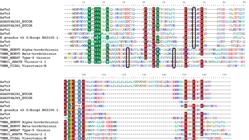
Neighbor-Joining cladogram of putative defensin peptides found in Feijoa sellowiana transcriptomes and Eucalyptus defensins selected based on amino acid sequence similarity