Natural powder colorant from Clitoria ternatea flowers: Physicochemical and bioactive properties
Abstract:
Flowers of Clitoria ternatea, commonly known as butterfly pea, have a large amount of phenolic compounds able to prevent oxidation, in addition to having an intense blue color, which make it a food coloring source. This work aimed to microencapsulate the aqueous extract of the butterfly pea flower by spray drying using different proportions of maltodextrin and gum arabic as carrier agents. The hygroscopicity, water activity, concentration of polyphenols and anthocyanins, average size and antioxidant activity were determined in the powders obtained, named as colorants. The powders obtained were blue in color with varying intensities and the product with 100% maltodextrin showed lower hygroscopicity, higher concentration of polyphenols and smaller average diameter. The results suggest that gum arabic did not contribute to increasing the concentration of polyphenols, making it more viable to use only maltodextrin as a carrier agent in drying the extract due to its greater availability. Thus, the powders obtained have potential for industrial use such as coloring and the enrichment of foods and beverages.
Keywords:
anthocyanin; antioxidant; butterfly pea; spray-drying
Resumen:
Las flores de Clitoria ternatea, popularmente conocidas como guisante mariposa, tienen gran cantidad de compuestos fenólicos, capaces de evitar la oxidación, además de un color azul intenso que las convierte en fuente de colorante alimentario. El objetivo de este estudio fue microencapsular el extracto acuoso de flor de guisante mariposa por atomización utilizando diferentes proporciones de maltodextrina y goma arábiga como agentes carreadores. Se determinó la higroscopicidad, la actividad acuosa, la concentración de polifenoles y antocianinas, el tamaño medio y la actividad antioxidante en los polvos obtenidos, denominados colorantes. Los polvos obtenidos mostraron color azul a intensidades variables y el producto con maltodextrina al 100% tuvo menor higroscopicidad, mayor concentración de polifenoles y menor diámetro promedio. Los resultados sugieren que la goma arábiga no contribuyó al aumento de la concentración de polifenoles, por lo que el uso de la maltodextrina como agente carreador exclusivo en el secado del extracto es más factible debido a su mayor disponibilidad. Así, los polvos obtenidos tienen potencial para uso industrial como colorantes y en el enriquecimiento de alimentos y bebidas.
Palabras clave:
antioxidante; antocianina; guisante mariposa; atomización
Resumo:
As flores de Clitoria ternatea, popularmente conhecida como ervilha borboleta, possuem grande quantidade de compostos fenólicos, capazes de prevenir a oxidação, além de apresentarem coloração azul intensa, o que as torna uma fonte de corante alimentício. Este trabalho teve como objetivo microencapsular o extrato aquoso da flor da ervilha-borboleta por atomização utilizando diferentes proporções de maltodextrina e goma arábica como agentes carreadores. A higroscopicidade, atividade de água, concentração de polifenóis, antocianinas, tamanho médio e atividade antioxidante foram determinados nos pós obtidos, denominados corantes. Os pós obtidos apresentaram cor azul em intensidades variáveis e o produto com 100% de maltodextrina apresentou menor higroscopicidade, maior concentração de polifenóis e menor diâmetro médio. Os resultados sugerem que a goma arábica não contribuiu para o aumento da concentração de polifenóis, tornando mais viável o uso da maltodextrina como exclusivo agente carreador na secagem do extrato devido à maior disponibilidade. Assim, os pós obtidos têm potencial para uso industrial como corantes e no enriquecimento de alimentos e bebidas.
Palavras-chave:
antocianina; antioxidante; ervilha borboleta; atomização
1. Introduction
Food color is associated with the appearance, flavor and nutritional value of the product. In the food industry, synthetic dyes are the most used due to their high stability and low cost. However, in recent years, consumers have changed their lifestyle, avoiding the consumption of foods with excessive synthetic dyes and preferring foods that do not have added dyes or those that contain natural dyes1)(2)3. Additionally, some synthetic dyes are associated with allergic reactions in humans and the dyes tartrazine, quinoline yellow, twilight yellow, carmoisine, ponceau 4R and allura red AC are linked to increased hyperactive behavior in children4. Thus, natural dyes can provide technological and bioactive functionalities to the foods in which they are applied, providing additional properties and added value5.
The use of natural dyes is a challenge because they are generally less stable, more expensive, require a higher concentration of material to achieve a color intensity equivalent to the synthetic dye and have a limited range of shades5. Therefore, research into different sources of natural pigments, as well as the study of their stability under different conditions, is necessary to expand their application in different processed foods. Clitoria ternatea flower, commonly known as butterfly pea or butterfly bean, is a source of natural pigments due to the blue color associated to the presence of polyacylated anthocyanins such as ternatins and delphinidins6. The butterfly pea flower is used to prepare teas and as a natural coloring in foods and drinks. In vitro and in vivo studies evaluated the health effects of the flower7)(8) , and stated that these represent an interesting source of anthocyanins and other flavonoids, which may have nutraceutical values, mainly as antioxidants, antimicrobials, anti-inflammatory and antidiabetic agents9)(10)11.
Anthocyanins are extremely unstable and easily degraded by factors such as pH, light, temperature, enzymes, oxygen, metal ions, among others12. Thus, microencapsulation emerges as a technique to improve the stability of natural dyes during processing and storage and is a technique for incorporating extracts into polymeric matrices13)(14) . Considering the various encapsulation techniques, spray drying is one of the most common methods applied by the food industry to transform liquid products into powders15. It is a simple, fast, easily scalable and reproducible technology that allows adequate drying conditions for heat-sensitive compounds, due to the short period of exposure to high temperatures16. The conversion of butterfly pea flower liquid extract into powdered natural dye is convenient, resulting in a ready-to-use product that is easy to handle and has a longer shelf life17.
Fuzetti and others18 encapsulated butterfly pea extract by spray drying using maltodextrin, cassava starch and gelatin; Rashid and others19 encapsulated the flower anthocyanins by the same technology using maltodextrin. However, no studies were found using gum arabic associated with maltodextrin and evaluating the antioxidant activity of the powders obtained. Due to the significant concentration of bioactive compounds and the coloring potential of butterfly pea flower extract, the present study aimed to produce and characterize powdered coloring from the flower extract by spray drying technique using different proportions of maltodextrin and gum arabic as carrier agents.
2. Materials and Methods
2.1 Materials
To prepare the extract, butterfly pea flowers were used, planted and harvested on a rural property located in Nova América da Colina city, in Paraná, Brazil. The flowers were harvested and kept at room temperature for 48 hours and then dried in oven with forced air circulation at 50 °C for 3 hours. Maltodextrin (Morrex 1920, Cargill) and gum arabic (Instantigum BA, Nexira) were used as carrier agents.
2.2 Extraction of Butterfly Pea Flower Dye
To extract the dye, the dried and crushed flower was mixed with distilled water in a ratio of 1:20 (w:v) and kept stirring at 40 °C for 30 minutes, according to conditions optimized in previous work20.
2.3 Production of Powdered Dye by Spray Dryer
A total of 5 formulations were prepared in which 20% (m/v) of carrier agent was solubilized in the aqueous extract previously obtained. Different proportions of maltodextrin and gum arabic were evaluated as follows: M100 (100% maltodextrin), M75G25 (75% maltodextrin and 25% gum arabic), M50G50 (50% maltodextrin and 50% gum arabic), M25G75 (25% maltodextrin and 75% gum arabic) and G100 (100% gum arabic). The solution was stirred using an Ultraturrax (IKA, model T18, Germany) at 12,000 rpm for 3 minutes. Then, the solutions were dried in a Spray Dryer (LabMaq, model MSD 1.0, Brazil), with a double fluid nozzle, with the following specifications: nozzle diameter 0.7 mm; inlet temperature 130 °C; feeding 0.4 L/h; air flow 1.65 m³/min, and compressed air pressure 6 bar. The drying condition was determined by preliminary tests. The powders obtained were stored in airtight bottles at room temperature for subsequent characterization.
2.4 Physicochemical Characterization of Powder Dyes
The color of the dyes was measured with a colorimeter (Konica Minolta, Japan), according to the CIELAB system (L*, a* and b*), using D65 illuminant and 10° observer. Chroma (C*) and hue angle (h) were determined. Hygroscopicity was determined by weighing 1 g of the powder in a crucible and kept in a desiccator containing saturated NaCl solution (75% relative humidity) for one week at 25 °C21. The samples were weighed and the hygroscopicity (%) was calculated as the percentage of moisture absorbed by the powder. Water activity was measured on a water activity meter (Aqualab, Meter 4TE) at 25 °C. Humidity was determined by gravimetric method22. The average diameter of the microparticles was determined by dynamic light scattering (Litesizer 500, Anton Paar, Austria) using absolute ethanol as dispersing medium.
2.5 Concentration of Total Phenolic Compounds
The concentration of total phenolic compounds was determined by the Folin-Ciocalteu method23. The powders were solubilized in distilled water and for the reaction 200 μl of diluted sample, 1000 μl of Folin's solution (10%, v/v) and 800 μl of sodium carbonate solution (7.5%, w/v) were mixed in test tubes. This mixture was stirred in vortex and allowed to rest for 30 min. Afterwards, absorbance was measured in a UV-vis spectrophotometer (Kasuaki, IL-593-BI) at 750 nm. The white was prepared using distilled water. A standard curve of gallic acid was used to calculate the results, being expressed in mg EAG/g sample.
2.6 Total Anthocyanin Concentration
The determination of the total anthocyanin content was made using the pH difference methodology24. The dye powder was diluted in water and then a 0.5 mL aliquot was mixed with 0.025 M potassium chloride buffer solution (pH 1.0) and another 0.5 mL aliquot was mixed with 0.4 M sodium acetate buffer solution (pH 4.5). After 30 minutes of incubation, the absorbances of the samples of the two buffers at wavelengths 520 and 700 nm were read in a UV-Vis spectrophotometer (Kasuaki, IL-593-BI). The difference in absorbance between pH values and wavelengths was calculated as follows:
A = (A520 nm - A700nm) pH 1.0 - (A520 nm - A700nm) pH 4.5
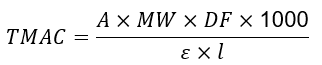
The total monomeric anthocyanin content (TMAC) was calculated by Equation (1) and the results were expressed as milligram of cyanidin-3-glycoside per gram sample.
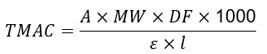
Where MW is molecular weight (449.2 g/mol for cyanidin-3-glucoside), DF is dilution factor, ɛ is molar coefficient (26,900 L/mol/cm for cyanidin-3-glucoside), and l is path length (1 cm).
2.7 Antioxidant Activity
The antioxidant capacity of the powder dyes was determined by three methods described below. The antioxidant capacity by the iron reduction method (FRAP) was determined according to Benzie and Strain25. The FRAP reagent was obtained from the mixture of TPTZ solution (2,4,6 tris (2-pyridyl) - triazine) 10 mM in 0.3 M acetate buffer (pH 3.6), 40 mM HCl solution and 20 mM ferric chloride aqueous solution (10:1:1, v/v/v). The antioxidant capacity by the capture of the free radical DPPH was according to Mensor and others26, with modifications. The 3900 μL volume of a 0.06 mM DPPH solution was mixed with 1000 μL of the dye diluted in water and incubated for 30 min at room temperature, and the absorbance reading was taken at 515 nm in a UV-Vis spectrophotometer. For the ABTS radical capture method, a 30 μL aliquot of the dye diluted in water was mixed with 3.0 mL of the ABTS*+ radical and, after 6 minutes of incubation, the reading was performed at 734 nm in a UV-Vis spectrophotometer27. For all methods, a standard trolox curve was constructed to express the results (Eq Trolox/g sample).
2.8 Appearance of the Dyes at Different pH
The dissolution of the powdered M100 sample was performed at different pH values in the range of 1 to 14, adjusted using HCl and NaOH solutions.
2.9 Statistical Analysis
All the analyses were performed in triplicate. The results were submitted to analysis of variance (ANOVA) and the differences between the means were identified by Tukey's test (p <0.05), using the Statistica® 12.0 program (Statsoft, USA).
3. Results
3.1 Physicochemical Characterization of Powdered Dyes
The powder dyes obtained from butterfly bean flower extract showed an intense blue color, and the intensity of the color depended on the proportion of maltodextrin and gum arabic in the formulation, as shown in Figure 1.

Images of butterfly pea flower powder dyes obtained by spray drying. A) 100% maltodextrin, B) 75% maltodextrin and 25% gum arabic, C) 50% maltodextrin and 50% gum arabic, D) 25% maltodextrin and 75% gum arabic, and E) 100% gum arabic
The analyzed instrumental color parameters in terms of L∗, a∗, b∗, hue angle, and chroma values of the butterfly pea flower dyes are given in Table 1, and confirmed that the different proportions of maltodextrin and gum arabic interfered significantly (p < 0.05) in the color of the powder obtained by spray dryer.
Table 2 presents the results of the physicochemical properties of the butterfly pea flower powder dye.
3.2 Phenolic Compounds, Total Anthocyanins and Antioxidant Activity
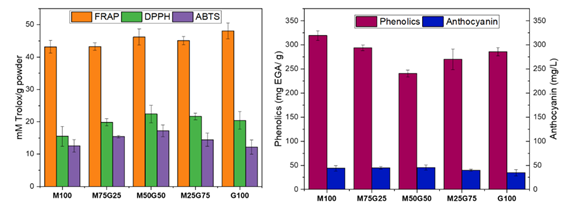
The results of phenolics compounds, anthocyanin content and antioxidant properties are given in Figure 2.
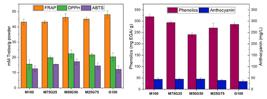
Phenolic compounds, anthocyanin and antioxidant properties of butterfly pea flower powder dye. M100 (100% maltodextrin), M75G25 (75% maltodextrin and 25% gum arabic), M50G50 (50% maltodextrin and 50% gum arabic), M25G75 (25% maltodextrin and 75% gum arabic) and G100 (100% gum arabic)
3.3 Appearance of the Dye at Different pH
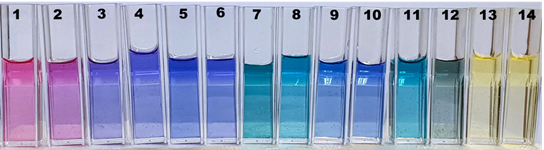
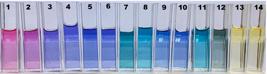
The M100 sample was reconstituted at different pH and it was noted that the color varied from pink to yellow between pH 1 and 14, respectively (Figure 3). The color and stability of anthocyanins are strongly influenced by the pH of the medium, and it is relevant to study the colorimetric performance of plant extracts rich in this compound.
4. Discussion
4.1 Physicochemical Characterization of Powder Dyes
The powders with higher proportions of maltodextrin were darker (lower L value), with higher saturation (higher chroma value) and higher b* values than the formulations with higher proportion of gum arabic (Table 1). It is possible that the slightly yellowish color of gum arabic interfered with the final coloration of the powder dyes, reducing the blue hue. For the hue angle, the reference is that 0° or 360° indicate red, 90° yellow, 180° green and 270° blue28, and the difference between the samples was small, with mean values of 297°, which is in the quadrant between dark blue and violet.
The moisture of the powder dyes did not show significant difference (p > 0.05), as shown in Table 2. The water activity (Aw) of the powders ranged from 0.194 to 0.263, and the values obtained were close to that reported by Fuzetti and others18 in microparticles of butterfly bean flower extract obtained by spray dryer. The decrease in the maltodextrin proportion increased significantly (p < 0.05) the Aw, making the sample more hygroscopic as observed in the hygroscopicity results. However, the Aw values obtained are within the recommended limit (<0.3) to ensure the stability of the powders29. The moisture values of the powders were higher than those reported by Fuzetti and others18, and may be associated with the higher drying temperature (140 °C) employed by these authors. According to the mechanism of drying, a higher inlet air temperature produced a greater driving force in the water evaporation and resulted in a powder with lower moisture content and Aw. The density of the powders ranged from 0.469 to 0.589 g/mL, with the lowest values found in the samples with the highest proportion of gum arabic. Powder with a low bulk density had a greater chance of oxidative degradation and shortened storage stability. Thus, considering the density results obtained, the dry dye with gum arabic may present lower stability in storage, due to the greater amount of occluded air in the powders21.
The hygroscopicity increased with the increase in the concentration of gum arabic in the formulations. It is expected that the particles present low hygroscopicity, because the moisture gain can lead to changes in the flow properties of the microparticles, in addition to changes in particles powder appearance and color. High hygroscopicity can also lead to greater degradation of the encapsulated material21. The hygroscopicity of spray-dried amaranthus betacyanin pigments (44 to 49%)21 and spray-dried strawberry juice (29.07 to 35.98%)30 were much higher than in this study. Maltodextrin was efficient in reducing hygroscopicity, possibly due to better interaction with the phenolic compounds in butterfly pea flower extract.
The mean size of the analyzed dye microparticles ranged from 121.10 to 199.14 nm, with the lowest values observed for M100 and M75G25. The use of maltodextrin as a carrier agent allowed the obtaining of microparticles with smaller size, correlating with the results of apparent density. It is possible that maltodextrin produces less viscous solutions, favoring the process of atomizing smaller particles in the drying process. In addition, the process yield can decrease due to the increase in the viscosity of the mixture, resulting in great adhesion of solids to the dryer wall31. Fuzzeti and others18 obtained higher yield in the production of dye powder using only maltodextrin (80.63%), as it is considered the most effective carrier agent in the drying of hydrophilic compounds32)(33) .
4.2 Phenolic Compounds, Total Anthocyanins and Antioxidant Activity
The phenolic and anthocyanins contents of the aqueous solution of the butterfly pea flower were 23.8 ± 2.9 mg EGA/g sample and 0.51 ± 0.22 mg/L, respectively. After drying, high concentrations of phenolic compounds (Figure 2) were obtained (240.5 to 319.2 mg EGA/g powder), with the highest value observed for M100. The results suggest that the spray drying process concentrated the phenolic compounds, especially anthocyanins. Higher anthocyanin values were observed in relation to the study by Fuzetti and others18, who obtained average values of 38 mg/L in powder dye using maltodextrin, cassava starch, and gelatin as carrier agents. Ferulic acid, gallic acid, rutin, tannic acid and derivatives of kaempferol and quercetin are the main phenolic compounds found in butterfly pea with antioxidant activity17)(34) .
The antioxidant activity evaluated by the ABTS, DPPH and FRAP methods indicated that all samples showed antioxidant activity, and no significant difference was observed between the samples, correlating with the results of total anthocyanins. The values between the methods were different due to the different reaction mechanisms that are involved in each method. The FRAP assay is characterized by the ability to transfer electrons, which results in the reduction of iron ions in the presence of antioxidant compounds. In the case of the ABTS and DPPH assays, when the dark green ABTS and purple DPPH radicals come into contact with an antioxidant, the radical is reduced, promoting the loss of the color of the reaction medium35.
Literature states that anthocyanins extracted from plants have antioxidant properties that contribute significantly to the health and therapeutic effects. Anthocyanin’s glycosylated B-ring structure contributes to its high antioxidant activity, while orthohydroxylation and methoxylation significantly increase antioxidant activity36. Antioxidants that scavenge free radicals include anthocyanin chalcones and quinoidal bases with a double bond conjugated to the keto group37. In addition to the coloring potential, the powders obtained can be used in the fortification of foods and beverages, in addition to acting as antioxidants in fatty foods to reduce lipid oxidation.
4.3 Appearance of the Dye at Different pH
As shown in Figure 3, the color at pH 1 to 2 was pink, and the cation flavilium was considered the predominant structure in this condition. With pH 3 to 5, the red flavylic cation and the two tautomers of the neutral blue quinonoid species in equilibrium produce the violet color in the butterfly pea extract. At the pH range from 5 to 7 the extract contains predominantly blue neutral quinonoid species, and at pH 7 and 8 the color of the extract changes from blue to green. This is attributed to the presence of neutral quinoidal bases and anionic quinoidal bases in equilibrium. Between pH 10 and 12, plant extracts rich in anthocyanins change color to yellow due to degradation of the quinoidal bases for ionic chalcones38)(39) .
5. Conclusions
The phenolic compounds of the flowers of Clitoria ternatea were present even after drying by spray dryer, which indicates the possibility of using this product as a natural antioxidant for food, in addition to acting as a natural colorant due to the amount of anthocyanins that gives the intense blue coloration. Regarding the carrier agents used, maltodextrin showed better performance, being advantageous due to the higher availability, lower cost and being a safe product for consumption.
Acknowledgements:
The authors thank CNPq (National Council for Scientific and Technological Development) for the scientific initiation scholarship, and the Multiuser Laboratory of Federal University of Technology - Paraná, Campus Londrina, for the performed analyses.
References
-
1. Sigurdson GT, Tang P, Giusti MM. Natural colorants: food colorants from natural sources. Annu Rev Food Sci Technol. 2017;8:261-80. Doi: 10.1146/annurev-food-030216-025923.
» https://doi.org/10.1146/annurev-food-030216-025923 -
2. Luzardo-Ocampo I, Ramírez-Jiménez AK, Yañez J, Mojica L, Luna-Vital DA. Technological applications of natural colorants in food systems: a review. Foods. 2021;10(3):634. Doi: 10.3390/foods10030634.
» https://doi.org/10.3390/foods10030634 -
3. Albuquerque BR, Oliveira MBPP, Barros L, Ferreira ICFR. Could fruits be a reliable source of food colorants? Pros and cons of these natural additives. Crit Rev Food Sci Nutr. 2021;61(5):805-35. Doi: 10.1080/10408398.2020.1746904.
» https://doi.org/10.1080/10408398.2020.1746904 -
4. Oplatowska-Stachowiak M, Elliott CT. Food colors: existing and emerging food safety concerns. Crit Rev Food Sci Nutr . 2017;57(3):524-48. Doi: 10.1080/10408398.2014.889652.
» https://doi.org/10.1080/10408398.2014.889652 -
5. Rodriguez-Amaya DB. Natural food pigments and colorants. Curr Opin Food Sci. 2016;7:20-6. Doi: 10.1016/j.cofs.2015.08.004.
» https://doi.org/10.1016/j.cofs.2015.08.004 -
6. Chayaratanasin P, Barbieri MA, Suanpairintr N, Adisakwattana S. Inhibitory effect of Clitoria ternatea flower petal extract on fructose-induced protein glycation and oxidation-dependent damages to albumin in vitro. BMC Complement Altern Med. 2015;15:27. Doi: 10.1186/s12906-015-0546-2.
» https://doi.org/10.1186/s12906-015-0546-2 -
7. Pasukamonset P, Kwon O, Adisakwattana S. Alginate-based encapsulation of polyphenols from Clitoria ternatea petal flower extract enhances stability and biological activity under simulated gastrointestinal conditions. Food Hydrocoll. 2016;61:772-9. Doi: 10.1016/j.foodhyd.2016.06.039.
» https://doi.org/10.1016/j.foodhyd.2016.06.039 -
8. Phrueksanan W, Yibchok-anun S, Adisakwattana S. Protection of Clitoria ternatea flower petal extract against free radical-induced hemolysis and oxidative damage in canine erythrocytes. Res Vet Sci. 2014;97(2):357-63. Doi: 10.1016/j.rvsc.2014.08.010.
» https://doi.org/10.1016/j.rvsc.2014.08.010 -
9. Jeyaraj EJ, Lim YY, Choo WS. Extraction methods of butterfly pea (Clitoria ternatea) flower and biological activities of its phytochemicals. J Food Sci Technol. 2021;58(6):2054-67. Doi: 10.1007/s13197-020-04745-3.
» https://doi.org/10.1007/s13197-020-04745-3 -
10. Kazuma K, Noda N, Suzuki M. Flavonoid composition related to petal color in different lines of Clitoria ternatea. Phytochemistry. 2003;64(6):1133-9. Doi: 10.1016/s0031-9422(03)00504-1.
» https://doi.org/10.1016/s0031-9422(03)00504-1 -
11. Rahman I, Biswas SK, Kirkham PA. Regulation of inflammation and redox signaling by dietary polyphenols. Biochem Pharmacol. 2006;72(11):1439-52. Doi: 10.1016/j.bcp.2006.07.004.
» https://doi.org/10.1016/j.bcp.2006.07.004 -
12. Mojica L, Berhow M, Gonzalez de Mejia E. Black bean anthocyanin-rich extracts as food colorants: physicochemical stability and antidiabetes potential. Food Chem. 2017;229:628-39. Doi: 10.1016/j.foodchem.2017.02.124.
» https://doi.org/10.1016/j.foodchem.2017.02.124 -
13. Multisona RR, Shirodkar S, Arnold M, Gramza-Michalowska A. Clitoria ternatea flower and its bioactive compounds: potential use as microencapsulated ingredient for functional foods. Appl Sci. 2023;13(4):2134. Doi: 10.3390/app13042134.
» https://doi.org/10.3390/app13042134 -
14. de Moura SCSR, Berling CL, Germer SPM, Alvim ID, Hubinger MD. Encapsulating anthocyanins from Hibiscus sabdariffa L. calyces by ionic gelation: pigment stability during storage of microparticles. Food Chem . 2018;241:317-27. Doi: 10.1016/j.foodchem.2017.08.095.
» https://doi.org/10.1016/j.foodchem.2017.08.095 -
15. Rajabi H, Ghorbani M, Jafari SM, Sadeghi Mahoonak A, Rajabzadeh G. Retention of saffron bioactive components by spray drying encapsulation using maltodextrin, gum Arabic and gelatin as wall materials. Food Hydrocoll . 2015;51:327-37. Doi: 10.1016/j.foodhyd.2015.05.033.
» https://doi.org/10.1016/j.foodhyd.2015.05.033 -
16. Arpagaus C, Collenberg A, Rütti D, Assadpour E, Jafari SM. Nano spray drying for encapsulation of pharmaceuticals. Int J Pharm. 2018;546(1-2):194-214. Doi: 10.1016/j.ijpharm.2018.05.037.
» https://doi.org/10.1016/j.ijpharm.2018.05.037 -
17. Siti Azima AM, Noriham A, Manshoor N. Phenolics, antioxidants and color properties of aqueous pigmented plant extracts: Ardisia colorata var. elliptica, Clitoria ternatea, Garcinia mangostana and Syzygium cumini. J Funct Foods. 2017;38:232-41. Doi: 10.1016/j.jff.2017.09.018.
» https://doi.org/10.1016/j.jff.2017.09.018 -
18. Fuzetti CG, de Castilhos MBM, Nicoletti VR. Microencapsulation of natural blue dye from butterfly pea (Clitoria ternatea L.) flowers: the application of different carriers. J Food Process Preserv. 2022;46(4). Doi: 10.1111/jfpp.16420.
» https://doi.org/10.1111/jfpp.16420 -
19. Ab Rashid S, Tong WY, Leong CR, Abdul Ghazali NM, Taher MA, Ahmad N, Tan W-N, Teo SW. Anthocyanin microcapsule from clitoria ternatea: potential bio-preservative and blue colorant for baked food products. Arab J Sci Eng. 2021;46:65-72. Doi: 10.1007/s13369-020-04716-y.
» https://doi.org/10.1007/s13369-020-04716-y -
20. do Nascimento JV, Silva KA, Giuliangeli VC, Mendes ALD, Piai LP, Michels RN, Dal Bosco TC, Ströher GR, Shirai MA. Starch-PVA based films with Clitoria ternatea flower extract: characterization, phenolic compounds release and compostability. Int J Biol Macromol. 2024;255:128232. Doi: 10.1016/j.ijbiomac.2023.128232.
» https://doi.org/10.1016/j.ijbiomac.2023.128232 -
21. Cai YZ, Corke H. Production and properties of spray-dried Amaranthus Betacyanin Pigments. J Food Sci. 2000;65:1248-52. Doi: 10.1111/j.1365-2621.2000.tb10273.x.
» https://doi.org/10.1111/j.1365-2621.2000.tb10273.x - 22. AOAC. Official Methods of Analysis. 18th ed. Gaithersburg: AOAC International; 2006.
-
23. Singleton VL, Rossi JA. Colorimetry of total phenolics with phosphomolybdic-phosphotungstic acid reagents. Am J Enol Vitic. 1965;16(3):144-58. Doi: 10.5344/ajev.1965.16.3.144.
» https://doi.org/10.5344/ajev.1965.16.3.144 -
24. Giusti MM, Wrolstad RE. Characterization and measurement of Anthocyanins by UV‐Visible Spectroscopy. Curr Protoc Food Anal Chem. 2001;00(1). Doi: 10.1002/0471142913.faf0102s00.
» https://doi.org/10.1002/0471142913.faf0102s00 -
25. Benzie IF, Strain JJ. The ferric reducing ability of plasma (FRAP) as a measure of "antioxidant power": the FRAP assay. Anal Biochem. 1996;239(1):70-6. Doi: 10.1006/abio.1996.0292.
» https://doi.org/10.1006/abio.1996.0292 -
26. Mensor LL, Menezes FS, Leitão GG, Reis AS, dos Santos TC, Coube CS, Leitão SG. Screening of Brazilian plant extracts for antioxidant activity by the use of DPPH free radical method. Phytother Res. 2001;15(2):127-30. Doi: 10.1002/ptr.687.
» https://doi.org/10.1002/ptr.687 -
27. Thaipong K, Boonprakob U, Crosby K, Cisneros-Zevallos L, Hawkins Byrne D. Comparison of ABTS, DPPH, FRAP, and ORAC assays for estimating antioxidant activity from guava fruit extracts. J Food Compost Anal. 2006;19:669-75. Doi: 10.1016/j.jfca.2006.01.003.
» https://doi.org/10.1016/j.jfca.2006.01.003 -
28. Kuck LS, Noreña CP. Microencapsulation of grape (Vitis labrusca var. Bordo) skin phenolic extract using gum Arabic, polydextrose, and partially hydrolyzed guar gum as encapsulating agents. Food Chem . 2016;194:569-76. Doi: 10.1016/j.foodchem.2015.08.066.
» https://doi.org/10.1016/j.foodchem.2015.08.066 -
29. Tonon RV, Brabet C, Pallet D, Brat P, Hubinger MD. Physicochemical and morphological characterisation of açai ( Euterpe oleraceae Mart.) powder produced with different carrier agents. Int J Food Sci Technol . 2009;44(10):1950-8. Doi: 10.1111/j.1365-2621.2009.02012.x.
» https://doi.org/10.1111/j.1365-2621.2009.02012.x -
30. Santiago-García PA, León-Martínez FM, Gutiérrez MC, Aguirre-Loredo RY, Santiago-Urbina JA, Soto-Castro D. Microencapsulation of strawberry juice in Agave angustifolia fructans: effect of spray-drying conditions on the anthocyanin content and physicochemical properties. Int J Food Sci Technol . 2023;58(12):6725-35. Doi: https://doi.org/10.1111/ijfs.16529.
» https://doi.org/https://doi.org/10.1111/ijfs.16529 -
31. Tonon RV, Brabet C, Hubinger MD. Influence of process conditions on the physicochemical properties of açai (Euterpe oleraceae Mart.) powder produced by spray drying. J Food Eng. 2008;88(3):411-8. Doi: 10.1016/j.jfoodeng.2008.02.029.
» https://doi.org/10.1016/j.jfoodeng.2008.02.029 -
32. Obón JM, Castellar MR, Alacid M, Fernández-López JA. Production of a red-purple food colorant from Opuntia stricta fruits by spray drying and its application in food model systems. J Food Eng . 2009;90(4):471-9. Doi: 10.1016/j.jfoodeng.2008.07.013.
» https://doi.org/10.1016/j.jfoodeng.2008.07.013 -
33. Can Karaca A, Guzel O, Ak MM. Effects of processing conditions and formulation on spray drying of sour cherry juice concentrate. J Sci Food Agric. 2016;96(2):449-55. Doi: 10.1002/jsfa.7110.
» https://doi.org/10.1002/jsfa.7110 -
34. Rawdkuen S, Faseha A, Benjakul S, Kaewprachu P. Application of anthocyanin as a color indicator in gelatin films. Food Biosci. 2020;36:100603. Doi: 10.1016/j.fbio.2020.100603.
» https://doi.org/10.1016/j.fbio.2020.100603 -
35. Ali SS, Kasoju N, Luthra A, Singh A, Sharanabasava H, Sahu A, Bora U. Indian medicinal herbs as sources of antioxidants. Food Res Int. 2008;41:1-15. Doi: 10.1016/j.foodres.2007.10.001.
» https://doi.org/10.1016/j.foodres.2007.10.001 -
36. Bors W, Heller W, Michel C, Saran M. Flavonoids as antioxidants: determination of radical-scavenging efficiencies. Methods Enzymol. 1990;186:343-55. Doi: 10.1016/0076-6879(90)86128-i.
» https://doi.org/10.1016/0076-6879(90)86128-i -
37. Wang H, Cao G, Prior RL. Oxygen radical absorbing capacity of Anthocyanins. J Agric Food Chem . 1997;45(2):304-9. Doi: 10.1021/jf960421t.
» https://doi.org/10.1021/jf960421t -
38. Abdullah R, Lee PM, Lee KH. Multiple color and pH stability of floral anthocyanin extract: Clitoria ternatea. In: CSSR2010: 2010 International Conference on Science and Social Research. (place unknown): IEEE; 2010. p. 254-8. Doi: 10.1109/CSSR.2010.5773778.
» https://doi.org/10.1109/CSSR.2010.5773778 -
39. Escher GB, Wen M, Zhang L, Rosso ND, Granato D. Phenolic composition by UHPLC-Q-TOF-MS/MS and stability of anthocyanins from Clitoria ternatea L. (butterfly pea) blue petals. Food Chem . 2020;331:127341. Doi: 10.1016/j.foodchem.2020.127341.
» https://doi.org/10.1016/j.foodchem.2020.127341