Greenhouse gasses potential offset by forest species and CO2 balance in integrated forestry-livestock systems in Uruguay
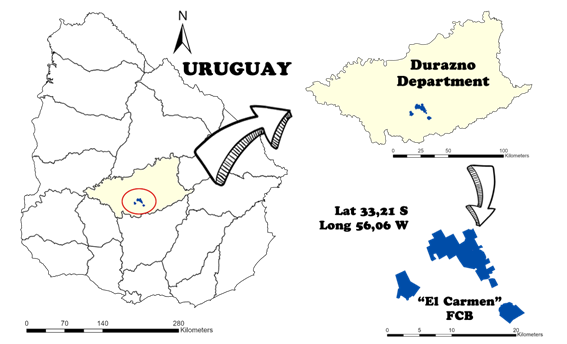
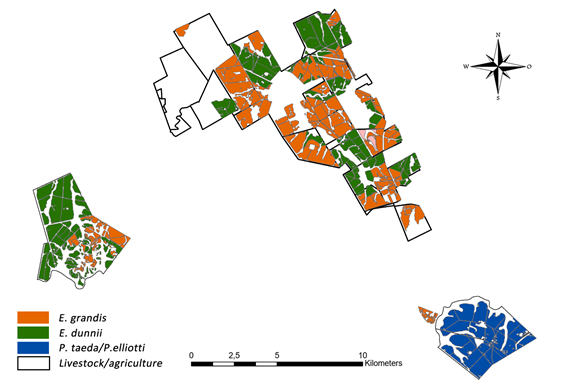
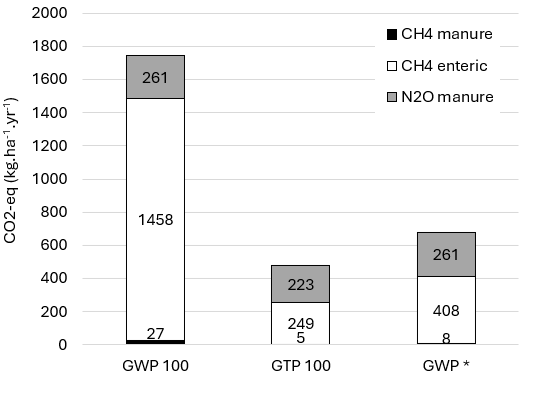
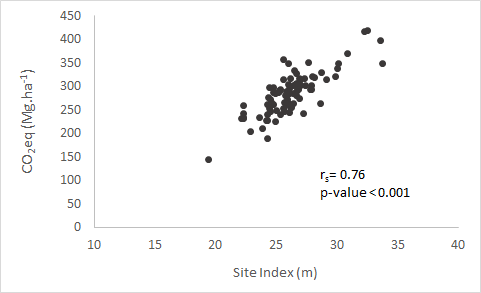
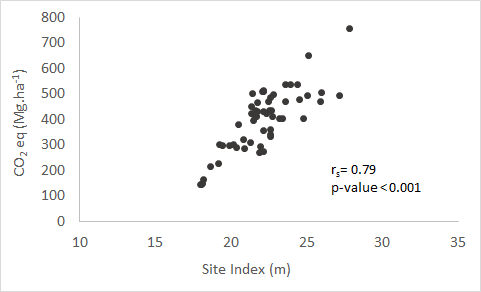
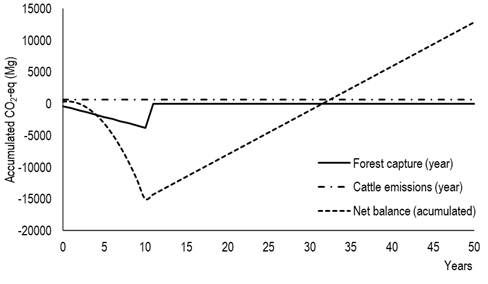
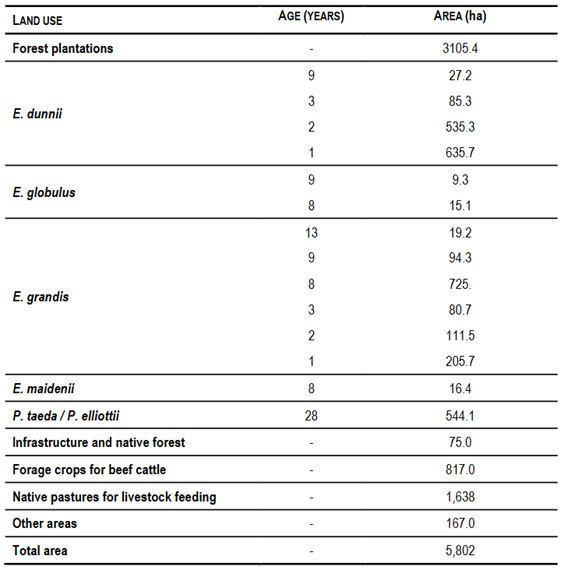
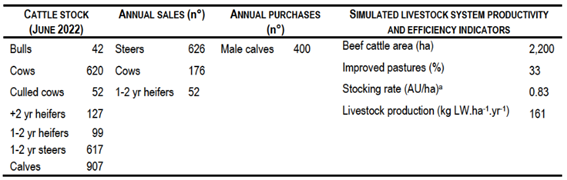
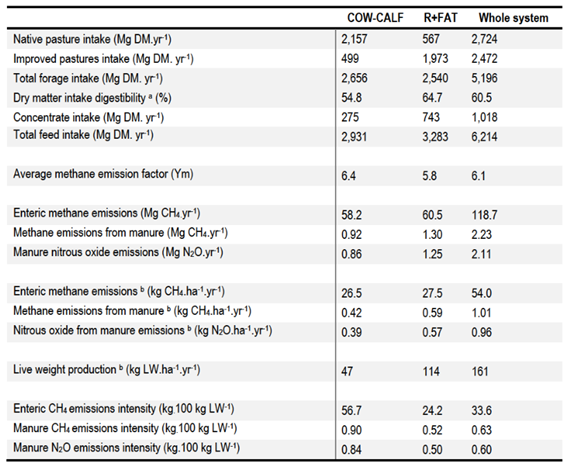
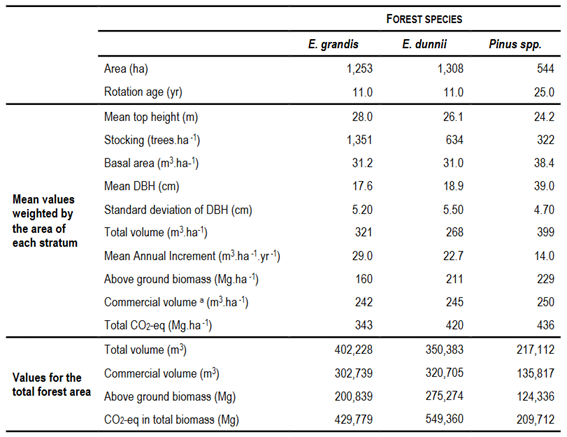
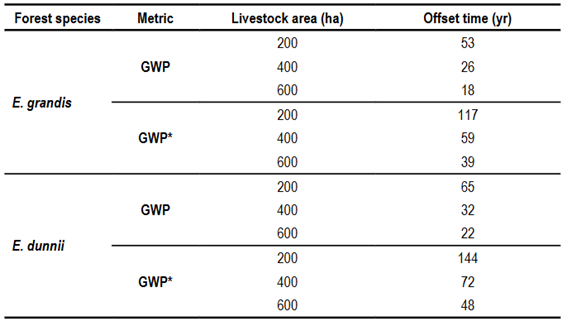
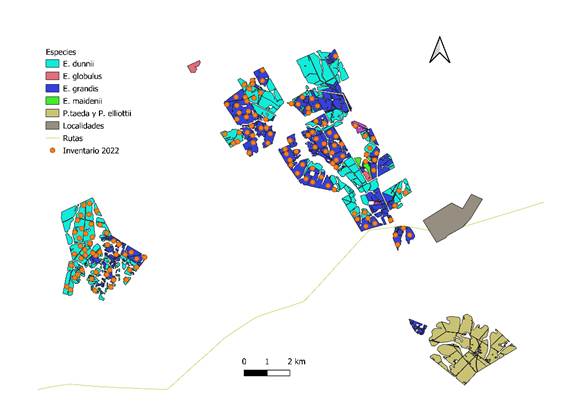
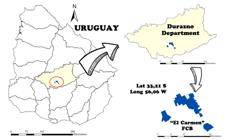
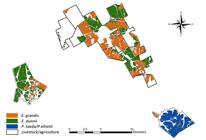
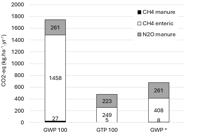
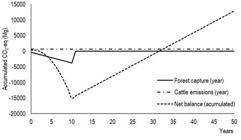
Uruguay's livestock methane is a mayor source of greenhouse gas (GHG) emissions, despite the country’s low overall emissions. A case study was conducted on Forestal Caja Bancaria (FCB), a commercial farm in Uruguay's central region, with an integrated production system covering 5,802 hectares. The study aimed to estimate GHG emissions from livestock, crops and forestry, CO2 captured by eucalypt and pine plantations, and soil organic carbon for all land uses. Results showed that cattle enteric fermentation accounted for 54 kg.ha-1.yr-1 of methane (CH4), and total emissions accounted for 1,746 kg.ha-1.yr-1 of CO2 equivalent. E. grandis, E. dunnii, and Pinus spp. captured 31, 38, and 17 Mg.ha-1.yr-1 CO2 equivalent during their pre-harvest growth cycles. According to GWP100 AR6, this capture rates could offset emissions from 17.6, 21.6 and 9.9 hectares of livestock production, respectively. Using a real system approach considering staggered plantating, harvesting, and subsequent resprouting or replanting, the estimated potential offsets are adjusted to 9.6, 11.8, and 5.1 hectares, respectively, until the first harvest. After this point, there is not further net biomass accumulation, and mitigation relies on the depletion of the remaining carbon stock in the forest area, which exceeds the carbon needed to offset livestock emissions from the previous phase. GTP100 AR6 and GWP* metrics indicated significantly lower CO2-eq emission values. This study aims to provide technical coefficients to quantify how forest plantations can offset livestock emissions, contributing to the goal of "carbon-neutral" meat. This information will help to asses forest systems' mitigation potential and explore livestock-forestry combinations.
Keywords:
forestry; carbon stock; climate change; livestock; mitigation
 Thumbnail
 Thumbnail
 Thumbnail
 Thumbnail
 Thumbnail
 Thumbnail
 Thumbnail
 Thumbnail
 Thumbnail
 Thumbnail
 Thumbnail
 Thumbnail
 Thumbnail
 Thumbnail