Oligodoncy due to mild hypohydrotic ectodermal dysplasia. From a comprehensive vision: approach to genetic diagnosis, impact at the psychosocial level and management of the restoration. A case report.
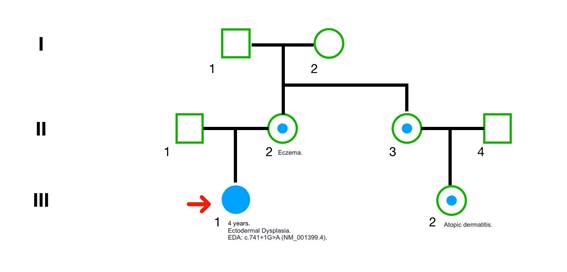
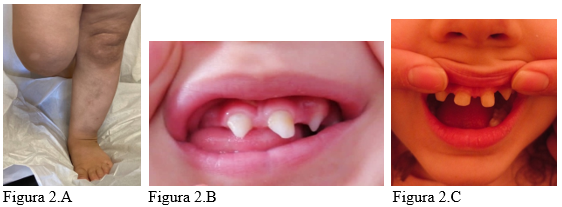
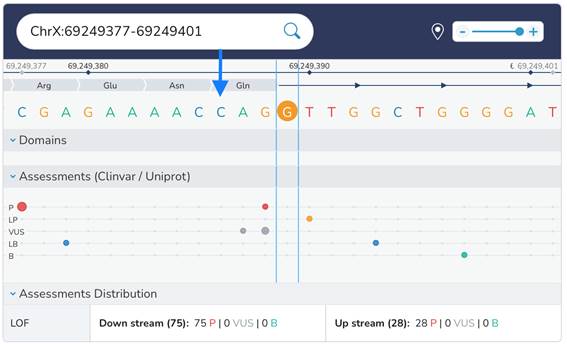
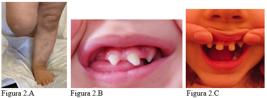
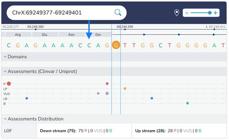
Hypohydrotic ectodermal dysplasia (HDE) is a genodermatosis characterised by involvement of the skin and its annexes. Its prevalence is close to 1/5.000 newborns in the world. It presents heterogeneity of locus so its inheritance mechanism can be autosomal dominant (ADI), autosomal recessive (ARI) and recessive linked to the X chromosome (RLX). It can be detected at the prenatal stage, but in general the diagnosis is made in early childhood. Mild HDE is seen in women with a mutation in the EDA gene (Xq12-13.1). Its expressiveness is variable, but it can have a great bio-psycho-social impact. The treatment is defined as palliative, with the use of moisturisers, environmental control, dental prostheses. A work on twins diagnosed in the prenatal period and treated with an intrauterous synthetic enzyme opens great expectation about the possibility of enzymatic or gene therapy. We present the case of a 4-year-old girl with oligodontia and mild skin involvement who has a family history described as eczema and atopic dermatitis, in which a genetic study was carried out that identified a probably pathogenic variant in the EDA gene.
To define the pathogenicity of this variant, it is proposed to analyse the segregation in the maternal family, along with the deepening of the phenotypic analysis in these family members.
Keywords:
Ectodermal dysplasia; skin; dermatology; oligodontics; paediatric dentistry; genetics; X-linked inheritance
 Thumbnail
 Thumbnail
 Thumbnail