Physiopathological changes and complications of liver resections.
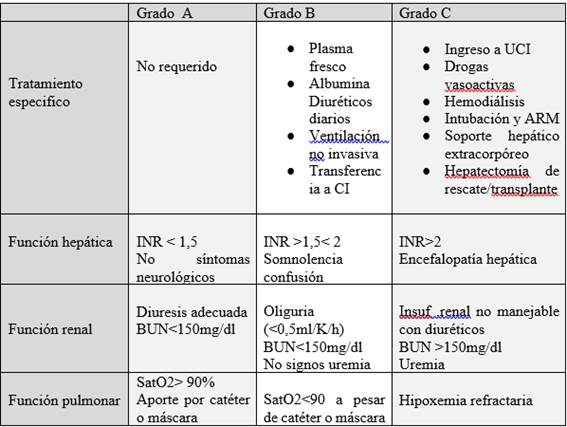
Modern surgical and anesthetic techniques have made it possible to increase the number of liver surgeries for various pathologies. This has reduced morbidity but still maintains high levels of morbidity. During hepatic surgery, hemodynamic changes related to liver mobilization, clamping and blood loss occur independently of the approach route. In the postoperative period, complications or pathophysiological changes derive from the lesions produced by ischemia and reperfusion phenomena; and those produced by hepatic regeneration. This capacity depends not only on the amount of remaining liver but also on the possible pre-existing hepatopathy. Postoperative liver failure is the most feared complication and manifests with jaundice, ascites, encephalopathy and paraclinical alterations such as hyperbilirubinemia and decreased prothrombin time. Surgical complications depend on the procedure performed and are mainly divided into biliary and vascular. The sequelae of hepatectomies depend on factors such as the patient's general condition, the presence of liver disease, the surgical procedure and the quantity and quality of the remaining liver.
Key words:
liver surgery; hepatectomy morbidity; hepatectomy postoperative