Assessment of the ultrasound margin of error between the estimated fetal weight and the weight at birth in the Maternity of the Hospital de Clínicas
Introduction: Ultrasonographic assessment of fetal weight allows assessment of fetal growth and well-being and can estimate birth weight, a determining factor for vital prognosis.
Objectives: Determine the ultrasound margin of error of the estimated fetal weight (EFP) in relation to the birth weight of neonates at the Maternity Hospital of the Hospital de Clínicas between the years 2020 and 2022.
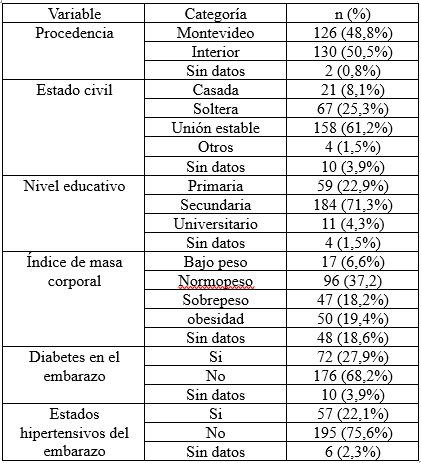
Materials and Methods: An observational, descriptive and cross-sectional study was carried out on women who had their birth in the aforementioned place and period and who had an obstetric growth ultrasound performed less than 7 days after birth. The error of the EPF was calculated using the formula: (Birth Weight - Estimated Fetal Weight) / Birth Weight) x 100. The error of the estimated fetal weight was contrasted with the body mass index, diabetes and hypertensive state of pregnancy, using Student's t and with gestational age and maternal age using the Pearson index taking statistically significant values less than 0.05.
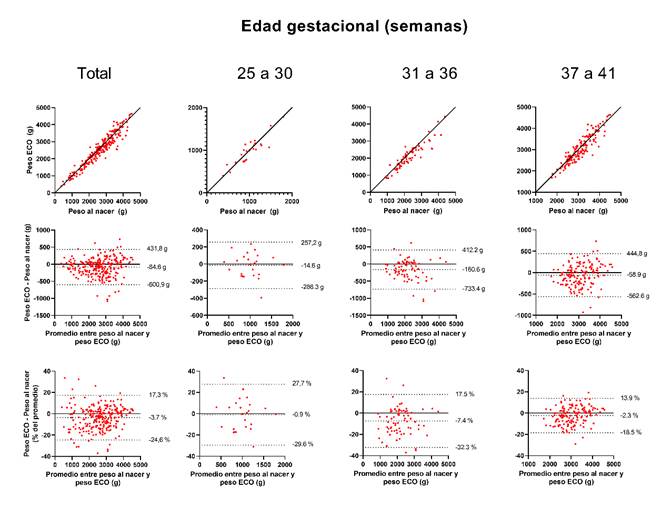
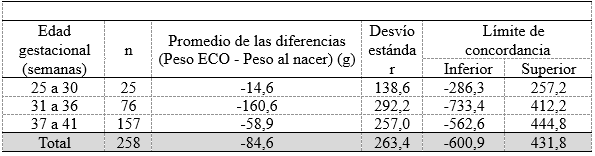
Results: 258 patients were included. The ultrasound margin of error of the EPF was 8.3% SD ± 7. A p value was obtained for BMI of 0.228, diabetes p 0.915, hypertensive states p 0.967, days in which the ultrasound was performed p 0.5 and age gestational p 0.001.
Conclusions: The ultrasound margin of error of the EPF is below the international parameters. Statistically significant associations were found with gestational age, but not with the other variables.
Keywords:
fetal growth; fetal weight; newborn weight; obstetric ultrasound; ultrasound error
 Thumbnail