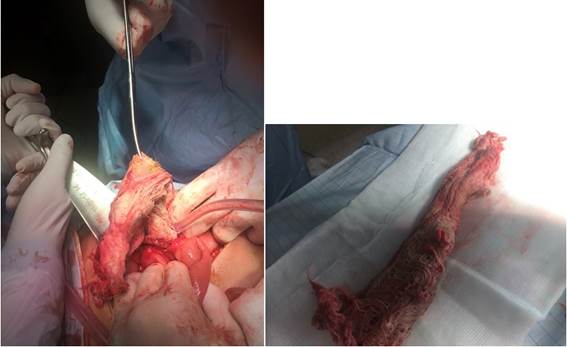
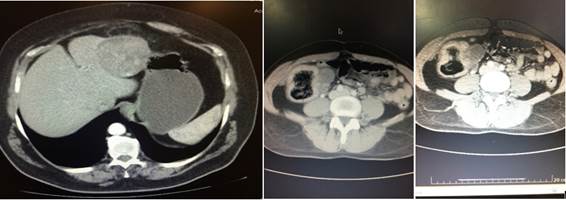
Foreign body. Case analysis and prevention strategies
Introduction: Retained foreign items are infrequent but can generate serious morbidity. Although some risk factors have been recognized and complementary detection systems developed, it continues to be a major problem from a health and medical legal point of view.
Objectives: to examine a case study at Hospital Maciel, focusing on clinical presentation and complications.
Patients and methods: 7 patients treated at the General Surgery and Urology Departments in Hospital Maciel, between 2013-2016. The main results analized are clinical presentation and complications, as well as the presence of recongnized risk factors.
Results: In all patients, the foreign bodies were compresses. In 2 cases the foreign body did not elicit symptoms whereas in 4 cases it did. In the latter, 2 had an early and a late presentation. The material count was incorrect in only one case. No patient died from the resulting complications
Discussion: Because retained surgical ítems will be a problem as long as surgical procedures are performed, it is necessary to emphasize on a systematic approach accompanied by complementary diagnostic tools that are also available in cases of item miscount.
Conclusions: Risk factors were present almost without exception in our casuistry. Also, the incidence seems to be higher than that reported in the literature.
Key Words:
oblitoma; textiloma; gossypiboma
 Thumbnail
 Thumbnail