Osteoarticular sequelae due to meningococcal septicemia treatment with Ilizarov: case report and literature review
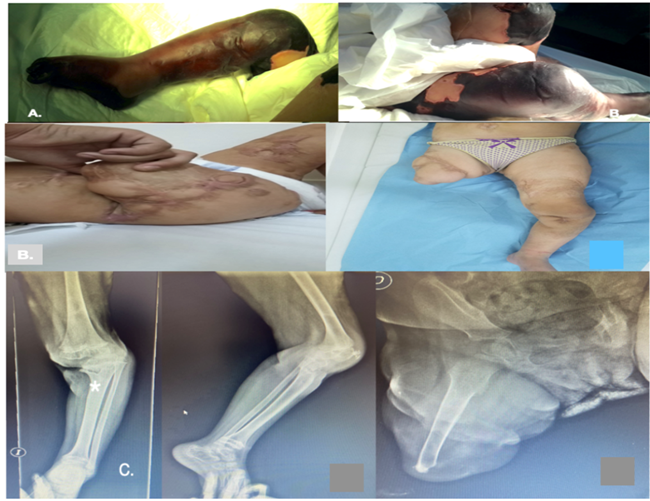
Introduction: Meningococal sepsis when complicated by disseminated intravascular coagulation is a clinical entity with high mortality, especially in children under 1-2 years of age, until a few decades ago when medical treatments managed to greatly improve their vital prognosis. This has meant that we currently see more osteoarticular sequelae in the medium-long term.
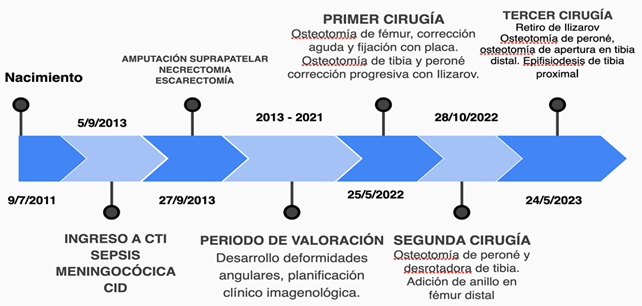
Objective: To report the case of a patient who suffered meningococal sepsis with prolonged follow up treated acutely and in the evolution by bone reconstruction with Ilizarov and to carry out a non-systematized bibliographic review of the osteoarticular sequelae of meningococal sepsis.
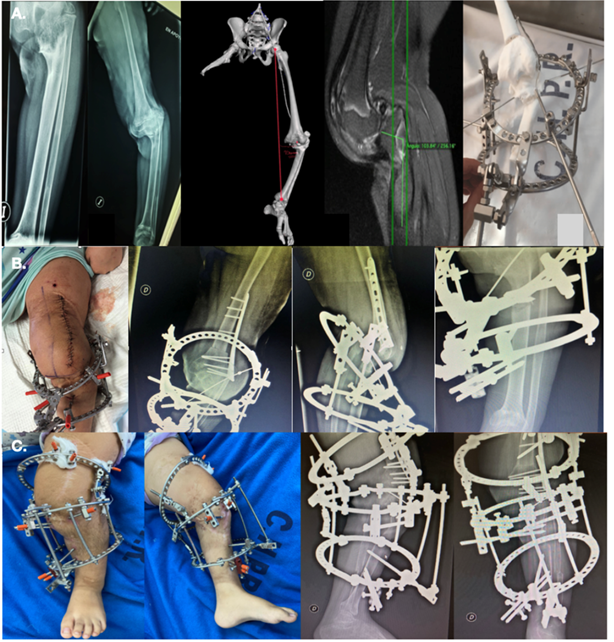
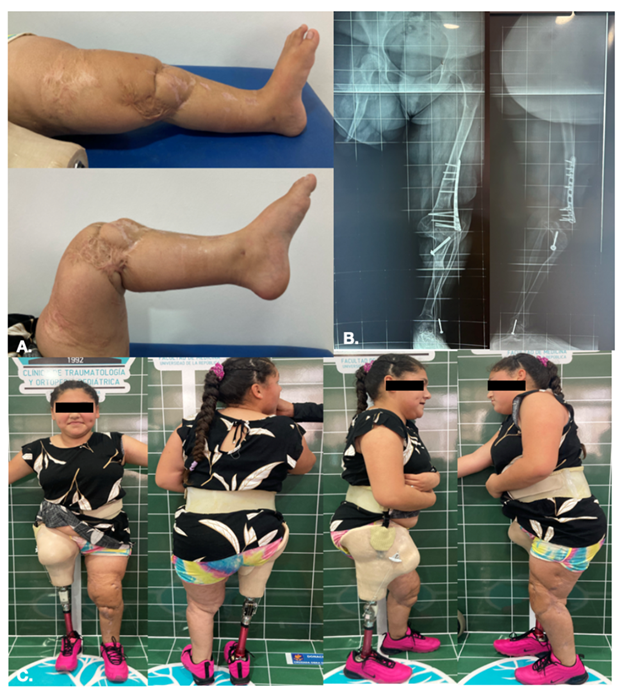
Results: The correction of the left lower limb deformities in all planes was acceptable, an axed and functional MII was achieved with a range of knee mobility of 90 degrees of flexion and 170 degrees of extension, allows the patient to walk assisted with a prosthesis adapted to the right stump.
Conclusions: The assessment must be multidisciplinary from the beginning of the disease. At the early stage, immediate complications related to disseminated intravascular coagulation must be resolver and in long-term follow up those linked to osteoarticular sequelae must be resolved. The Ilizarov method emerges as a versatile alternative, since it allows all planes of deformity to be managed and at the same time to perform lengthening.
Keywords:
Reconstruction; Ilizarov; Angular Deformities; Meningococcal Sepsis; Disseminated Intravascular Coagulation
 Thumbnail
 Thumbnail
 Thumbnail