Transmitted HIV-1 resistance in patients without exposure to antiretroviral treatment. Guatemala
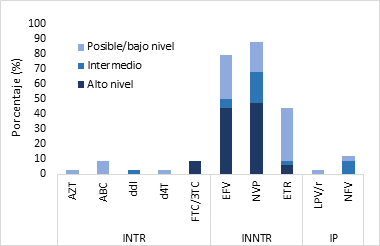
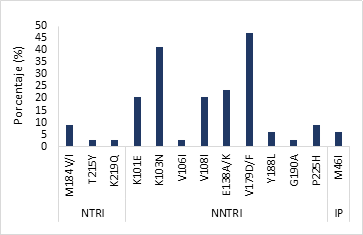
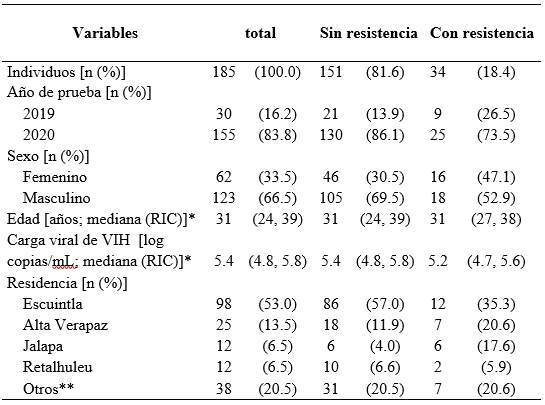
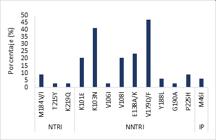
The objective of this study was to describe the levels of transmitted HIV-1 resistance in patients with a recent HIV diagnosis before starting ART, treated in Comprehensive Care Units in Guatemala during the years 2019 and 2020. The study included records of 185 HIV-positive adult patients, recently diagnosed with HIV without a history of ART use. The analysis was carried out in the DeepChek® v2.0 software, the Stanford HIVdb algorithm (v9.4 - 07/12/2022) was followed to classify resistance. 18.4% (95% CI 13.1 - 24.7%) of general resistance to some family of ARVs was found. There was evidence of 15.1% (95% CI 10.3 - 21.1%) of individual resistance to the NNRTI family, mainly affecting NVP and EFV; 2.2% (95% CI 0.6 - 5.4%) resistance to INTR, mostly to FTC/3TC; and 2.7% (95% CI 0.9 - 6.2%) of intermediate and low resistance IP NFV and LPV/r. Three cases presented multiple resistance to NRTIs + NNRTIs. The most frequently found mutations were K103N (41.2%), M184V/I (8.8%) and M46I (5.9%). The high transmitted resistance of HIV-1 in patients treated in different Comprehensive HIV Care Units demonstrates the importance of periodically analyzing the trend of resistance in people who have not been exposed to ARVs, which in turn is an indirect marker. of the presence of acquired resistance in the country, data that demonstrate the need for prompt and effective actions and interventions given its impact on public health.
Keywords:
HIV-1; drug resistance; antiretrovirals; mutations; Guatemala
 Thumbnail
 Thumbnail