A clinical case of food poisoning scombroidosis
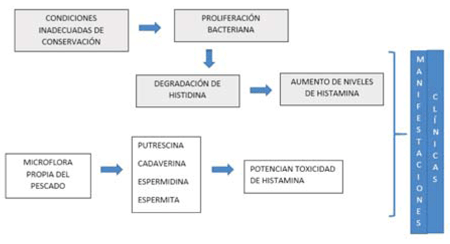
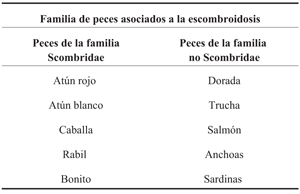
Introduction: scombroidosis is the most common cause of ichthyotoxic poisoning worldwide. It is often misdiagnosed as an IgE-mediated allergy to fish. It is caused by the consumption of fish of the Scombridae and Scomberesocidae family, and other non-scombridae food item whose cold chain cycle has been stopped.
Objective: present a clinical case about a type of food poisoning rarely diagnosed in the pediatric population of our country and analyze its clinical manifestations and evolutionary course.
Clinical case: 12-year-old patient who attended the emergency room after eating tuna, showing symptoms compatible with histaminergic syndrome. A diagnosis of scombroid intoxication was made, he was treated with antihistamines and corticosteroids, and presented a positive clinical response. We made the corresponding epidemiological notifications.
Conclusions: frequent underdiagnosed pathology. Caused by poor preservation of the cold chain of a variety of fish. The clinical diagnosis was made according to epidemiological data of fish intake. These are self-limited clinical cases, with good evolution, which are treated with antihistamines and corticosteroids.
Key words:
Poisoning; Agents histamine
 Thumbnail