Primer trasplante de progenitores hematopoyéticos en un paciente con inmunodeficiencia primaria en Uruguay: síndrome de hiper IgM ligado al X
Abstract
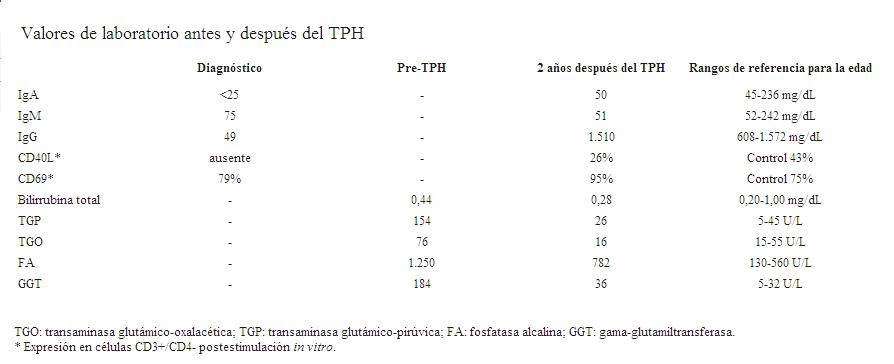
Introduction: allogenic stem cell transplantation (HSCT) has the potential to cure severe congenital immunodeficiencies. Hyper-IgM type 1 syndrome (HIGM-1) - caused by mutations in the gene encoding CD40 ligand - is a primary immunodeficiency with high morbidity and mortality despite adequate supportive care. We describe the first HSCT in our country in a child with HIGM-1 syndrome and preexisting cholangiopathy. Methods: one child with HIGM-1 syndrome and persistent infections, growth failure, and cholangiopathy documented by liver biopsy underwent nonmyeloablative HSCT from HLA matched sibling with fludarabine, melphalan, and anti-thymocyte globulin as preparative regimen. Results: the child is 2 years after his HSCT. Donor chimerism is 100%. He is free of infections and no longer depends on intravenous gammaglobulin. His cholangiopathy impresses resolved and laboratory assays shows correction of his immunologic defect. Conclusion: nonmyeloablative HSCT from HLA matched sibling allowed immune reconstitution in a patient with HIGM-1 syndrome and preexisting cholangiopathy, without severe hepatotoxicity
HEMATOPOIETIC STEM CELL; TRANSPLANTATION; IMMUNOLOGIC DEFICIENCY SYNDROMES; CD40 LIGAND; X CHROMOSOME; BILE DUCT DISEASES