El consumo de alcohol disminuye el tiempo de lactancia exclusiva
Abstract
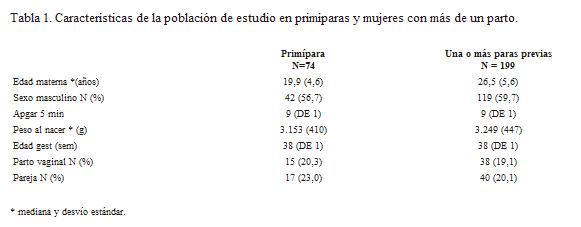
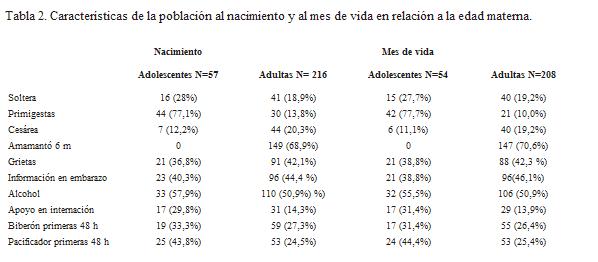
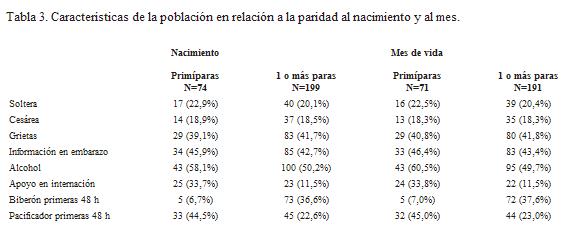
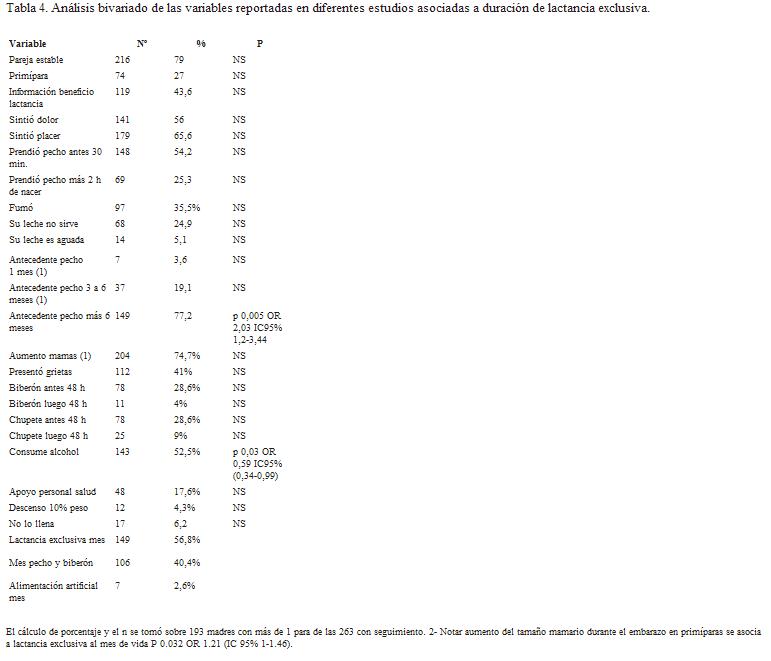
Objectives: the aim of this study was to determine factors associated with exclusive breastfeeding in the first month of life. Method: we conducted a cohort study with prospective data acquisition. In the first 48 hours of life during hospitalization were collected known factors, beliefs and attitudes that are associated with breastfeeding. Telephone follow-up was performed at month of life. Results: we included 273 mothers and children housed in a room together. The loss was 11 (4%). In 191 mothers who were contacted in a month and had one or more child before, 149 (77.2%) had breastfeed their children 6 months or more. 116 mothers (42.6%) received information on the benefits of breastfeeding during pregnancy. 140 mothers (51.4%) reported pain during breastfeeding, 74 of them with cracks. 148 infants (54.4%) latched in the first hour of life. 78 (28.6%) received bottle by neonatal indication or maternal difficult. 149 (56.8%) continued with exclusively breastfed in a month. Alcohol consumption significantly reduced the possibility of exclusive breastfeeding in a month (p=0.01). In patients with a previous child was significantly associated with exclusive breastfeeding in a month have given the chest more than six months previously (p=0.001). Remain valid after multivariate analysis statistical history of breastfeeding more than 6 months OR 2.91 (95% CI 1.54 to 5.50), alcohol OR 0.55 (95% CI 0.32 to 0.92). Conclusions: alcohol consumption was independently associated as a negative predictor for exclusive breastfeeding. Having given breast more than six months before and be multiparous increases the possibility of exclusively breastfeeding in a month.
BREAST FEEDING; ALCOHOL DRINKING; RISK FACTORS; INFANT, NEWBORN