Multifocal pyomyositis due to Staphylococcus aureus. A clinical case study
Introduction: pyomyositis (PMS) is an acute or subacute bacterial infection of the skeletal muscle. It is a rare infection in pediatrics, and it is usually accompanied by abscess formation. It occurs more frequently in male preschoolers, mostly affecting the extremities and pelvic region. The multifocal manifestation is frequent. The main etiological agent is Staphylococcus aureus.
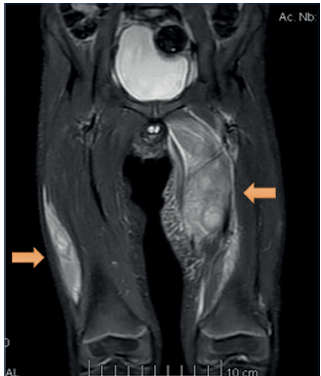
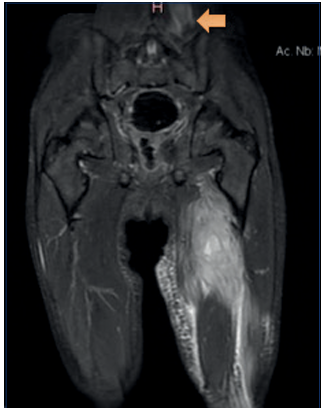
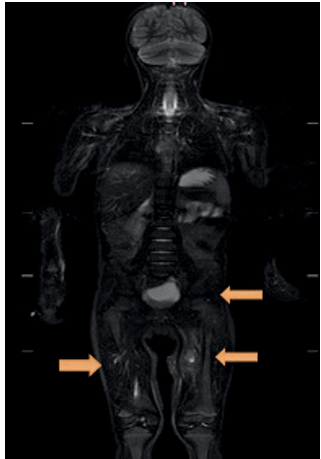
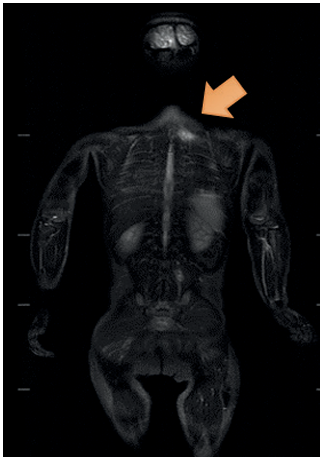
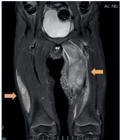
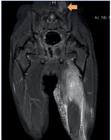
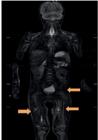
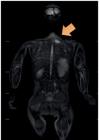
Clinical case: 3 year-old, male, healthy patient. He consulted for continuous fever of up to 39ºC of 6 days of evolution, pain in both lower limbs predominantly on the left, lameness and general repercussions. Physical examination: a 13 x 5 cm tumor in the left thigh with diffuse limits, smooth, firm, adhered to muscle layers, painful. Without fluxive elements on the skin. Soft tissue ultrasound: enlargement of the soft tissues of the extremity. Magnetic resonance imaging (MRI): abscesses involving the adductor lodge of the left limb, the vastus lateralis of the right thigh, left lumbar paravertebral musculature and left cervical-thoracic musculature. Treatment: drainage, requires multiple surgical cleanings and prolonged antibiotic therapy. Culture of the lesion: methicillin-resistant Staphylococcus Aureus (MRSA). Good clinical and imaging evolution.
Discussion: PMS has had an increasing incidence with the appearance of MRSA. Ultrasound is a suitable method for local diagnosis. Experience in the interpretation of MRI has enabled us to research multifocal involvement, identifying unobserved foci during clinical check-up. Antibiotic therapy and surgical drainage are the main treatments. The prognosis is good in most cases.
Key words:
Pyomyositis; Staphylococcus Aureus; Child
 Thumbnail
 Thumbnail
 Thumbnail
 Thumbnail