Lipomyelomeningocele and tethered cord in neonate: a cutaneous finding
Introduction: hidden spinal dysraphism involves congenital anomalies characterized by an incomplete fusion of the neural tube, where the lesion is covered by skin and the nervous tissue is not exposed. Some skin stigmas are linked with this spinal injury, mainly congenital lipomas in the posterior midline of the lesion. Hidden spinal dysraphism’s main complication could be tethered cord syndrome, which can cause irreversible neurological damage.
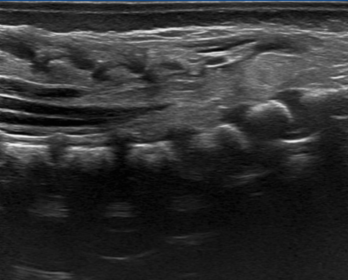
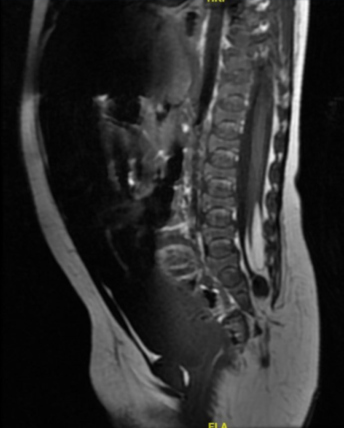
Clinical case: female newborn showing a lipoma-like skin stigma in the sacral region, looking like hidden spinal dysraphism, which was later confirmed through ultrasound and magnetic resonance imaging, which showed lipomyelomeningocele and a tethered cord.
Conclusions: early detection of these skin markers is sometimes the only tool to early diagnosis and personalized treatment in asymptomatic patients. It enables a possible surgical remediation and may prevent the irreversible neurological damage linked to the tethered cord.
Key words:
Spinal dysraphism; Neural tube defects; Tethered cord; Newborn
 Thumbnail
 Thumbnail
 Thumbnail