Déficit de succínico semialdehído deshidrogenasa: Primer caso de aciduria 4 OH butírica en Uruguay
Abstract
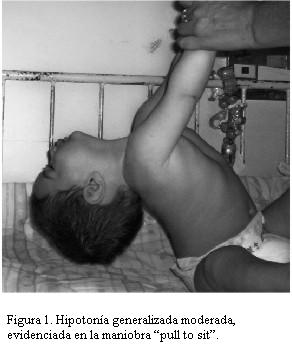
Summary Succinic semialdehyde dehydrogenase deficiency is a rare disorder of the catabolic pathway of gamma-aminobutyric acid, the major central nervous system inhibitory neurotransmitter. Because of such deficiency, transamination of gamma-aminobutyric acid to succinic semialdehyde is shunted towards the production of 4-hydroxybutyric acid, a neurotoxic metabolite which becomes abundant in physiologic fluids which allows the detection of the disorder. Clinical features are not specific and consist of psychomotor retardation, seizures, hypotonia and non progressive ataxia. Electroencephalographic finding include background slowing and generalized or focal epileptiform discharges. Magnetic resonance imaging reveals in most of the cases, increased T2-weighted signal of the globus pallidi bilaterally and symmetrically. Eventhough vigabatrin should theoretically inhibit the formation of succinic semialdehyde and therefore 4-hydroxybutyric acid, to date there is no effective treatment for succinic semialdehyde dehydrogenase deficiency. Due to its uniqueness, the main objective of this article is to present a patient with succinic semialdehyde dehydrogenase deficiency, with only 350 cases identified worldwide.
GAMMA-AMINOBUTYRIC ACID-metabolism; VIGABATRIN-therapeutic use; METABOLIC DISEASES; NERVOUS SYSTEM DISEASES
 Thumbnail