Test de control de asma en pediatría: ACT infantil Utilidad clínica en la práctica diaria
Abstract
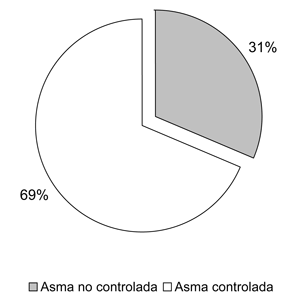
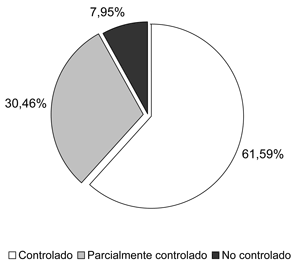
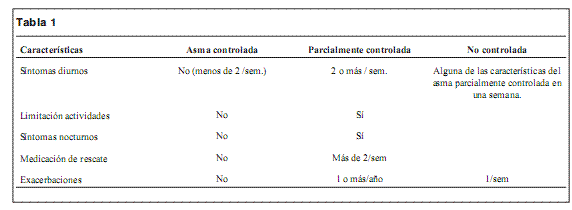
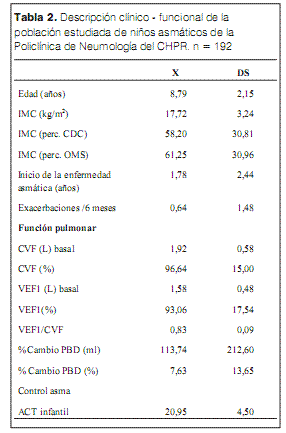
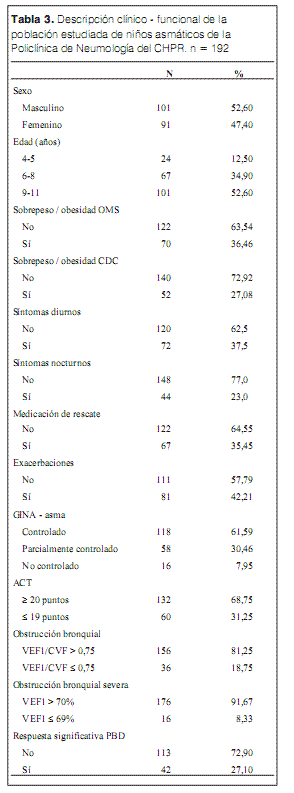
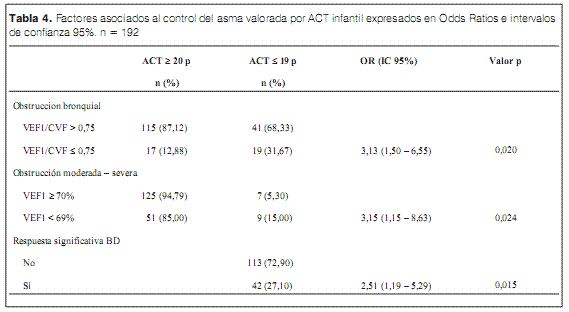
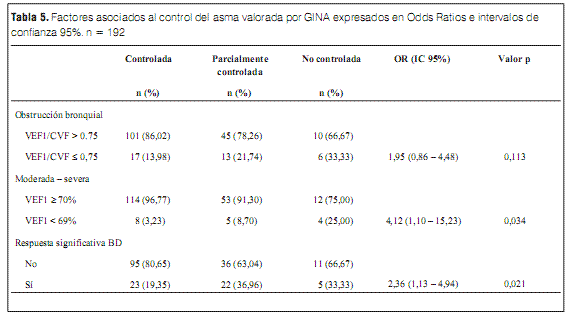
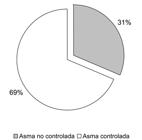
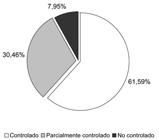
Asthma is the most common chronic disease in childhood. The goal of asthma guidelines is achieve the control of the disease. Objectives: determine the proportion of children with controlled asthma using the asthma control test (ACT), and the GINA clinical- functional levels. Compare these groups with pulmonary function test. Methodology: cross sectional study assessment asthmatic children between March 2008- April 2009. Results: of 192 children, 31.25% had no control asthma applying ACT instrument. According GINA in 30.46% children, the asthma was partially controlled, while 7.95% can not achieve the control of the disease. 18.75% of them had airflow limitation, and 27.10% significant response to bronchodilator. They had a significant association with the no control ACT group (p= 0,020). This association was present only with the most severe obstructive group among GINA levels (valor p 0,034). The children with ACT no controlled asthma had more probability to have airflow limitation by spirometry (OR = 3.13 CI95% 1.50- 6.55), and significant response to bronchodilator. (OR = 2.51 CI95% 1.19 – 5.29). The ACT is a tool to apply in clinical practice that recognize a special group with poor control of the disease and more likelihood to present pulmonary function deterioration, so they may receive a specific treatment
ASTHMA-prevention & control; RESPIRATORY FUNCTION TESTS; CROSS-SECTIONAL STUDIES
 Thumbnail
 Thumbnail