Dengue fever: a review article and experience in Pediatrics
Abstract
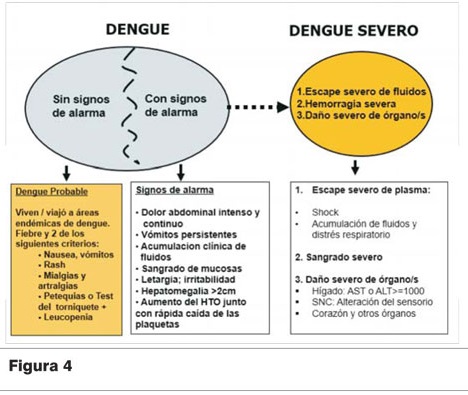
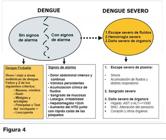
Failure to control the expansion of Aedes Aegypti in the world and to avoid the dissemination of diseases transmitted by mosquitoes, being dengue fever among these conditions, results in a relevant detailed approach to this topic. A protocol has been written to handle dengue fever, a pathology that initiates in an acute manner and whose symptoms are extremely varied, although it follows a well-defined pattern of stages. The current classification of dengue fever, dengue fever /SIC/ and severe dengue fever, identification of clinical signs that anticipate worsening of the disease: alarm signs and identification of risk conditions or factors for the development of a severe disease, provide essential tools for the clinical handling of cases. The constant challenge lies in being able to recognize it in initial stages, among other conditions that are frequent during childhood, in spite of its presenting non-specific clinical signs, and making a timely decision when there is a risk of it being severe. The disease may be diagnosed in the first five days by directly identifying viral components in the serum. Treatment consists of support, with a close monitoring of evolution, since there is no specific therapy. Vaccinations may be a key element to reduce the burden of the disease.
DENGUE; SEVERE DENGUE; REVIEW
 Thumbnail
 Thumbnail
 Thumbnail
 Thumbnail
 Thumbnail
 Thumbnail
 Thumbnail