Percutaneous retrieval of intravascular foreign bodies
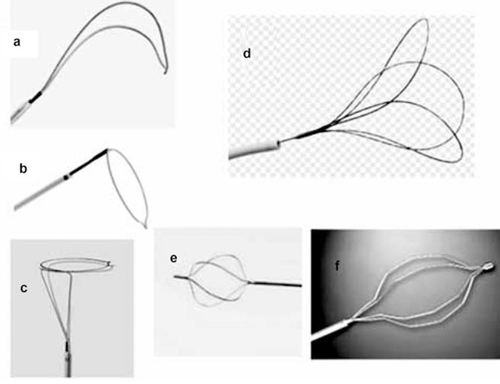
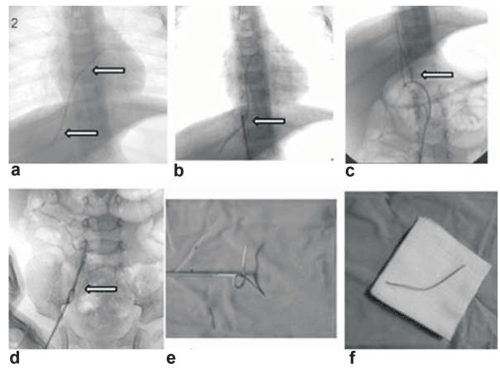
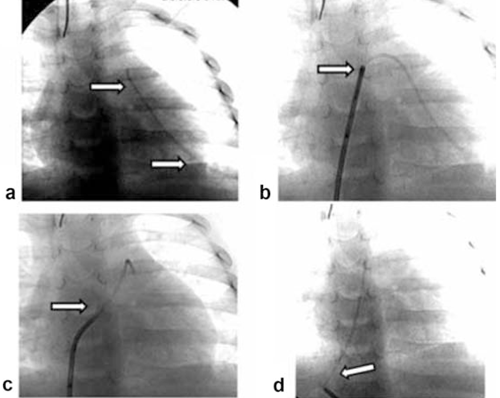
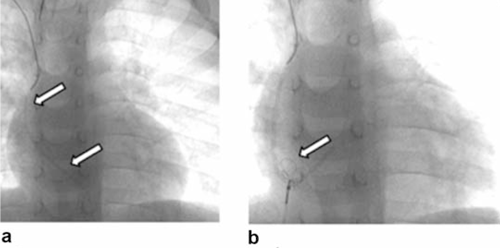
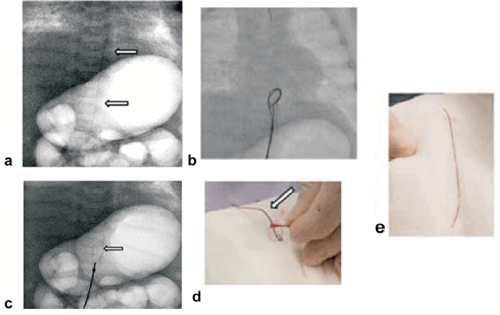
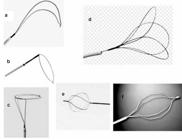
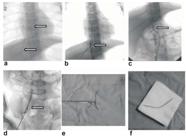
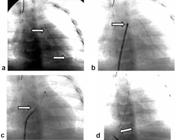
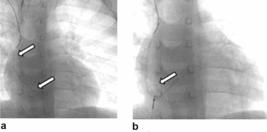
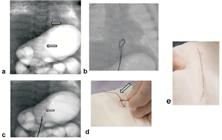
Handling pediatric patients at Intensive Care Centers and in catheterization rooms often leads to using materials (guidewires, catheters, closure devices) that may sometimes remain in the vascular tree and cause embolism, either at the venous or arterial level. This means that ICUs should have material to perform percutaneous retrieval, in order to avoid potential complications due to the intravascular presence of these bodies. In 20 years, we have retrieved 40 intravascular bodies percutaneously: 25 remains of central venous catheters, 7 remains of Porth to Cath, 1 metallic guide and 7 embolized coils. We used the femora vein in 35 patients (in one case, we also used jugular venous access) and in the remaining three patients we used the femoral arterial route. In 5 cases, we used a Pigtail catheter (in case of catheter remains) in order to move and place patients in a more accessible position. In 8 cases we used a catheter, in 27 cases a loop catheter (Goose Neck Snare) and in 3 cases we used a bioptome in order to capture and retrieve the embolized materials.
We managed to extract 37 embolized objects without complications, one could not be extracted because it was firmly attached to the right ventricular apex.
Key words:
Cardiac catheterization; Foreign bodies
 Thumbnail
 Thumbnail
 Thumbnail
 Thumbnail
 Thumbnail