Factors associated with the prevalence of iron deficiency anemia in Uruguayan children aged 6 to 24 months
Introduction: iron deficiency anemia is a major public health issue due to its multiple biological, economic, and social consequences. It is common in young children due to the high iron requirements needed for their rapid growth and development.
Objectives: analyze the prevalence of iron deficiency anemia in children aged 6 to 24 months in Uruguay and assess its association with social determinants of health, aiming to generate evidence to guide public policy decision-making.
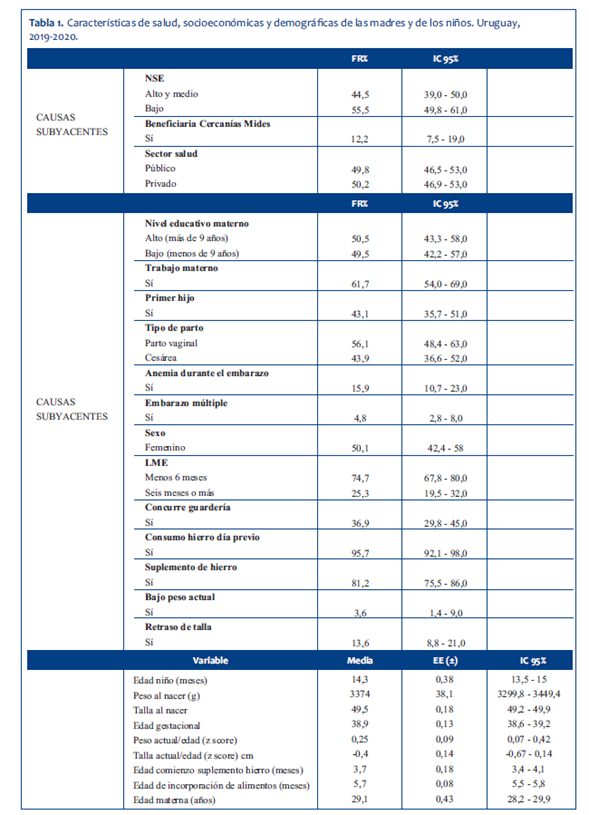
Methodology: cross-sectional study with a sample of 264 children aged 6 to 24 months, participants of the National Survey on Breastfeeding, Feeding Practices, and Anemia conducted in 2019-2020. Descriptive and analytical statistics were used. Normality was tested, and mean differences between groups were compared as appropriate. In the multivariate analysis, a logistic regression model was adjusted to predict the presence of anemia in children.
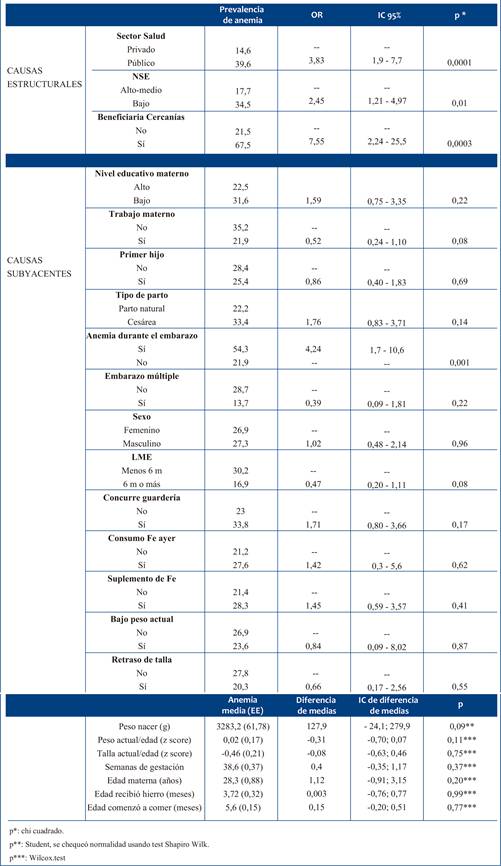
Conclusions: the prevalence of anemia was 27%; being a beneficiary of the Cercanías program, maternal anemia during pregnancy, public healthcare sector, and cesarean birth were identified as predictive variables for anemia in Uruguayan children, increasing the risk by 4.8, 4.61, 2.58, and 2.24 times, respectively. All associated factors are related to distal causes beyond the child. Addressing this issue requires an integrative, interdisciplinary, and multicausal approach with a strong economic component, involving different sectors of society.
Key words:
Iron Deficiency Anemia; Prevalence; Child