Meckel’s diverticulum presented at an atypical age
Introduction: Meckel’s diverticulum (DM) is the most frequent congenital gastrointestinal malformation. It is a result of failure of duct obliteration. It usually occurs in children under 2 years of age. Most remain asymptomatic. The treatment will depend on whether the clinical presentation was symptomatic or an imaging or laparoscopic finding.
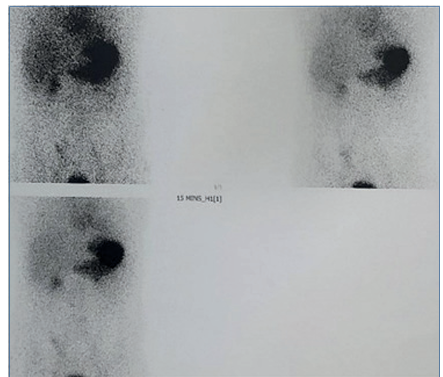
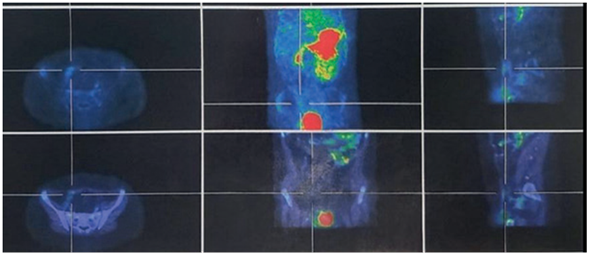
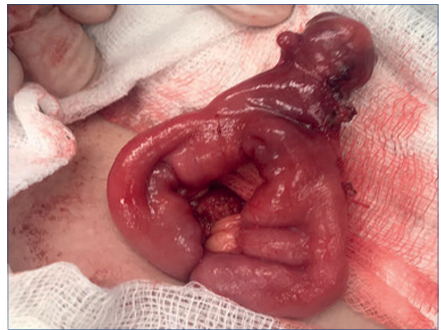
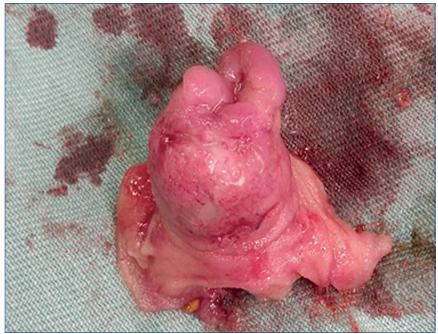
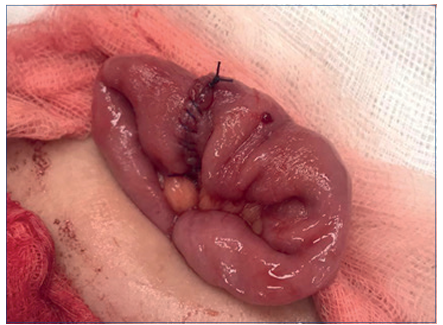
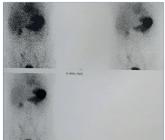
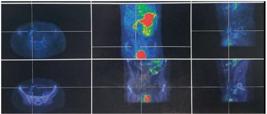
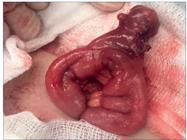
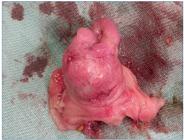
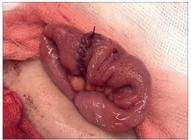
Clinical case: 11 year-old female patient. Seven days prior to the consultation, she began to show enterorrhagia, 4 to 5 episodes per day. In the evolution he presents melenas, not abdominal pain, or fever. On the day of admission, headache, dizziness, palpitations and fatigue set in. Physical exam: Glasgow 15, HR 110 bpm, RR: 20 rpm, BP 100/60 mmHg. Intense skin-mucous pallor. Abdomen: soft, depressible, pain on deep palpation of the epigastrium. A nasogastric tube was placed, aspirating clear gastric fluid. Studies: Complete blood count: Hb 6.3 g/dl, HTO 16.8%, platelets 343,000/mm³, white blood cells 19,400/mm³. Normal blood crasis. Red blood cells were transfused. Normal abdominal ultrasound. Fibrogastroscopy without alterations. Scintigraphy evidenced the DM. Resection of the intestinal segment that included the DM and ileo-ileal anastomosis at the terminal end was performed laparoscopically. Good evolution, without complications.
Conclusions: although DM usually occurs in young children, the pediatrician must maintain suspicion in schoolchildren and adolescents with suggestive symptoms. Enterorrhagia accompanied by melena without spontaneous abdominal pain usually leads the diagnosis. It is essential to make an early diagnosis and timely treatment.
Key words:
Ileal Diverticulum; Gastrointestinal Tract/Anomalies
 Thumbnail
 Thumbnail
 Thumbnail
 Thumbnail
 Thumbnail