Síndrome de Sturge-Weber sin angioma facial: Presentación de un caso clínico con su evolución clínica e imagenológica
Abstract
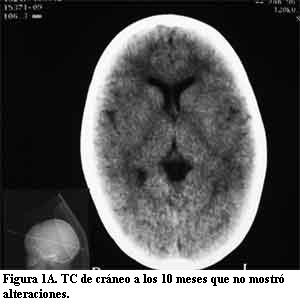
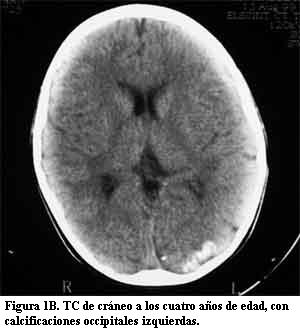
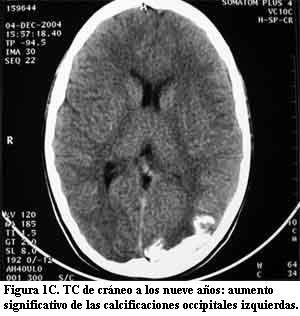
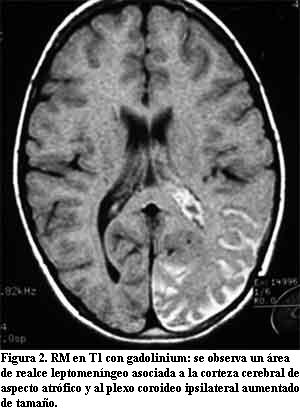
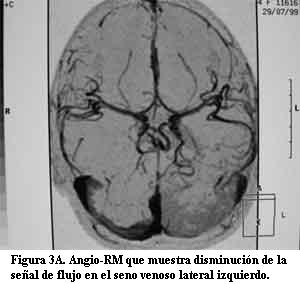
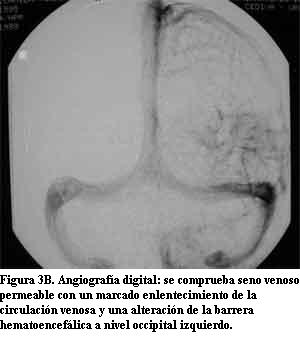
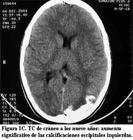
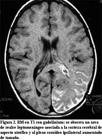
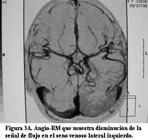
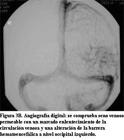
Introduction: Sturge-Weber Disease (SWD) is non-frequent neurocutaneous syndrome which affects the cerebral vascular bed. The traditional presentation consists of a leptomeninges angiomatosis at the occipitoparietal regions and an ipsilateral port-wine stain over the ophtalmic branch of the trigeminal nerve. There is a variation which does not have the associated facial nevi. Clinical case: the case is of a female patient. It starts when she was 10 months old with vomits, global hypotonia with ocular and head lateralization. A CT scan, electroencephalogram and a fundus examination were done, being all normal. At the age of 4 she repeated the focal seizures. A hyperdense image at the left occipital lobe was seen at the CT scan and a leptomeningeal image was highlighted at the left occipitoparietal lobes at the MRI with paramagnetic contrast. At the age of six she repeated the seizures even though she received an anticonvulsant drug. At the age of 9 she had an episode characterized by conscience alteration and headache. The CT scan showed a significant increase of the left occipital calcifications. Discussion: few SWD cases without facial nevi have been described. This patient's evolution is interesting due to the advanced calcification progress and the acceptable control of the epilepsy
STURGE-WEBER SYNDROME; NEUROCUTANEOUS SYNDROMES; CALCINOSIS; EPILEPSY; TOMOGRAPHY, X-RAY COMPUTED; MAGNETIC RESONANCE IMAGING; ANGIOGRAPHY
 Thumbnail
 Thumbnail
 Thumbnail
 Thumbnail
 Thumbnail
 Thumbnail