Congenital pulmonary airway malformation: a clinical case study
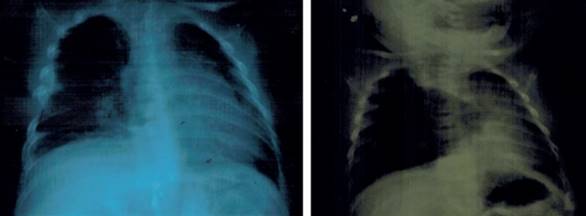
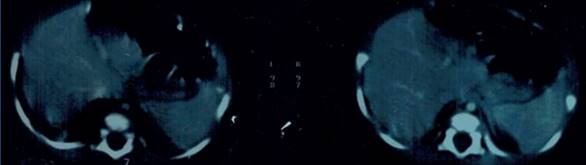
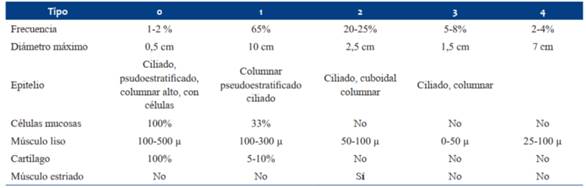
Congenital pulmonary airway malformation (CPAM), formerly called pulmonary cystic adenomatoid malformation, is a rare developmental abnormality of the terminal airways. Lesions are of variable size and distribution, usually unilateral. The diagnosis can be made from the prenatal period by means of gestational ultrasound, occasionally causing serious fetal repercussions. In newborns, the disease may manifest itself through acute respiratory distress. In children and adults it can be diagnosed through recurrent lung infections or other complications. In symptomatic patients, surgical treatment is indicated to prevent infections and neoplastic transformation. However, prophylactic versus expectant management in asymptomatic patients remains controversial. We present the clinical case of a 2-month-old infant who, during the course of bronchiolitis underwent a chest X-ray that revealed a radiolucent image of the middle lobe. The computed tomography scan showed a large cystic image in the right lung, which could be linked to an CPAM. The surgical treatment was carried out and the segmentectomy confirmed a pathological type IV CPAM. The patient evolved favorably.
Key words:
Congenital cystic adenomatoid malformation of lung; Infant
 Thumbnail
 Thumbnail