Estudio descriptivo de la situación nutricional en niños de 6-72 meses de la República Argentina: Resultados de la Encuesta Nacional de Nutrición y Salud (ENNyS)
Abstract
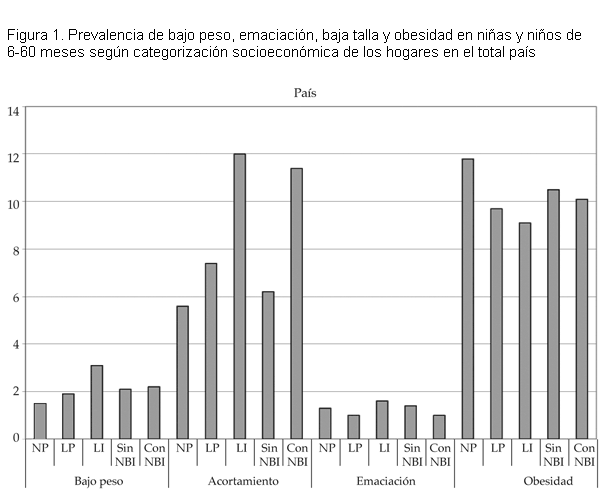
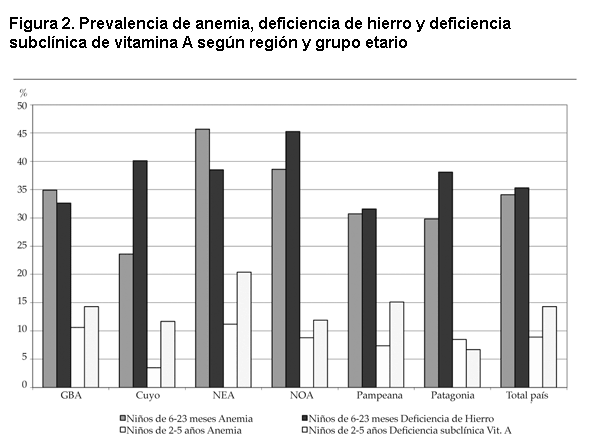
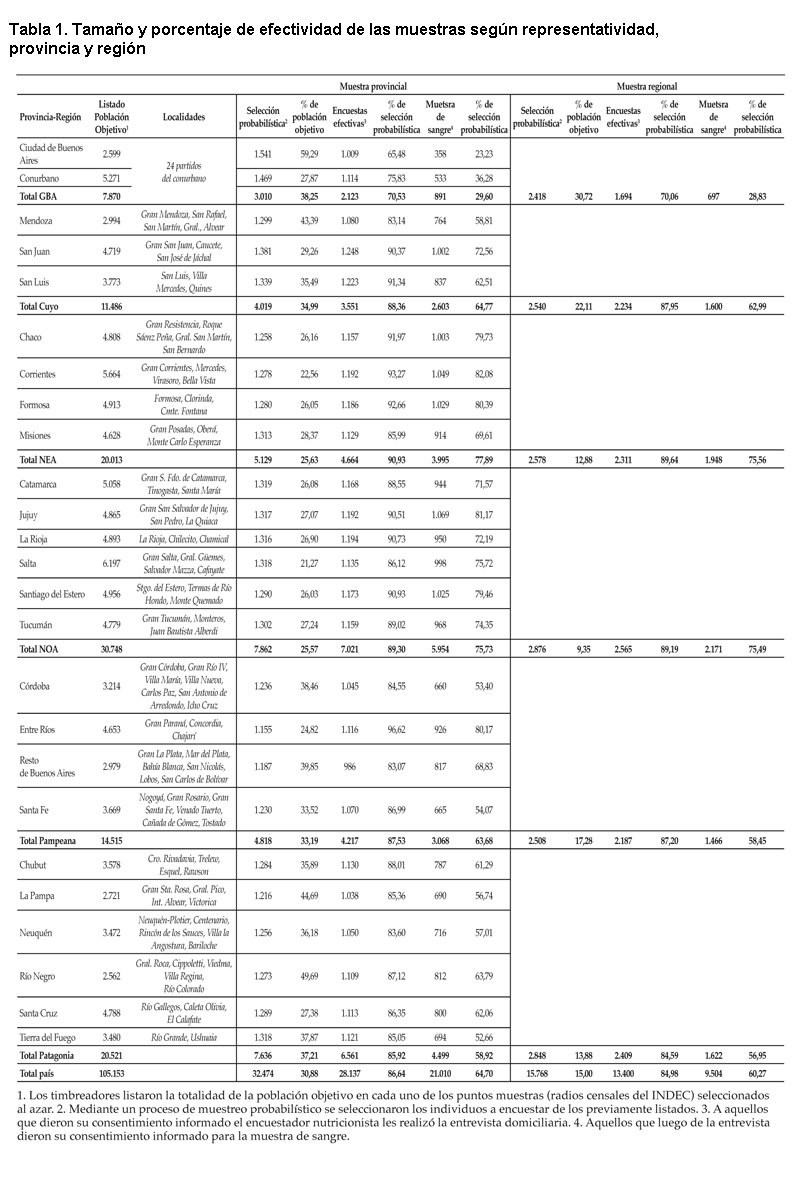
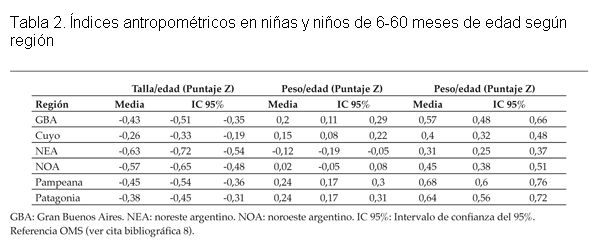
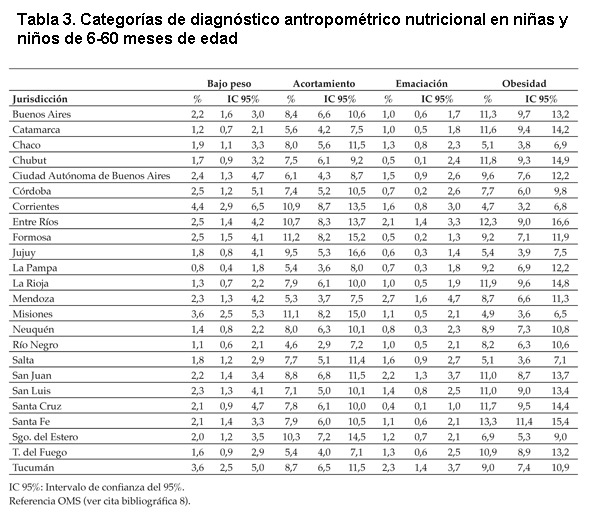
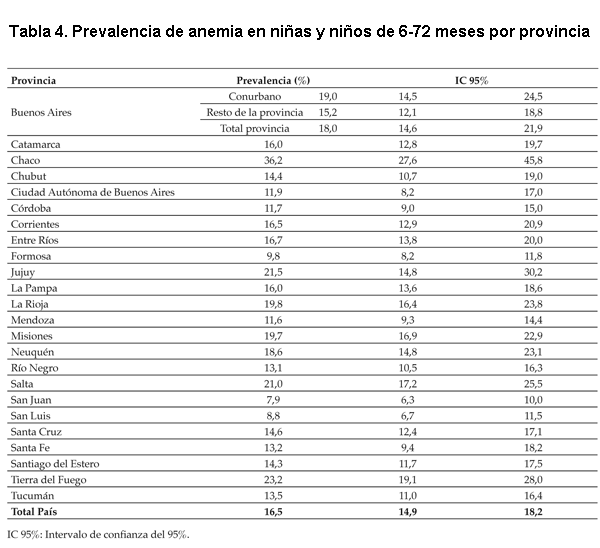
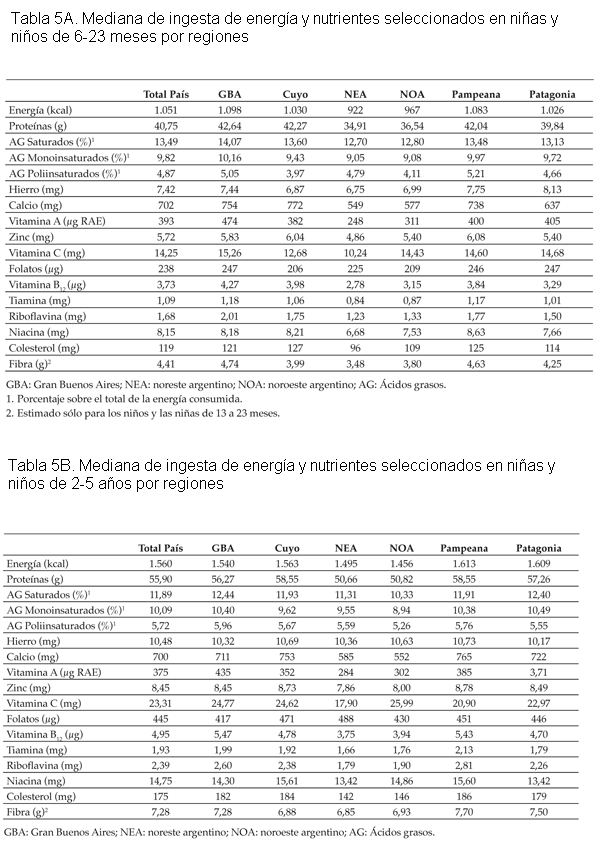
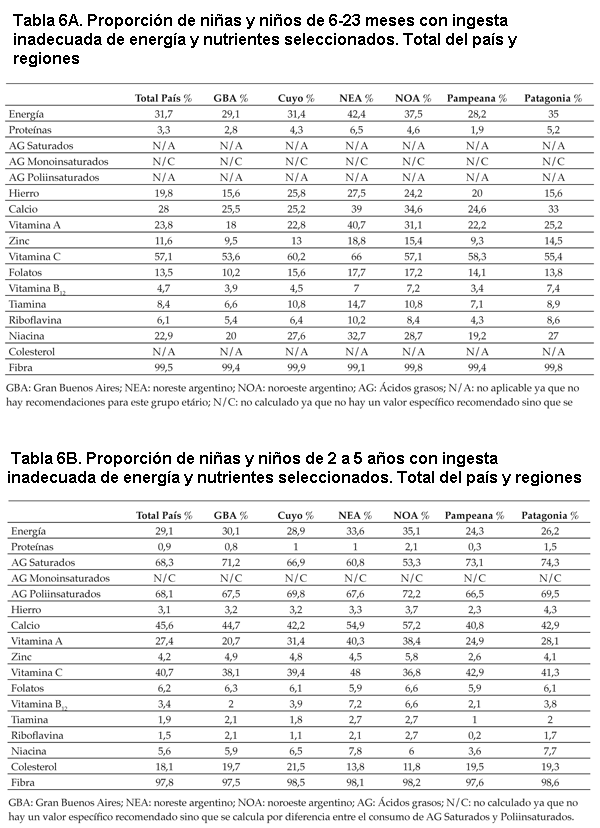
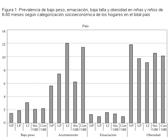
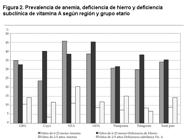
Introduction: data availability on nutrition status from vulnerable population groups is essential for the design and evaluation of interventions. The Ministry of Health from Argentina developed in 2004-2005 the National Survey of Nutrition and Health. Our objective is to describe the nutrition status of infants and preschool children (6-72 months), globally and by region and socioeconomic level. Population and methods: a probabilistic, multistage sample was selected, representative at the national, regional and provincial levels. Anthropometric indices weight/age, height/age and weight/height, were estimated, according to WHO reference. Nutrient intake was estimated by a 24-hours recall, and hemoglobin, serum ferritin, retinol and vitamin D concentration were measured. Results: prevalence of stunting, wasting and obesity were 8.0%, 1.3%, and 10.4%, respectively. Prevalence of anemia was 16.5% in children <6 years and 35.3% in children aged 6-23 months. Prevalence of subclinical vitamin A deficiency in children of 2-5 years was 14.3%, and prevalence of vitamin D deficiency in Patagonia was 2.8% in children aged 6-23 months. Different nutrient intake inadequacies were observed. Infants and children at the lower socioeconomic level showed higher prevalence of nutrition inadequacies. Conclusions: the coexistence of different nutrition deficiencies and overweight and obesity constitute the main characteristic of Argentinean infants and preschool children. Relevant differences exist according to socio-economic and geographic conditions
NUTRITIONAL STATUS; NUTRITION SURVEYS; ANTHROPOMETRY; OBESITY; ANEMIA; VITAMIN A DEFICIENCY; MALNUTRITION
 Thumbnail
 Thumbnail