Fluid management protocol for critically ill children during invasive mechanical ventilation
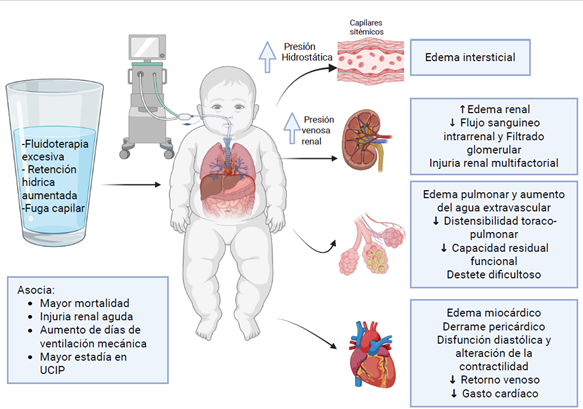
Fluid resuscitation is an important intervention for children in shock. However, evidence shows that a positive fluid balance and the consequent Fluid Overload (FO) are associated with increased mortality and morbidity in critically ill children. Documented complications include increased days of invasive mechanical ventilation (MV), incidence of acute kidney injury (AKI), and prolonged hospital stay.
Patients admitted to Pediatric Intensive Care Units (PICUs) are at a particularly high risk of developing FO due to the confluence of factors such as: 1) excess fluid administration before and during PICU admission (initial resuscitation, maintenance fluids, drug infusions, and transfusions); 2) increased water retention secondary to the activation of various counterregulatory hormonal mechanisms−such as the non-osmotic release of antidiuretic hormone; and 3) capillary leakage into the interstitium, which contributes to tissue edema and organ dysfunction.
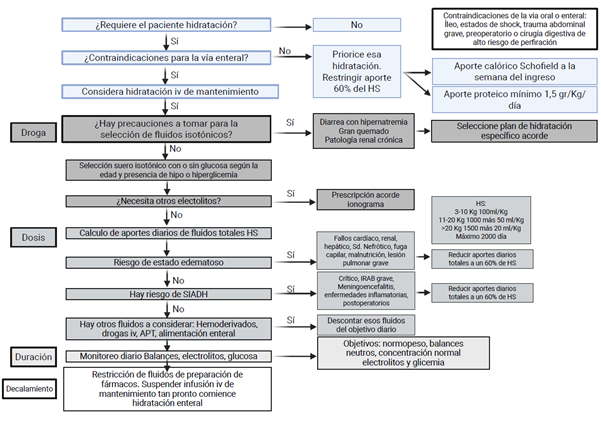
Pediatric clinical studies have demonstrated that fluid restriction strategies and FO prevention are associated with lower mortality and a reduction in the duration of MV. In this regard, FO−largely of iatrogenic origin−must be recognized as a central clinical challenge, and its prevention, as a priority. This paper introduces a preventative strategy for fluid overload, based on the best available evidence, with the purpose of being applied in the PICU and contributing to mitigate the adverse impact of FO on this vulnerable population.
Key words:
Fluid Therapy; Pediatric Intensive Care Unit; Invasive Mechanical Ventilation
 Thumbnail
 Thumbnail