Dietary habits and early childhood tooth cavities in a uruguayan population: pilot study
Objective: to learn the relation between the food consumption profile (frequency and type) and the prevalence, extension and distribution of cavity lesions in children of 18-35 months of age from the city of Montevideo, Uruguay.
Material y Methods: a cross-sectional study was carried out in 50 children, of both sexes. Parents answered a questionnaire regarding sociodemographic data, eating habits and oral hygiene. Two examiners recorded caries lesions on each tooth surface according to ICDAS-epi criteria, visible plaque index and PUFA index. Descriptive analysis of the variables were performed. The diet analysis considered food type, incorporation time and frequency through percentages.
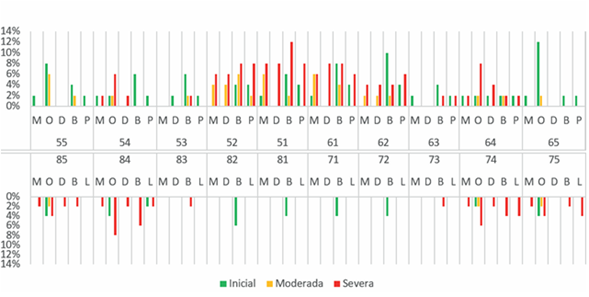
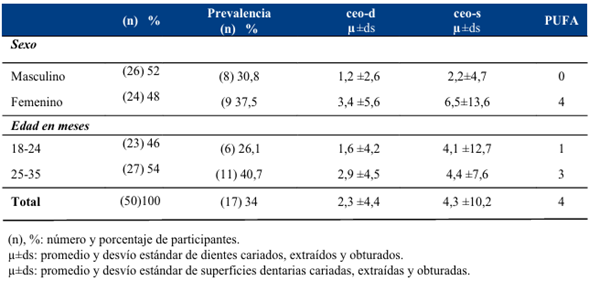
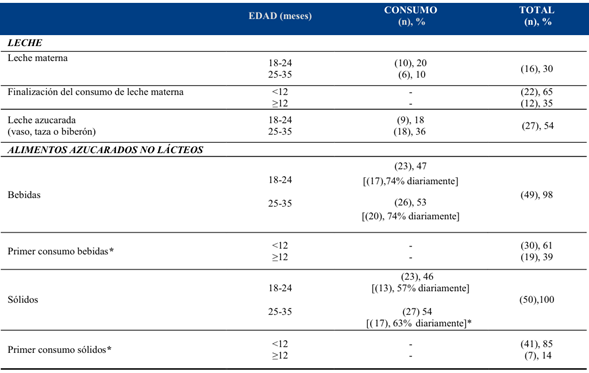
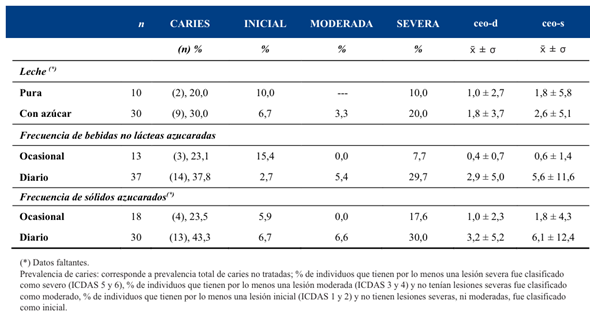
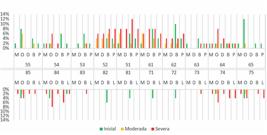
Results: children examined had an average age of 26.6 ± 5.9 months of age. The cavity prevalence was 34%, with an extension of 2.3 and 4.3 for ceo-d and ceo-s respectively. For the most part, severe untreated injuries were observed located in the anterior superior and posterior-inferior sector. The PUFA index was 8%. 30% consumed breast milk, 54% milk with sugar, 100% consumed beverages and sugary foods, mostly before 11 months and daily. Children who consumed sugary drinks (non-milk) in a bottle presented greater extent and severity of cavity lesions (ceo-d modificated= 3.5 and ceo-s modificated = 7.8).
Conclusions: we need to deepen our knowledge of feeding patterns in early childhood. The population studied showed the early incorporation of sugar into the diet, warning about the presence of a common risk factor for various non-communicable diseases (cavities, diabetes, obesity, cardiovascular diseases).
Key words:
Eating of Food; Dental Caries; Preschool; Uruguay
 Thumbnail