Posterior reversible encephalopathy during a hypertensive emergency in 4 children hospitalized at the Pereira Rossell Pediatric Hospital
Introduction: posterior reversible encephalopathy (PRES) is a complex syndrome characterized by headaches, epileptic seizures, visual disturbances and sensorial alterations associated to changes of white matter in parieto-occipital regions shown in magnetic nuclear resonance. It is linked to various causes that provoke cerebral edema including arterial hypertension (AH) and immunosuppressive treatments.
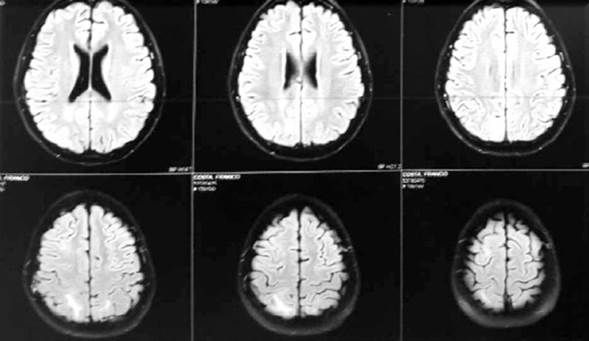
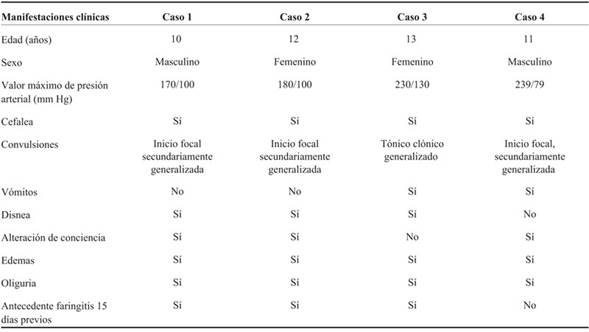
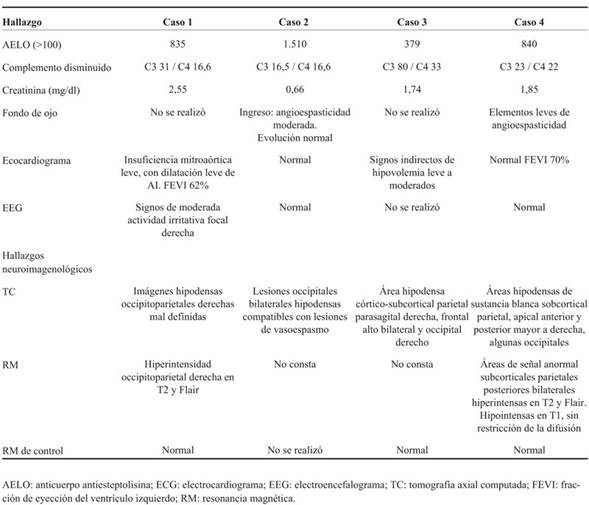
Clinical cases: 4 children admitted between January 1st, 2005 and December 31st, 2015 at the Pereira Rossell Pediatric Hospital. Median age: 11.5 years. The initial clinical manifestation in 3 of 4 patients was dyspnea and generalized edema. All of them presented endocranial hypertension and generalized convulsions. CT was the first requested image to all patients, and it was clear that all of them had experienced occipital cortical-subcortical, parietal and frontal hypodense lesions. In three of the cases we performed a Magnetic Resonance that showed typical findings. All of them presented nephritic syndrome with arterial hypertension over P99, reversible renal failure, a decrease of C3 and an increase of Antistreptolysin O (AELO). HTA control required polytherapy at the critical care unit. None of them presented neurological sequelae.
Conclusions: PRES is an association or unusual manifestation of hypertensive emergency. Early detection by pediatricians seems essential to provide an appropriate therapeutic approach.
Key words:
Posterior leukoencephalopathy syndrome; Glomerulonephritis
 Thumbnail