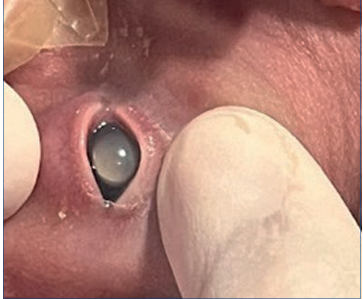
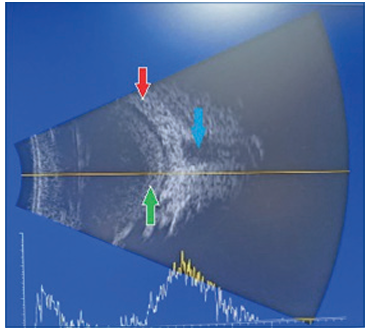
Endogenous endophthalmitis in a severely preterm newborn. Clinical case study
Endogenous endophthalmitis is a pathology with an incidence of 0.1% to 4% and it may lead to severe and irreversible ocular complications. In newborns, it mainly occurs as a complication of sepsis, especially in premature babies with low birth weight and risk factors, such as prolonged exposure to catheters, parenteral feeding, and surgical interventions.
The most frequent etiology is bacterial, mainly Pseudomonas aeruginosa.
Given the low frequency, we consider this report important so that physicians, when suspecting endophthalmitis, can implement early treatment.
Treatment ranges from systemic or intravitreal antibiotics to vitrectomy.
We present the case of a premature infant, who during sepsis to Pseudomonas aeruginosa, was diagnosed with endophthalmitis.
The course of endophthalmitis and the visual prognosis are unpredictable, which is why we consider routine ophthalmic evaluation of this type of patient to be important given that delaying treatment is associated with worse visual results.
Key words:
Endophthalmitis; Premature; Pseudomonas Aeruginosa; Sepsis
 Thumbnail
 Thumbnail