Hypocondroplasya in pediatrics: case study
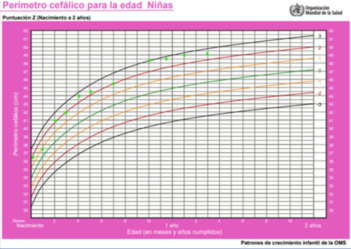
Hypochondroplasia is a skeletal dysplasia characterized by short height, robust build, disproportionately short arms and legs, short and broad hands and feet, mild joint laxity, and macrocephaly. Children generally show slow growth rate, which leads to short stature and limb disproportion.
Hypochondroplasia is mostly inherited with an autosomal dominant character, although many sporadic cases have been detected.
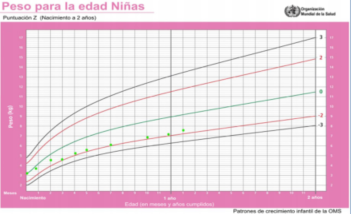
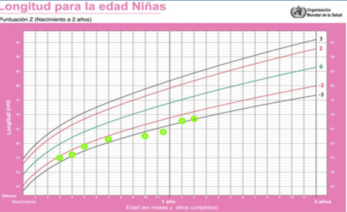
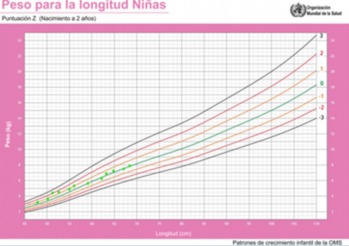
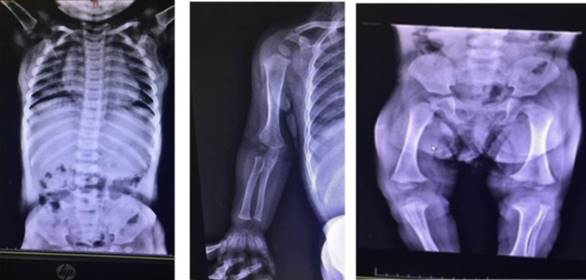
Diagnosis requires a thorough history and adequate physical examination. It is important to assess some growth indicators such as: weight for age, length/height for age, relationship between weight and length/height, growth speed, genetic target height, measurements of body segments, among others. Skeletal XRs can diagnose most bone dysplasias. Molecular studies are usually the confirmatory test and are requested when a diagnosis is suspected. It is important to include bone dysplasias in the differential diagnosis of short stature and to take them into account for any disharmonious short stature with phenotypic alterations. Hypochondroplasia is currently not an approved indication for growth hormone therapy.
We present a clinical case of a 14-month-old girl, with a severe, disproportionate short stature, who presented difficulties in her definitive hypochondroplasia diagnosis.
Key words:
Bone development diseases; Osteochondrodyslasias
 Thumbnail
 Thumbnail
 Thumbnail
 Thumbnail
 Thumbnail