How to interpret suspicion tests and when to start empirical antibiotic therapy for urinary tract infections
Introduction: urinary tract infections (UTIs) are a cause of frequent consultation. Nitrites and leukocyte esterase (LE) or leukocytes in urine are suspected markers, but their presence is variable.
Objective: determine the validity of the suspicion tests and describe the antibiotic prescription based on the results.
Materials and methods: descriptive, retrospective study of children with suspected UTIs analyzed with nitrites, EL and urine culture between 2016 and 2018.
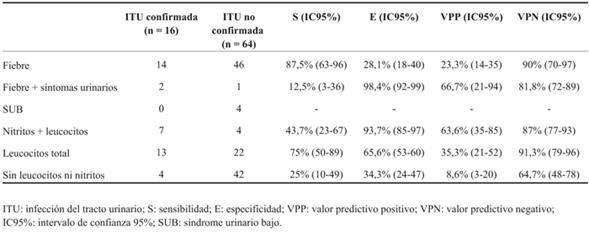
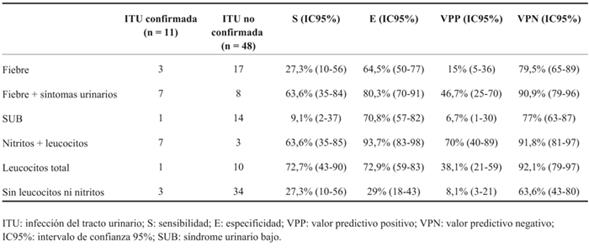
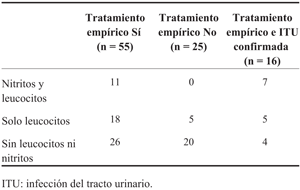
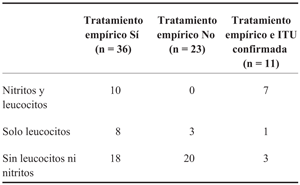
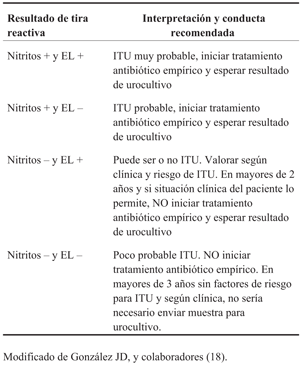
Results: 137 patients were studied for suspected UTIs, and they were confirmed through urine cultures in 27 (19.7%). The main reason for suspected UTIs was fever of unknown origin (FUO) for children aged one month to 3 years of age, and leukocyte / LE sensitivity was 75%, specificity 65.6%, PPV 35.2% and NPV 91.3%. In the case of nitrites and LE the sensitivity was 43.7%, specificity 93.7%, PPV 63.6% and NPV 87%. For children of over 3 years of age, fever and urinary symptoms were the most frequent suspicion of UTI, but they showed low diagnostic sensitivity. Leukocyte sensitivity was 72.7%, specificity 72.9%, PPV 38.1% and NPV 92.1%. For leukocytes and nitrites, the sensitivity was 63.6%, specificity 93.7%, PPV 70% and NPV 91.8%. 65% of children of over 1 month of age with suspected UTI received empirical antibiotics. ITUs were confirmed in only 29.6% of those who received antibiotics.
Conclusions: pediatric UTIs are over diagnosed. The symptoms’ low sensitivity and specificity as wekk as suspicion tests lead to an excessive use of antimicrobials.
Key words:
Urinary tract Infections; Anti-bacterial agents