Prostaciclinas inhalatorias en la hipertensión pulmonar persistente del recién nacido
Abstract
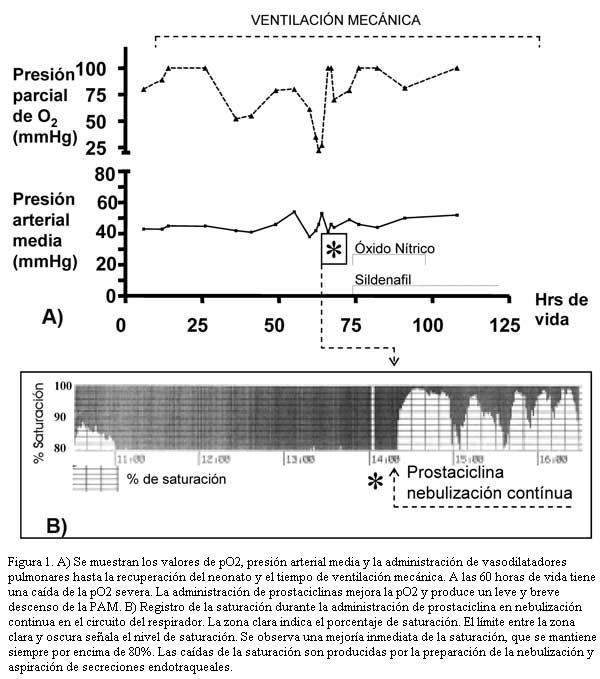
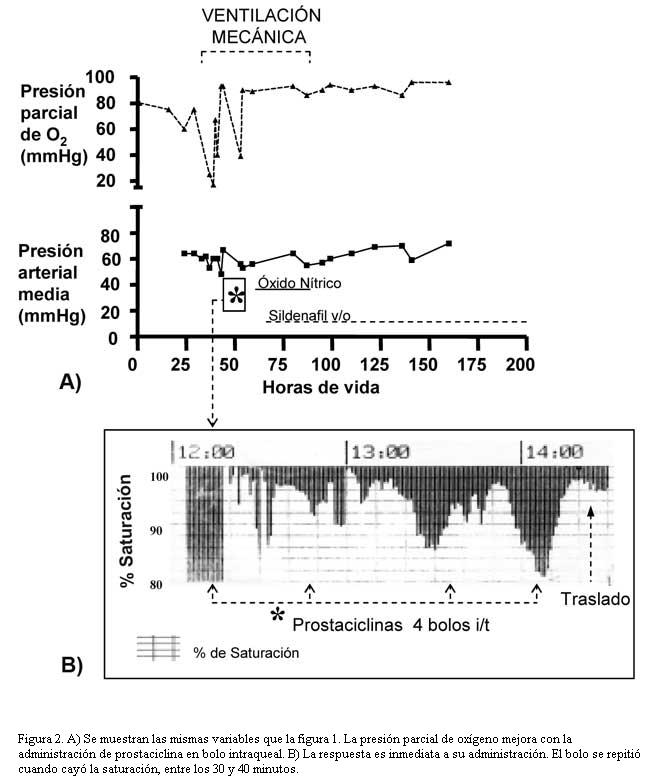
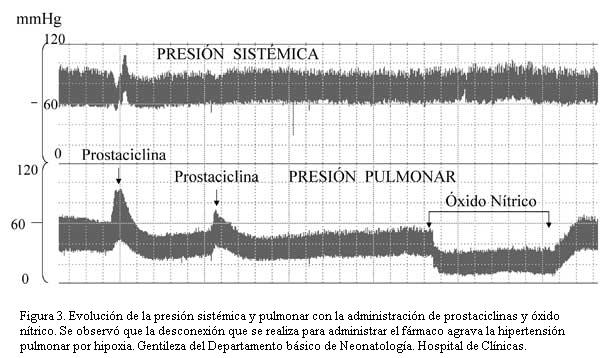
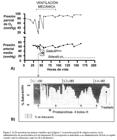
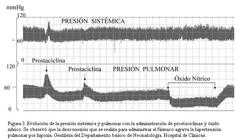
Summary Newborn persistent pulmonary hypertension is due to a delay in the reduction of the pulmonary resistance after birth. It can cause severe hypoxia caused by a left - right shunt. Different therapeutic strategies have been tested to produce vasodilation. Nitrous oxide is the selected treatment but in most neonatal intensive care centers is not available so these patients need to be resettled. Usually the disease is so severe that other treatments are necessary to manage and stabilize them, before taking them to another place. The aim of this work is to show that inhaled prostacyclins are an alternative therapy. Two cases of term newborns that developed severe pulmonary hypertension are presented. Both have been treated with hyperventilation, alkalis, and inotropics without improvement. Due to the impossibility of traveling and their extreme gravity prostacyclins were administered endotracheally, one of them by continuous nebulization and the other by bolus. An immediate increase of the oxygenation was achieved in both, allowing their stabilization and travel to a specialized center where they received nitric oxide and oral sildenafil before weaning. They evolved without complications with normal mental and motor development. A piglet model in which pulmonary hypertension is induced and is later treated with inhaled prostacyclins and nitric oxide is also presented.
HYPERTENSION, PULMONARY-therapy; EPOPROSTENOL-therapeutic use; NITRIC OXIDE-therapeutic use; PHOSPHODIESTERASE INHIBITORS -therapeutic use; INFANT, NEWBORN
 Thumbnail
 Thumbnail
 Thumbnail