Impact of high flow nasal cannula oxygen in the management of acute respiratory failure in a Pediatric Emergency Department
Abstract
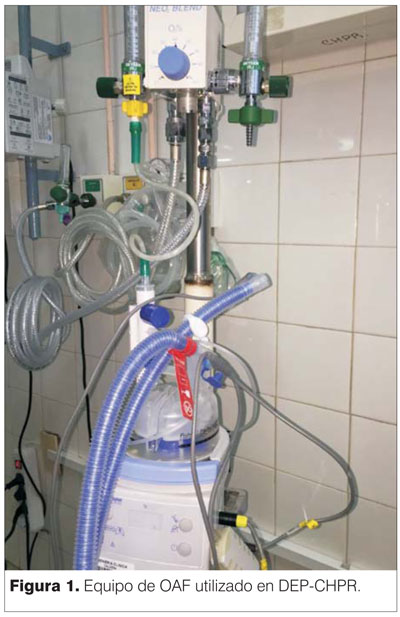
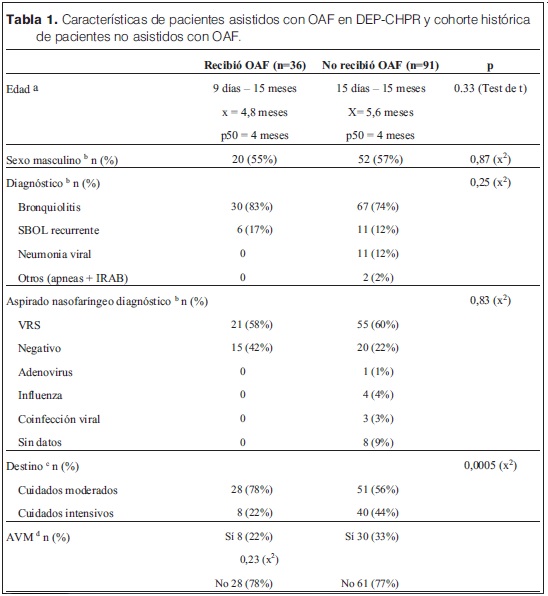
Introduction: high flow nasal cannula oxygen (HFNC) has become a simple, easy to implement, non-expensive technique, without serious complications, to treat respiratory failure in lower respiratory tract infections (LRTI). Its early implementation could improve outcome in these children. Objectives: to communicate the first experience with HFNC in children with LRTI in a Pediatric Emergency Department. To compare it with a historical cohort of children who did not receive HFNC. Methods: descriptive, prospective study (01/06/13-20/09/2013). Every child treated with HFNC in the Emergency Department -Pereira Rossell Hospital. Inclusion criteria: <2 years old with viral LRTI, respiratory failure and Tal score >8 or persistent ³7, persistent apnea, oxygen saturation <90% with O2 mask. Exclusion criteria: pCO2>70 mmHg, pH<7.2, depression of consciousness, hemodynamic failure. Results: HFNC 36 children; median age 4 months; bronchiolitis 83%; VRS+ 58%. Destination HFNC patients: admission 78%, PICU 22%, MV 22%. No complications, no deaths.. Historic cohort: 91 children with LRTI not treated with HFNC; PICU: 40(44%) vs HFNC (p=0.0005). MV: historic cohort 30(33%) vs HFNC (p=0.026). Younger than 6 months: HFNCO MV 5(19%), historic cohort: 25(45%) (p=0.026). Conclusions: admission to PICU was prevented in a high number of patients. Need for MV in patients younger than 6 months with HFNC was significantly lower. The early application of HFNC in severe LRTI modified the treatment of these patients in the emergency department.
OXYGEN INHALATION THERAPY; RESPIRATORY TRACT INFECTIONS; RESPIRATORY INSUFFICIENCY; EMERGENCY TREATMENT
 Thumbnail