Atypical pityriasis rubra pilaris in pediatrics. A case report
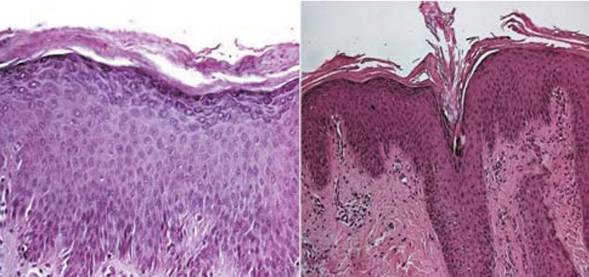
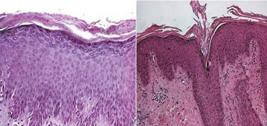
Pityriasis rubra pilaris (PRP) is an unusual erythematous squamous dermatosis of unknown etiology, caused by an alteration of keratinization in the epidermis. This disease presents a bimodal distribution, being its incidence greater in the first and sixth decade of life. It has a heterogeneous clinical manifestation, and, according to Griffiths, has been classified into 6 subtypes, based on clinical features and prognosis. The typical manifestations of this disease are follicular hyperkeratotic papules, palmoplantar keratoderma and orange-red scaly plaques that can progress to erythroderma, with islands of sparing. According to different studies, the most frequent clinical manifestations in children are type III and IV according to Griffiths classification. Histology is not specific but supports diagnosis. There are multiple therapeutic options, depending on the extension and severity of the disorder.
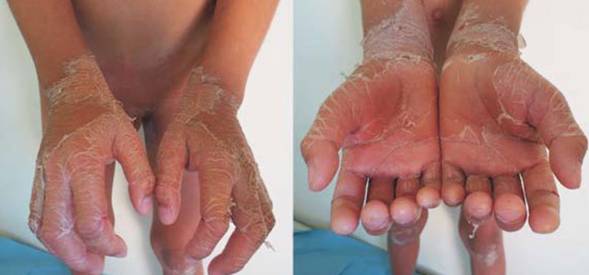
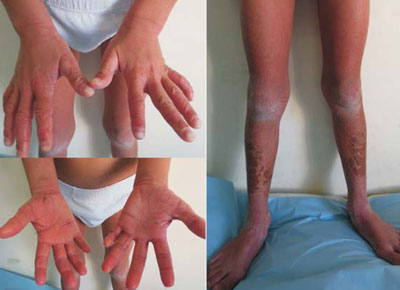
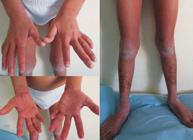
This review presents the case of a 5-year- old child case with a diagnosis of atypical PRP associated with extensive erythema, his response to treatment of systemic corticosteroids and later to topical retinoids being good.
Key words:
Pityriasis rubra pilaris; Prednisone; Retinoids
 Thumbnail
 Thumbnail
 Thumbnail